The Ethiopian ibex faces extinction, reclassified as a critically endangered species.
Overfishing is the main reason for the decline in ibex populations.
Written by: Ayman Ragab
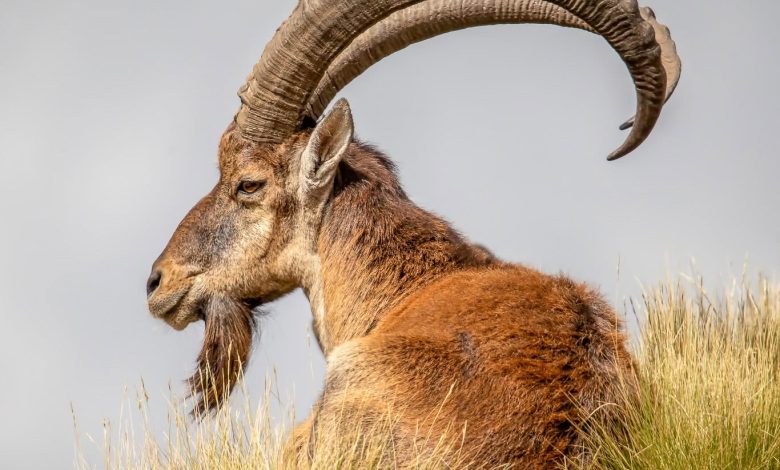
The International Union for Conservation of Nature (IUCN) has reclassified the Walia ibex, a rare species of wild goat endemic to Ethiopia, as critically endangered for 2026, after field studies showed its numbers have fallen below the critical population threshold.
The federation explained that a census conducted in December 2025 recorded only 271 Walia ibex within the Simien Mountains National Park in northern Ethiopia, which is the only protected area where this species lives, making it one of the most geographically restricted large mammals in the world.
The reclassification decision was based on a study published by Paul Schadi and his colleagues in the journal Oryx, which documented a decline in the ibex population from 865 individuals in 2015 to 306 individuals by May 2024.
Sharp decline in numbers
The study revealed that the number of adult individuals, which is the criterion the International Union for Conservation of Nature relies on for assessing threat levels, has decreased to less than 250 individuals during 2023 and 2024.
As a census conducted in November 2024 revealed the presence of 289 ibexes, including 228 adults, before the total number decreased to 271 by December 2025.
The conservation status of the Caucasian tur on the Red List has seen frequent changes over the past decades. It was classified as endangered in 1986, then critically endangered in 1996, returned to the endangered category in 2008, before being listed as vulnerable after the 2020 assessment.
Overfishing is the main reason for the decline in ibex populations.
During the period between 2009 and 2012, surveys showed an increase in the ibex population from 680 to 850 individuals, while researchers expected the number to exceed 975 by 2020. This, at the time, reinforced its classification as an endangered species.
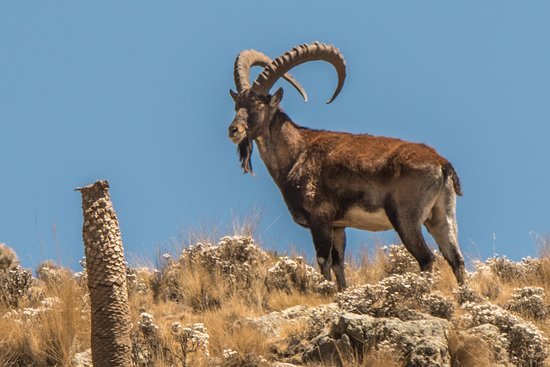
Poaching is the primary reason for the decline in ibex populations, as the animals are killed for food and traditional medicine, along with human expansion and habitat degradation.
Two successive crises also contributed to the worsening situation. The COVID-19 pandemic led to a decline in tourism, reduced revenues, and disrupted field patrols, while the war between the Ethiopian government and the Tigray People's Liberation Front (TPLF) during 2021-2022 caused an increase in illegal fishing due to weak law enforcement.
The International Union for Conservation of Nature pointed to the continuation of poaching activities, citing an incident that occurred in April 2025, during which 4 poachers were arrested, and the remains of two whales were confiscated.
For its part, the Ethiopian Wildlife Conservation Authority (EWCA) confirmed that the species is also facing increasing pressures, including agricultural expansion, livestock grazing, weak enforcement of wildlife protection laws, as well as resistance from some local communities to restrictions on land use for conservation purposes.
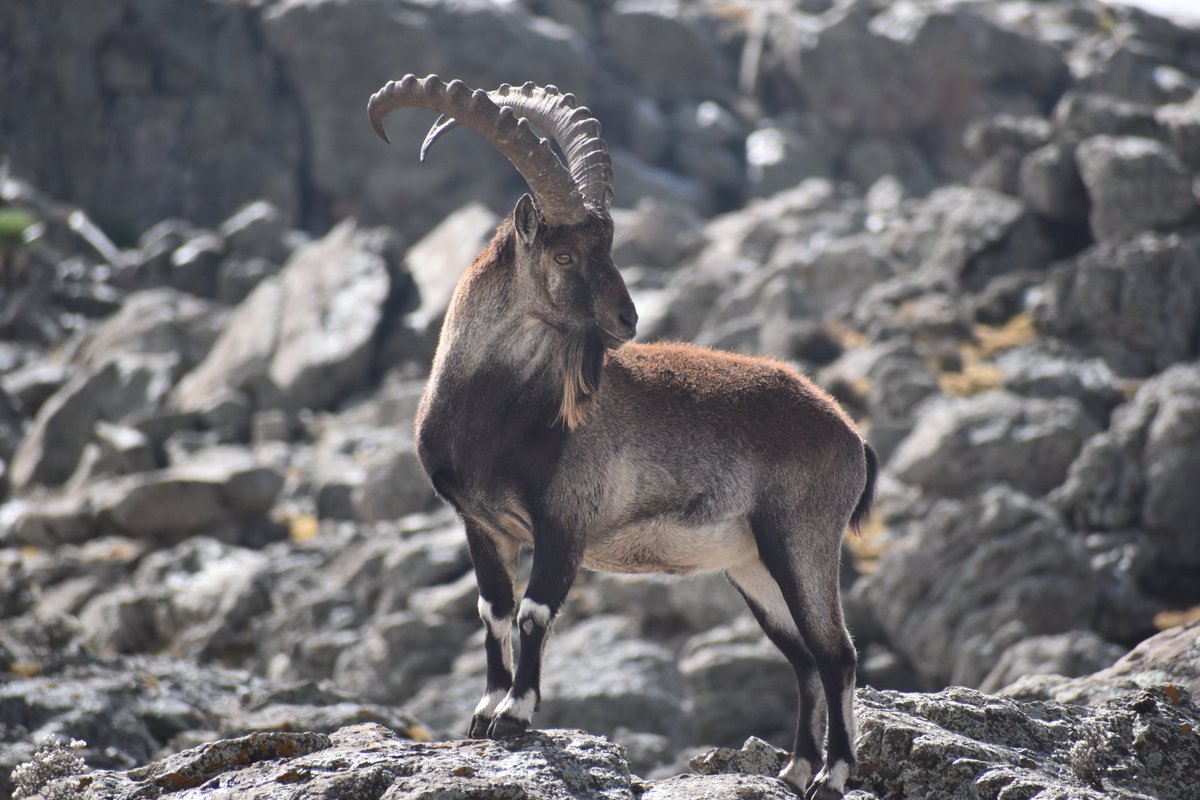
The authority added that the species' specialized habitat requirements and low reproductive rate make the Wali ibex more vulnerable to sharp declines under increasing environmental and human pressures.