From the Marula Festival to the Reed Dance, the most prominent annual celebrations in the Kingdom of Eswatini
أهم الاحتفالات السنوية في مملكة إسواتيني.. عيد المارولا ورقصة القصب وإنكوالا
Written by: Badr Ahmed
The Kingdom of Eswatini, one of Africa's last absolute monarchies, is among the most traditional countries, organizing an array of annual royal celebrations and ceremonies that are centuries old and form an essential part of the Swazi people's national identity.
These events are not limited to a festive nature, but rather carry social, spiritual, and political dimensions that strengthen the status of the monarchy and the unity of society.
Marula Festival
Locally known as Imagwaneshi or Buganu, it is held annually between February and April to celebrate the harvest season of the marula fruit, one of the most important traditional trees in Eswatini.
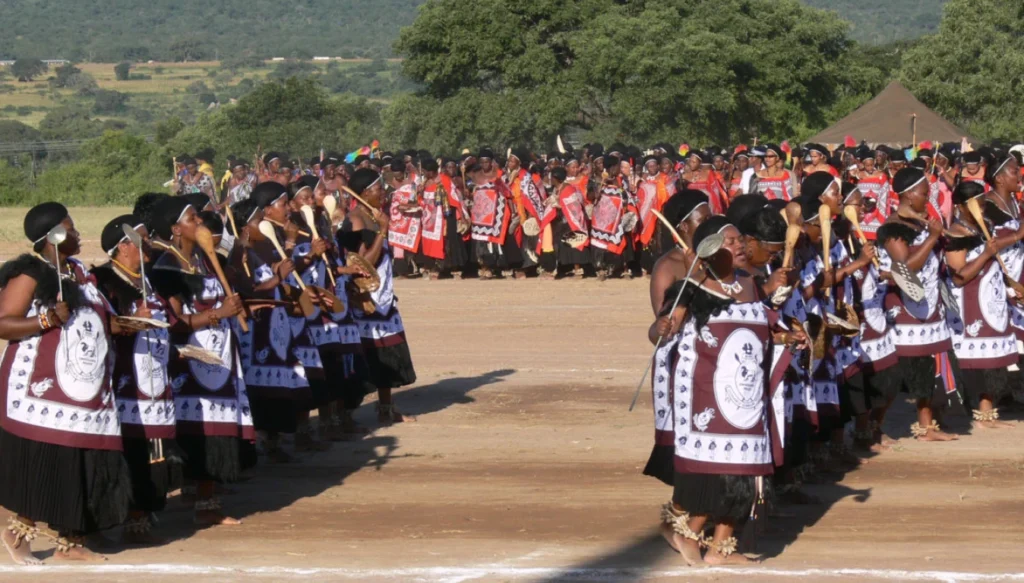
Women are responsible for gathering the fruit and fermenting it to produce the traditional Marula drink, before it is presented to the Queen Mother Ndlovukati in a formal royal ceremony. The festival transforms into a national occasion filled with folk songs, dances, and traditional rituals, attended by thousands of citizens from all over the kingdom, as a symbol of fertility, prosperity, and community unity.
Inkwala festival
The Incwala is the most important and sacred traditional festival in Eswatini, held between December and January with the start of the traditional year.
Although it is sometimes translated as the festival of the first fruits, it essentially represents a rite of renewing royal legitimacy, celebrating the king, and praying for the kingdom's prosperity.
The King personally participates in the multi-day ceremonies, which include warrior dances and traditional rituals, large parts of which are not allowed to be documented out of respect for their sacredness. The celebration is seen as a symbol of national unity and a renewal of the covenant between the King and the people.
Reed Dance
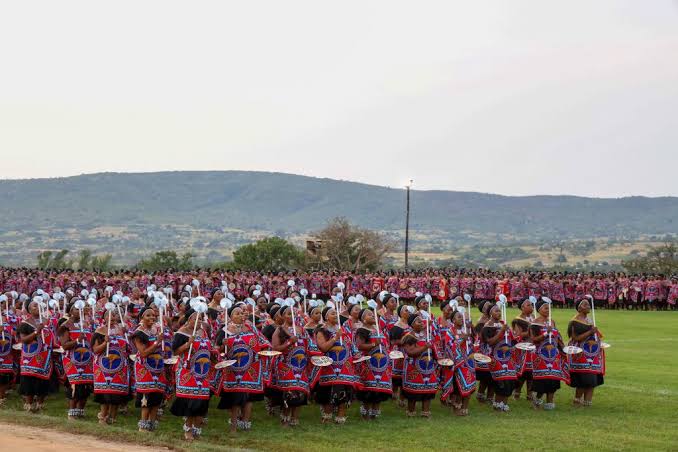
The Reed Dance is Eswatini's most famous and globally recognized festival, held annually between late August and early September.
Tens of thousands of unmarried girls participate in the festival, where they cut reeds and offer them to the Queen Mother to contribute to the maintenance of the royal residence, before performing traditional dances before the King and the royal family.
The celebration is seen as an occasion to celebrate Swazi culture and values of discipline and chastity, and it has become one of the most prominent tourist attractions in the kingdom.
Celebrations that Enhance National Identity
In addition to these ceremonies, Eswatini annually celebrates Independence Day on September 6th, along with a number of national and official occasions. These celebrations collectively represent a cornerstone for preserving the Kingdom's cultural heritage, reflect the pivotal role of the monarchy in political and social life, and contribute to revitalizing cultural tourism and attracting visitors from around the world.