The Kara people of Ethiopia: Body painting preserves identity and embodies cultural heritage
Body painting among the Kara people of Ethiopia
Written by: Ayman Ragab
The Kara people, who live in the Omo Valley region of southern Ethiopia, are one of the smallest ethnic groups in the country, numbering only a few thousand.
The population relies on agriculture and herding in a semi-nomadic manner, with their daily lives linked to the seasonal cycles of the Omo River.
The tribe grows crops such as sorghum and maize in the fertile flooded lands, and they also rely on fishing and raising limited numbers of livestock to meet their food needs.
Kara tribe
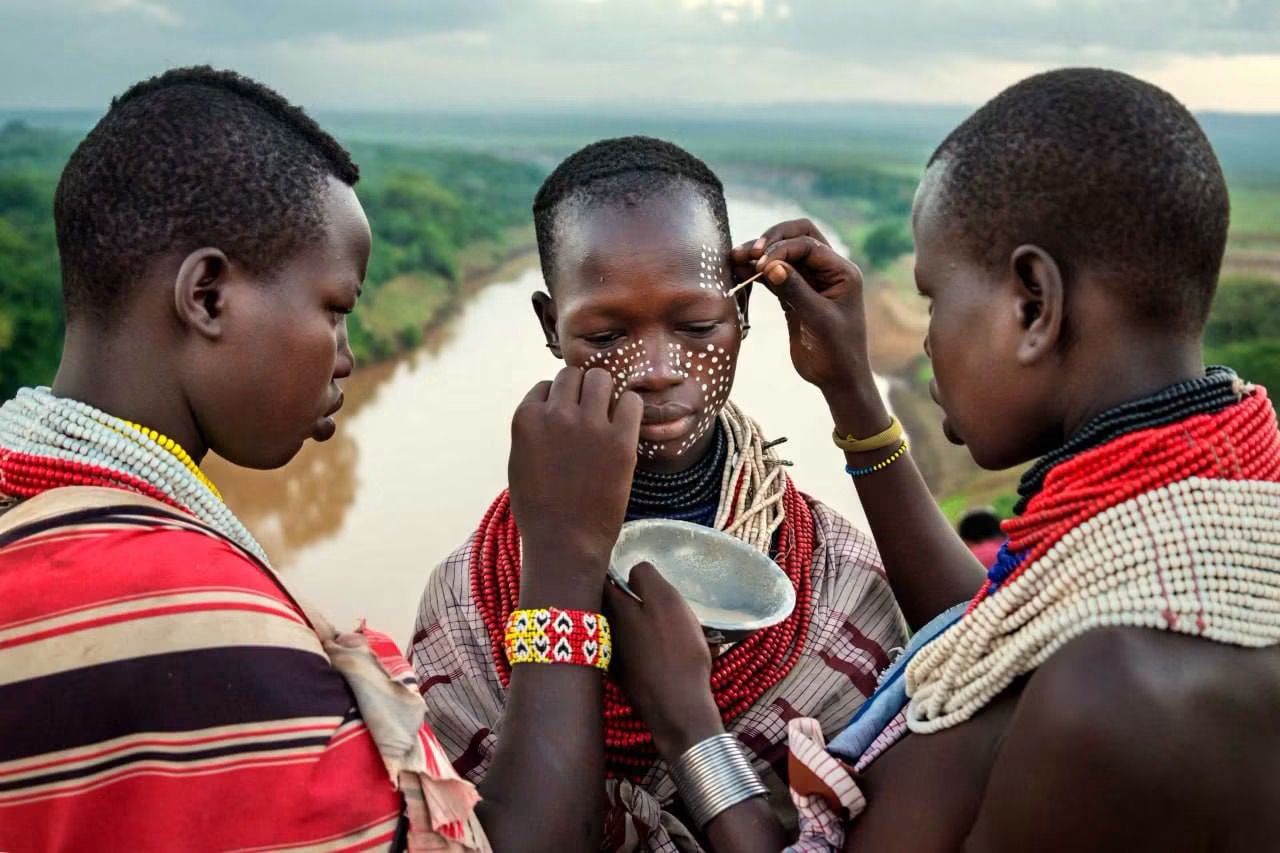
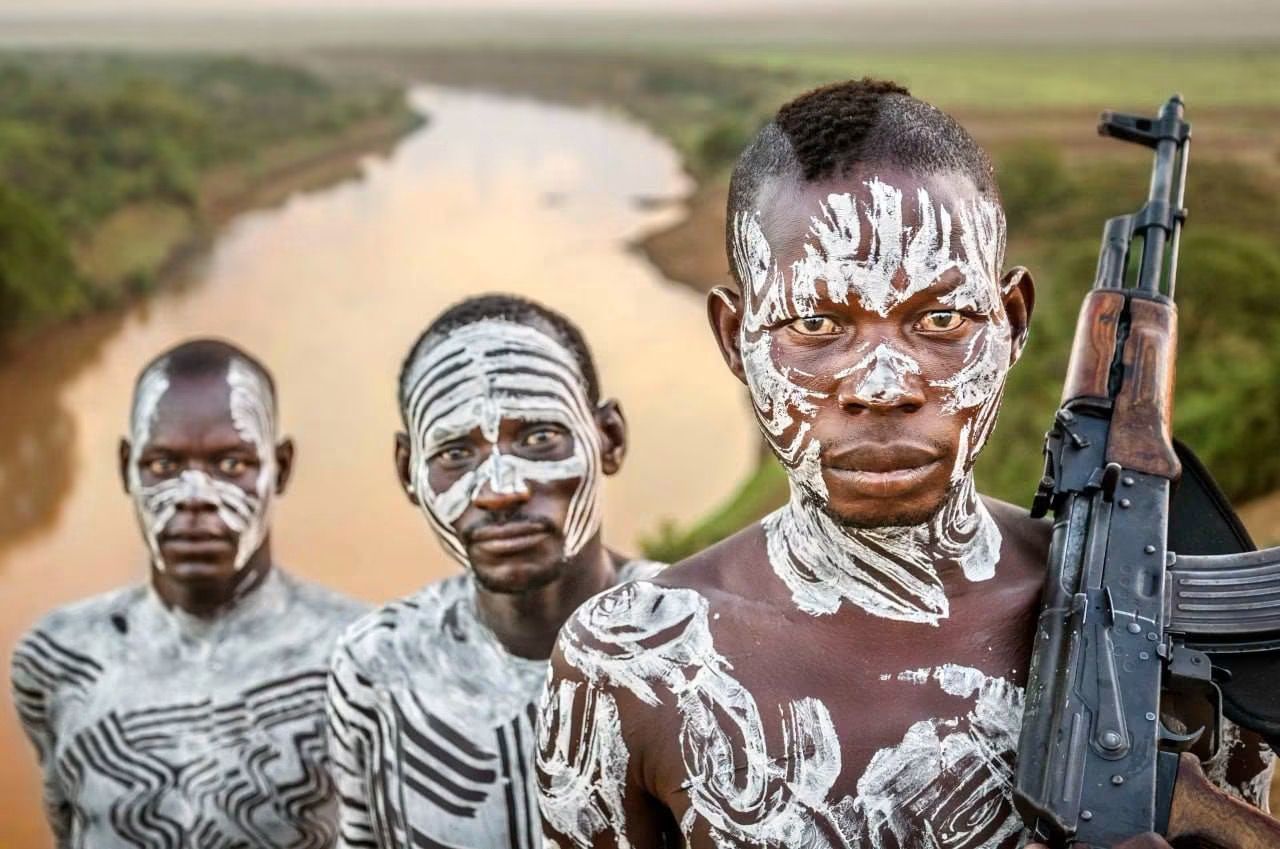
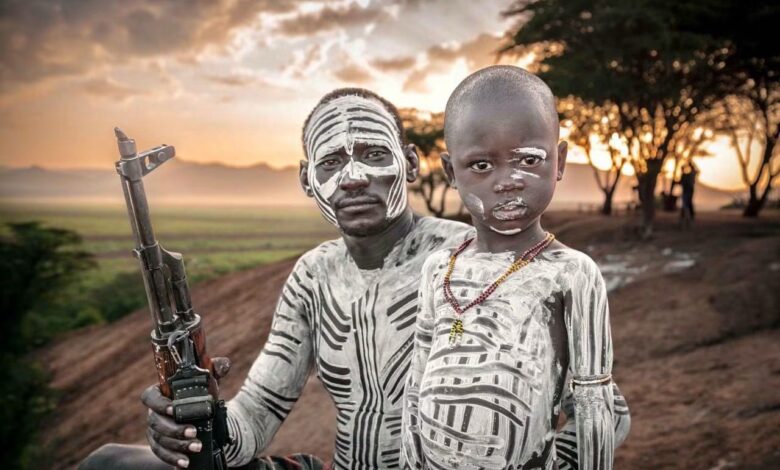
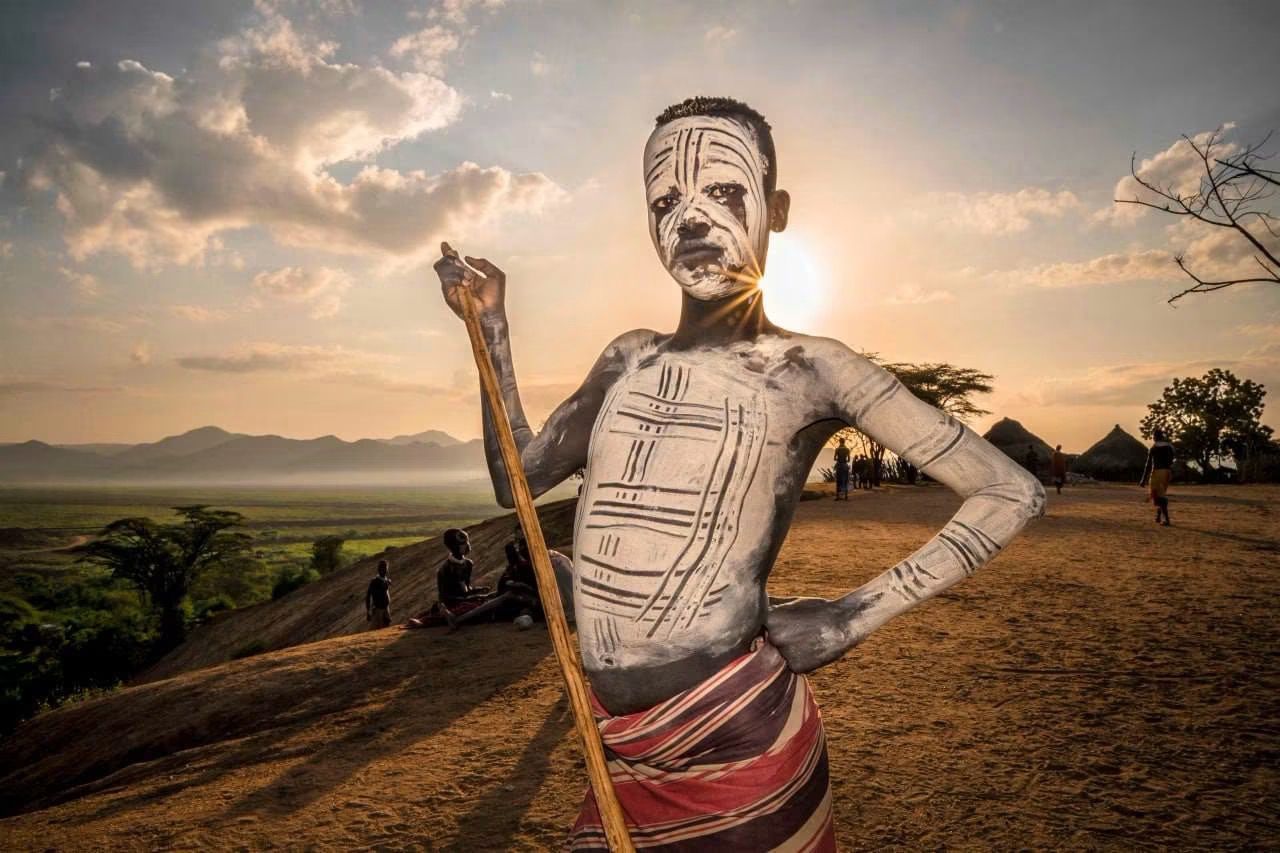
The Kara tribe, like many tribes in the Omo Valley, are known for their art of painting on the body and face using white chalk and other natural materials, whether in preparation for celebrations and ceremonies, as a means of self-expression, to demonstrate social status within the tribe, to prevent disease, or to attract a life partner.
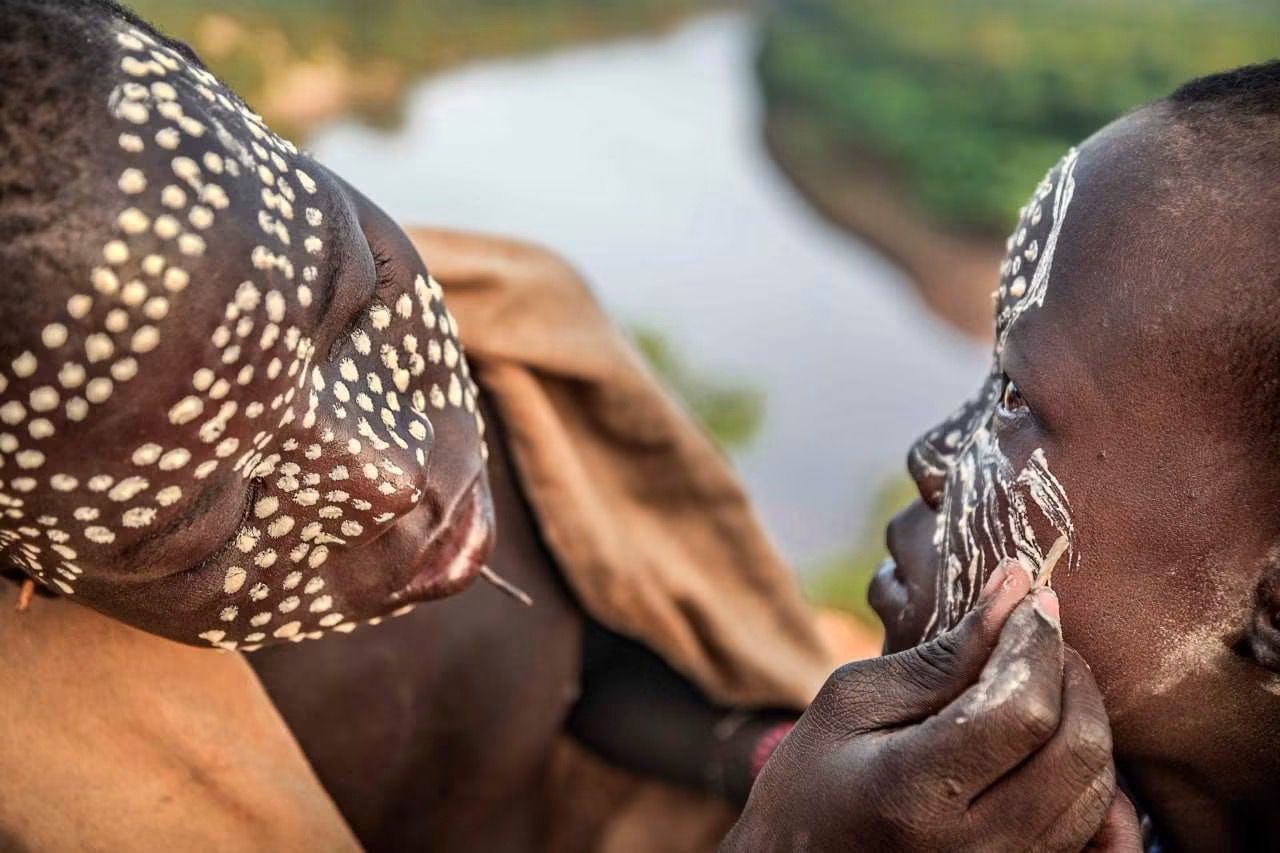
Body painting plays a prominent role in rites of passage, such as the transition from childhood to adulthood, as well as during communal celebrations related to agriculture or marriage. The designs carry personal significance and are often created spontaneously, transforming the body into a work of art that reflects psychological state, social status, and creativity.
Natural materials for drawing
The tribe uses natural materials from the surrounding environment. White chalk is mixed with yellow rocks, red iron ore, and coal to obtain various colors. Sometimes plant juices, ash, and animal fats are added to fix the colors on the skin and make them withstand the heat of the sun.
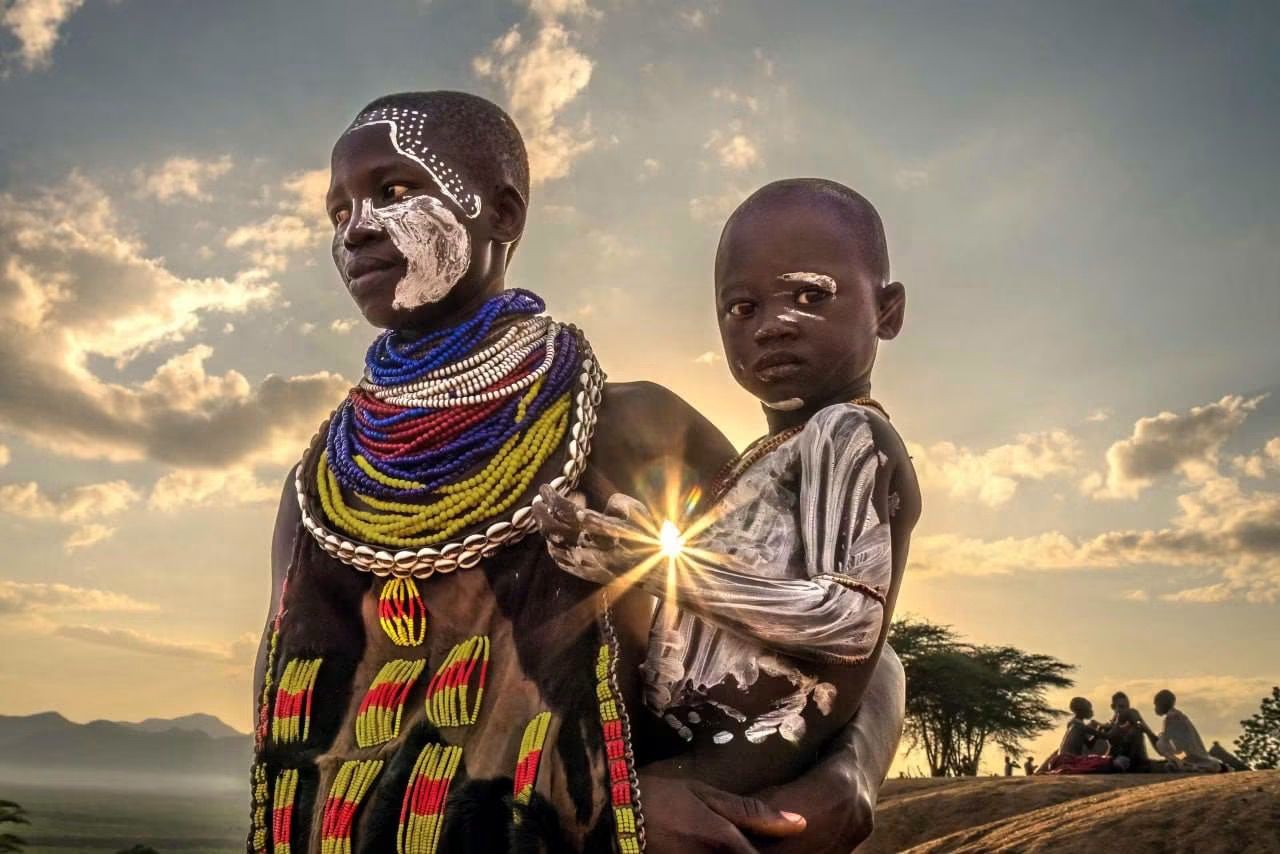
The use of natural resources is not limited to decorating the body, but extends to the manufacture of tools, weapons, and ornaments made from beads, shells, and metals.
Despite increasing contact with the outside world, the Kara people remain committed to their customs and traditions, which reflect a close connection to the land, society, and cultural heritage passed down through generations.