The IMF and Senegal open new talks amid financial crises
A technical mission begins a visit to Dakar to discuss reforms and public debt.
Written by: Mohammed Omran
They met Senegalese President Basiru Jumai Fai with Kristalina Georgieva, Managing Director of the International Monetary Fund.
A technical mission begins a visit to Dakar to discuss reforms and public debt.
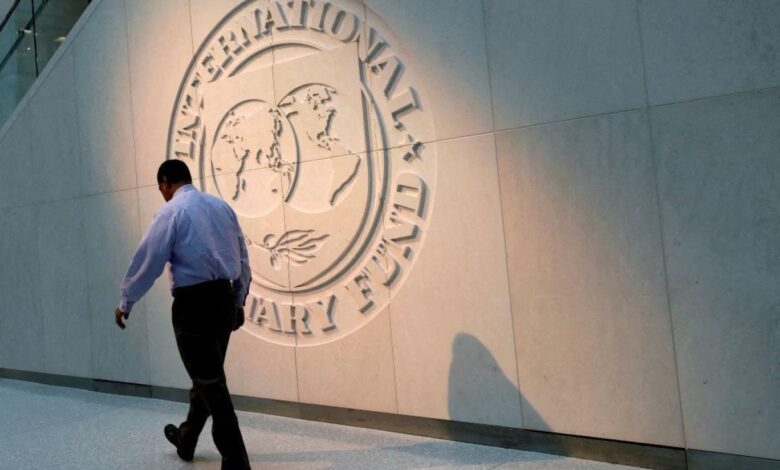
The International Monetary Fund (IMF), part of the Bretton Woods organization, announced that it will send a technical mission to Senegal starting June 15 to continue discussions with Senegalese authorities on the country's economic and financial situation.
Local press quoted Julie Kozak, the IMF's communications director, as saying that the mission aimed to reach a common understanding of Senegal's macroeconomic outlook, financing needs, and reform priorities.
The talks will also focus on the issue of public debt and measures to enhance the sustainability of public finances, in light of discrepancies in financial and budget data published in recent years.
The IMF indicated that it is continuing its discussions with the Senegalese authorities regarding their request for a new cooperation program, while emphasizing the need to continue the ongoing technical work.
This announcement comes at a time when Senegal continues its efforts to strengthen its macroeconomic stability and secure the necessary financing to implement its development priorities.
Discussions between Dakar and the IMF are expected to focus particularly on financial instruments that can support economic reforms and public finance management in the country.
The IMF stresses the need to complete the technical work and enhance economic stability.
In 2024, the new government accused the previous administration (2012-2024) of concealing the true extent of this alarming financial situation. As a result, the International Monetary Fund suspended its $1.8 billion (€1.6 billion) aid program, agreed upon in 2023, pending responses and commitments from the new authorities.
The Fund specifically pointed to serious errors in the reports relating to the budget deficit and public debt for the period 2019-2023.
Following several visits by the International Monetary Fund to Senegal to review the country's finances, the two sides began negotiations in mid-October regarding a new aid program.
In a separate development, Kristalina Georgieva, Managing Director of the International Monetary Fund, announced her intention to appoint Zain Zaidan as Director of the African Department, succeeding Abebe Amro Selassie, whose retirement date from the Fund is May 1, 2026.
In this regard, Georgieva said: I informed the Executive Board of my intention to appoint Zain Zaidan as Director of the African Department.
Zain possesses deep institutional knowledge, sound judgment, and strong policymaking experience, which will support the African administration's efforts to meet the growing demand for policy advice, financing, and capacity development in sub-Saharan Africa that is tailored to the region's needs.
In a statement, Georgieva added: “Zain possesses a balanced and thoughtful approach that has demonstrated remarkable competence in addressing difficult and sensitive challenges. I am confident in his ability to successfully lead the African Department, uniting efforts to support its mission and serve member countries.”.
Who is Zinedine Zidane?
Zidane is a Mauritanian national with over twenty years of experience in macroeconomic policymaking and international economic cooperation. He holds a PhD in applied mathematics and a postgraduate degree in macroeconomics from the University of Nice, according to data available on the International Monetary Fund website.
Zidan currently serves as Deputy Director in the Middle East and Central Asia Department, where he oversees the Fund’s activities in key Gulf economies and contributes to deepening strategic partnerships with key regional partners, including through the establishment of the IMF’s regional office in Riyadh in 2024.