“Morocco Market” Platform Launched in Ivory Coast to Boost Moroccan Product Reach
Written by: Ayman Ragab
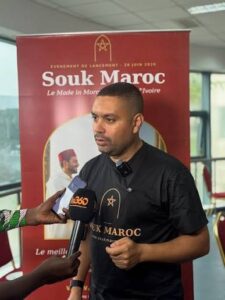
The Palace of Culture in Treichville, Abidjan, witnessed the launch of “Souk Al Maghrib” (Moroccan Market), a digital platform dedicated to marketing Moroccan products in Côte d'Ivoire, with the aim of facilitating their access to consumers. The platform relies on a fleet of vehicles equipped to handle various shipment sizes, ensuring delivery to major Ivorian cities, a move that reflects the continued growth in trade between Morocco and Côte d'Ivoire.
The launch of the platform comes amid a recovery in the e-commerce sector in Ivory Coast, where a partnership agreement was signed between the Moroccan Chamber of Commerce and Industry in Ivory Coast (CCIM-CI), the entity overseeing the project, and the Council of Moroccans Residing in Ivory Coast (ACMRCI).
Establishing a trade bridge between the two countries
The project aims to create a trade bridge between the two countries by bringing together Moroccan e-commerce companies operating in Ivory Coast within a unified platform, which will contribute to highlighting Moroccan expertise and organizing the display of products more efficiently.
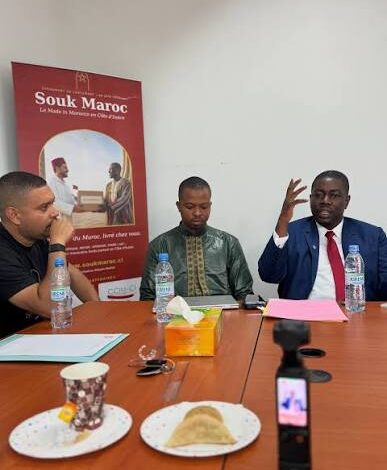
Hassan El Ouardi, founder of “Chipsen Market” and the project’s creator, explained that “Morocco Market” is a digital marketplace that allows any Ivorian consumer to easily access various Moroccan products, regardless of the sector, stressing that the initiative aims to expand the marketing channels for Moroccan products and enhance their distribution.
For his part, Wazani Shahidi confirmed that the platform will provide a digital window to showcase Moroccan products, explaining that the Ivorian consumer or any customer from the region will be able to find Moroccan products, such as “Boubou” or “Babouche”, as soon as they enter the platform.
“Market of Morocco” is not limited to commercial activity, but also seeks to serve members of the Moroccan community in Ivory Coast and producers in Morocco, by providing a modern digital space that allows them to market their products, increase their reach, and access a wide range of customers without the need for traditional points of sale.
Encouraging Moroccan traders to join the platform
To encourage Moroccan merchants to join the platform, they were granted free membership for the first year, facilitating their entry into the e-commerce sector. The platform's catalog is expected to feature a wide range of products, including argan oil cosmetics, leather goods, footwear, traditional clothing, handicrafts, and Moroccan cuisine.
The project was praised by the President of the Council of Moroccans Residing in Ivory Coast, Shahidi Wazani, and the President of the Moroccan Chamber of Commerce and Industry in Ivory Coast, Saad Hamzaoui, along with a number of members of the Moroccan community, who considered it to be of added value to Moroccan society and to contribute to strengthening economic relations between Morocco and Ivory Coast through the adoption of modern mechanisms to facilitate trade.

Hassan Al-Wardi emphasized that the platform operates on a trust-based model, with all transactions conducted via a cash-on-delivery system, allowing customers to pay for their orders after receiving and inspecting them. The platform also offers a full and free return policy within one to two weeks if the customer is not satisfied.
To ensure efficient delivery operations, the project organizers partnered with Shipsin Côte d'Ivoire, a logistics and operations company that has been active in the Ivorian market for six years. The company's director, Diaby Fadjiguiba, confirmed their readiness in terms of technical and logistical capabilities to provide high-quality delivery services.
Fadjiguiba explained that the delivery services cover the greater Abidjan area and a number of major cities, including Bouaké, Yamoussoukro, San Pedro and Korhogo, with a digital tracking system and a fleet of vehicles equipped to accommodate different parcel sizes, in addition to partnerships with reliable transport companies to ensure that orders reach other cities.
Based on its experience, the “Morocco Market” platform confirms its ambition to expand in the future into markets connected to the West and Central Africa region.
B2C type e-market
Consumers can access the platform via the website www.soukmaroc.ci, which is the first B2C e-market in Ivory Coast dedicated entirely to local Moroccan products and authentic crafts.
Data from the Moroccan Export Agency indicates that the trade balance between the two countries is clearly in Morocco's favor, as the Kingdom's imports from Ivory Coast amounted to 649 million dirhams in 2024 compared to only 128 million dirhams in 2020. In contrast, Ivory Coast's imports from Morocco increased from 2.373 billion dirhams to 3.575 billion dirhams during the same period.
Morocco imports mainly cocoa, timber, natural rubber and tropical fruits, such as cashews, from Ivory Coast, while Ivory Coast imports phosphate fertilizers, phosphoric acid, canned fish, flour, wheat, dairy products, cement, electrical cables, packaging materials and plastic products from Morocco.