Written by Omnia Hassan
Football fans around the world are turning their eyes to the American city of Atlanta, where its stadium will host a heavyweight clash next Tuesday between the Egyptian national team and its Argentine counterpart in the Round of 16 of the 2026 World Cup. This match carries great aspirations for the Pharaohs and a strong desire from the world champion to continue their journey defending the title.
A different path to the summit
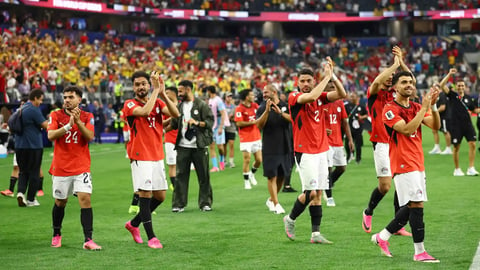
The Egyptian national team enters the match with high morale after achieving a historic feat by eliminating Australia on penalties, securing its place among the top 16 teams in the world. As for Argentina, they reached the same round after a tough victory over Cape Verde, in a match that revealed some weaknesses in the Tango's ranks.
Absences worry the elected officials
Technical director Hossam Hassan faces a significant defensive challenge after the injuries of the duo Mohamed Abdelmonem and Ahmed Fetouh, which necessitates emergency adjustments in the backline. Captain Mohamed Salah is also entering the match suffering from a muscle injury that could affect his full readiness.
Conversely, left-back Nicolás Tagliafico is absent for Argentina, while Lionel Messi continues to deliver exceptional performances, remaining the Argentine national team's most prominent weapon in the tournament.
Tactical battle in midfield
The match is expected to be a tough midfield battle, with the Egyptian national team relying on the efforts of Marwan Attia and Emam Ashour to disrupt Argentina's build-up play, while depending on defensive organization and quick counter-attacks, especially through Omar Marmoush's runs.
As for Argentina, they will seek to impose possession and take advantage of individual skills and quick passes to exploit gaps in the Egyptian defense.
What do the AI predictions say?
According to an analysis conducted by artificial intelligence models based on the two teams’ results and technical statistics, Argentina appears to be the favorite to advance with a probability of 72%, compared to 28% for the Egyptian national team.
Despite these expectations, the World Cup matches confirm that the language of numbers doesn't always decide the outcomes, as less favored teams have often succeeded in tipping the scales and creating historic upsets.
The Egyptian national team hopes to repeat this scenario, relying on its fighting spirit and the support of its fans, in order to write a new chapter in the history of Egyptian and African football on the biggest football stages.