Challenges Facing Washington in Congo's Minerals: Peace Pressure on Rwanda and China's Obstacle

Ahmed Salem
International competition for natural resources is escalating in the Democratic Republic of Congo, which possesses one of the world's largest reserves of strategic minerals, primarily cobalt, used in the manufacturing of batteries and modern technology.
In the fierce competition, it seeks US To enhance its presence in the Congolese mining sector, in an attempt to reduce its reliance on China-controlled supply chains, as part of a broader struggle to secure vital resources, where competition is no longer limited to the economic sphere but has extended to political and security tools.
But greater challenges stand between America and its influence in the Congolese mining sector, due to its connection with the ongoing conflict in eastern Congo, where the interests of international powers overlap with complex local conflicts.
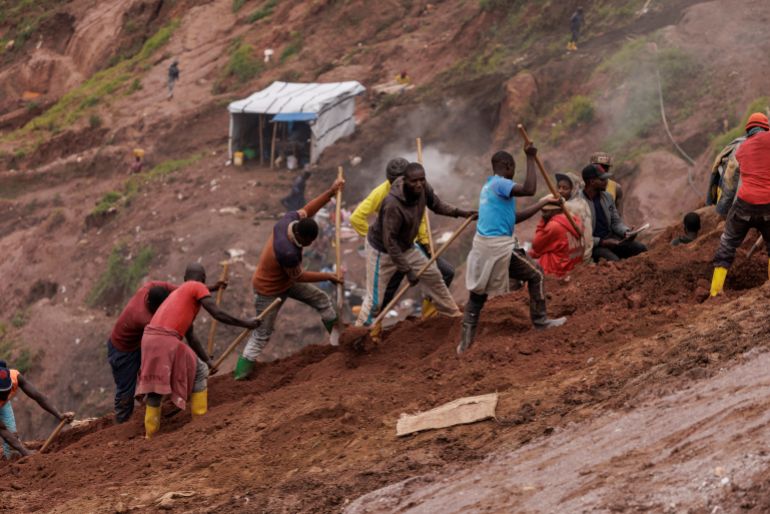
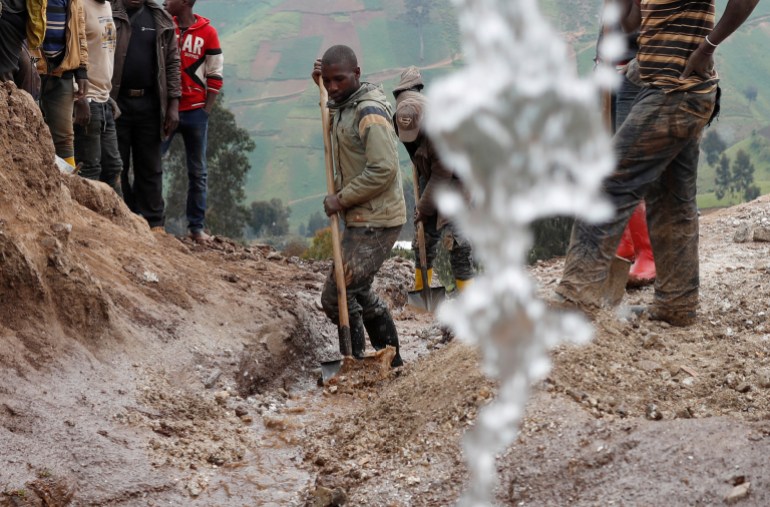
Attempts to achieve stability or support peace processes often overlap with the pursuit of control over mineral-rich regions, making the conflict more complex and prolonged.
In this context, an analytical report published by the American magazine Foreign Affairs revealed that the strategy adopted by the administration of U.S. President Donald Trump, based on linking the end of the war in eastern Democratic Republic of Congo to securing U.S. access to critical minerals, faces increasing challenges that could lead to the stalling of the peace process and the strengthening of authoritarianism in Kinshasa, without achieving decisive strategic gains in countering Chinese influence in mineral supply chains.
A three-decade conflict
The report reviews the roots of the conflict in the eastern Democratic Republic of Congo, which date back about three decades, when the Rwandan army first intervened in 1996 under the pretext of pursuing armed groups involved in the 1994 Rwandan genocide. Since then, Kigali has supported four successive rebel movements, most notably the March 23 Movement (M23).
The report finds that, despite the declining military threat posed by these groups to Rwanda, Kigali has continued its intervention in eastern Congo for multiple reasons, including establishing a buffer zone on its border, exploiting rich natural resources, and leveraging the conflict to address its internal challenges and justify tightening its security grip.
The return of M23 and the escalation of war
According to the report, the «M23» movement resumed its military operations in late 2021 after years of calm, which led to the displacement of millions of civilians. Meanwhile, regional initiatives led by the East African Community, the African Union through Angolan mediation, and the Southern African Development Community have failed to achieve a real breakthrough due to the weakness of the Congolese army and the adherence of both Kinshasa and Kigali to hardline positions.
The report indicates that the fall of the city of Goma into the hands of the movement, just one week after President Trump's second term began, revealed Rwanda and the «M23» movement's exploitation of the transitional vacuum within the US administration before its new team was fully formed.
Trump's Approach: Peace for Minerals
The report confirms that the Trump administration adopted an approach based on linking political settlements with economic interests, making U.S. support for the Congo conditional on granting American companies priority in investing in cobalt, copper, and lithium projects, while using sanctions and threats to halt aid as tools of pressure on the parties to the conflict.
In December 2025, Washington sponsored the signing of a peace agreement between Congo and Rwanda, coinciding with an agreement for regional economic integration that included funding for a hydroelectric power project, the establishment of joint national parks, and the development of a regional mineral supply chain, in addition to a strategic partnership granting U.S. companies and their allies priority in certain critical mineral projects.

Out-of-the-box diplomacy
The report notes that Trump assigned his Africa advisor, Moussa Bolis, to lead mediation between Kinshasa and Kigali, in parallel with negotiations hosted by Qatar between the Congolese government and the «M23» movement.
The report believes that Blouze bypassed the traditional decision-making mechanisms within the National Security Council and the Department of State, leveraging his direct proximity to the president. This allowed for swift sanctions to be imposed on prominent Rwandan figures, as well as on former Congolese President Joseph Kabila, before a joint declaration was reached in June 2025, followed by a framework agreement with the «M23» movement in November of the same year.
Peace in exchange for economic privileges
The report indicates that the Kinshasa government presented Washington with a clear offer based on a simple equation: help stop Rwandan military pressure in exchange for granting American companies broad concessions in the mining sector.
This was translated into a series of agreements between the Congolese state mining company «Gecamines» and a number of international companies, with the support of the U.S. International Development Finance Corporation.
The report places these steps within the «America First» strategy in Africa, which relies on expanding the role of the U.S. International Development Finance Corporation after raising its capital ceiling to $205 billion, to finance strategic projects in Angola, Rwanda, Zambia, and the Congo.
At the forefront is the «Lobito Corridor» project, which aims to connect the copper and cobalt belts in Congo and Zambia to the Atlantic Ocean and reduce reliance on Chinese infrastructure.
Unprecedented pressure on Rwanda
The report emphasizes that Washington exerted unprecedented pressure on Rwanda by imposing sanctions on Rwandan army officials and companies involved in gold trading, which in turn pushed the M23 forces and the Rwandan army to withdraw from some areas.
However, the report indicates that these withdrawals were more tactical than strategic, as military operations continued, with increased use of drones by both sides and civilian casualties, including a UNICEF employee who was killed in a raid near the city of Goma.
Pressure imbalance
Among the most prominent criticisms raised by the report is that Washington focused its pressure on Rwanda, while showing greater tolerance for the hardening of the Congolese government, which still insists on the full disarmament of Rwanda and the «M23» movement before making any political concessions, despite the movement's military superiority on a number of fronts.
The report believes this approach encourages Kinshasa to reject compromises and hinders the chances of reaching a sustainable political settlement.
Concerns about entrenching authoritarianism
The report also warns that U.S. policy may indirectly contribute to strengthening the authoritarian tendencies of President Félix Tshisekedi, who since October 2024 has begun laying the groundwork to amend or replace the constitution to allow him to run for a third presidential term.
The report quotes Congolese officials who believe that the Trump administration may tolerate Tshisekedi's continued hold on power in exchange for the maintenance of U.S. privileges in the metals sector, as well as Kinshasa's cooperation in receiving migrants deported from the United States, a process whose first batches arrived in the capital, Kinshasa, last April.
China... The Biggest Obstacle
Despite the expanding American presence, the report emphasizes that China still dominates African mineral value chains, accounting for over two-thirds of the Congo's copper and cobalt exports, and more than half of the continent's exports of bauxite, manganese, tantalum, and tungsten, in addition to its control over refining and manufacturing capabilities.
The report believes that US investment increases, no matter how large, will not be sufficient in the short term to displace China from its dominant position, making the US bet part of a long-term strategic competition, rather than a rapid shift in the balance of power.
Weakness of American Diplomatic Tools
The report also points out that the continued vacancy of 39 U.S. embassies in Africa, including the U.S. embassies in Congo and Rwanda, limits Washington's ability to manage a complex issue like the crisis in eastern Congo.
He adds that US policy appears contradictory, as Washington continues to provide health assistance to Rwanda and sign agreements for cooperation in the field of civilian nuclear energy, while simultaneously imposing sanctions on the Rwandan army, which weakens the effectiveness of American pressure tools.
In light of this reality, observers fear that linking the end of the war to economic interests will prolong the conflict instead of resolving it, turning natural resources into a driver of conflict rather than an input for development and stability.