Kwame Nkrumah: The spiritual father of African unity and the architect of the independence of the African continent.
Who is Kwame Nkrumah?
Written by: Mohamed Ragab
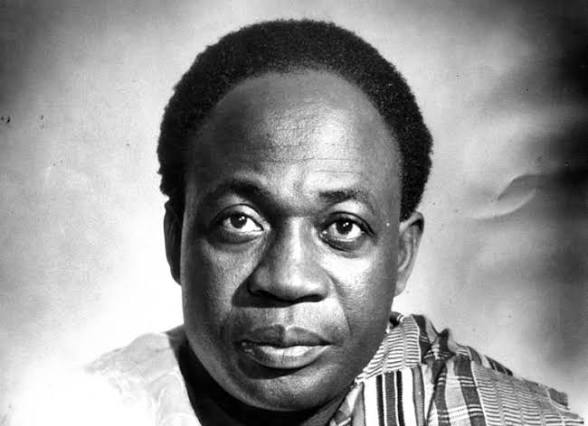
African peoples and global liberation movements commemorate the late Ghanaian leader Kwame Nkrumah, the man who changed the political map of Africa in the twentieth century. Nkrumah was not just the president of a newly independent state, but a strategic thinker and a revolutionary visionary whose influence extended beyond his country to encompass the entire continent, rightfully earning him the title of “Father of African Unity.”.
From student activism to leading the revolution against colonialism
Kwame Nkrumah was born in 1909 in the Nkrumah region of the Gold Coast (present-day Ghana).
He was educated in the United States and Britain, where he was influenced by anti-imperialist ideas and global liberation movements.
During his time in London, he emerged as a pivotal figure in organizing the Fifth Pan-African Conference in Manchester in 1945, which laid the foundation for decolonization in Africa.
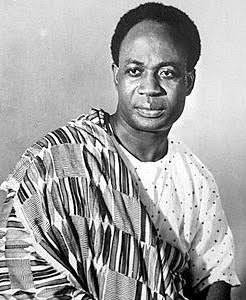
Driven by a burning desire for liberation, Nkrumah returned to his homeland and founded the People's Consensus Party. He led a series of peaceful protests and strikes known as Affirmative Action, which resulted in his arrest by British authorities. Despite his imprisonment, his party achieved a landslide victory in the elections, forcing Britain to release him and appoint him Prime Minister in 1952.
A day that changed the history of Africa
On March 6, 1957, Kwame Nkrumah declared Ghana's independence as the first country to gain its freedom in sub-Saharan Africa.
In his famous historic speech, Nkrumah uttered the phrase that has been repeated by generations: “The independence of Ghana is meaningless unless it is linked to the complete liberation of the entire African continent.”.
During his reign, the Ghanaian capital, Accra, became a hub for national liberation movements, and Ghana provided financial, political, and military support to many African countries that were resisting British and French colonialism.
United States-Africa Project
Nkrumah believed that small African states could not withstand the major colonial powers on their own. Therefore, he was a strong advocate for the establishment of the "United States of Africa," a project aimed at integrating the continent into a single political, economic, and military entity with a unified army and a common currency.
His diplomatic efforts culminated in cooperation with prominent African leaders in the establishment of the Organization of African Unity (now the African Union) in the Ethiopian capital, Addis Ababa, in 1963, to serve as the official platform for defending the continent’s issues.
Nkrumah's contributions were not limited to politics; he was also a prominent intellectual theorist. He authored his famous book, "Neo-Colonialism: The Final Stage of Imperialism," in which he warned of the danger of the colonizer relinquishing political power while maintaining economic dominance through transnational corporations and debt.
The end in exile and the eternal legacy
In 1966, while Nkrumah was on an official visit to China, opposition forces backed by foreign powers took advantage of his absence and led a military coup against him.
Nkrumah lived the rest of his life in exile in the Republic of Guinea, until he died in Romania in 1972 after contracting an illness.
Despite his passing, Kwame Nkrumah remains an inspiring symbol of African liberation and dignity, and his body rests today in a majestic national mausoleum in Accra, a testament to the life of a leader who lived for the freedom of an entire continent.