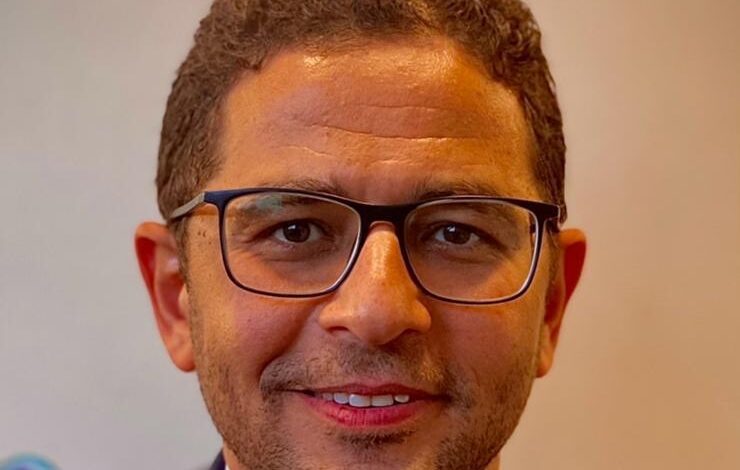
Hatem El Rouby writes: Arab-African cooperation... a partnership of peoples and the youth's bet on a shared future
When we talk about cooperation The Arab-African relationship is not merely a fleeting diplomatic connection or a matter of rhetoric. We are talking about a shared geographical expanse, an intertwined history, and a future that neither region can build alone. The common challenges of food security, climate, energy, migration, and youth necessitate a single logic: dialogue first, then trust, and finally, joint action.
From this standpoint, the Ambassadors of Voluntary Work Foundation for Sustainable Development was interested in strengthening the bonds of cooperation between Arab and African youth, and organizing the first Arab-African camp to go beyond slogans and turn the values of cooperation into a practical experience. This camp focused on filmmaking and screenwriting.
The training of young people on the tools of visual storytelling took place in the Wadi El Rayan Reserve in the Egyptian governorate of Fayoum, because cinema is a language that transcends borders and conveys the cultures of countries across borders. The participants came up with ideas for short films that reflect issues of identity, women, the environment, and migration, in an attempt to narrate the continent and the region from the perspective of its people, not from the lens of the other.
Then came the organization of the second camp within the framework of the Egyptian presidential initiative “Get Ready for Green”, linking young people directly to issues of climate, afforestation and the circular economy. It was not theoretical lectures, but rather field workshops and the creation of local solutions applicable in the villages and cities of the participants in cooperation with the Ministry of Social Solidarity and Environment and the United Nations Volunteers program. The result was not just certificates of appreciation, but a network of relationships, and small partnerships that began to form between the youth of the participating countries, including Chad, Djibouti, Somalia, Palestine, Iraq, Jordan, Egypt, Libya and Sudan. This is the beginning of true peace: for people to get to know each other, then to trust each other, then to work together.
This youth movement does not grow in a vacuum. It is based on major visions that give us a framework and momentum, including the African Union’s Agenda 2063, which places the goal of a united, prosperous and peaceful Africa at the heart of its priorities, and emphasizes the role of youth and women as an engine for transformation, as well as the Arab Initiative 2045, which aims to renew joint Arab action and move from coordination to integration in the economy, culture and human development.
Such efforts come in light of existing Arab-African agreements, from periodic summits to funding mechanisms, to provide a strong institutional foundation and everyone’s cooperation to activate them on the ground through tangible projects.
Recent years have witnessed a practical momentum in the Arab-African partnership that deserves attention, and I would like to highlight some important milestones, including:
The Saudi Fund for Development has committed to providing more than $41 billion to Africa, including $10 billion in export financing and $5 billion in direct development financing. The Fund has signed 14 development agreements in African countries worth over 2 billion riyals, focusing on infrastructure, energy, and agriculture.
The Islamic Development Bank Group also signed a memorandum of understanding in Cairo to promote trade and investment flows between Arab and African countries through information exchange, risk sharing, and capacity building.
In Algeria, the Minister of Finance announced his country’s commitment to allocating $1 billion to finance development projects in Africa, in addition to major projects such as the Trans-Saharan Highway, the Nigeria-Algeria Gas Pipeline, and the railway network extending towards neighboring countries.
The Arab-African Trade Bridges Program also launched a $1.5 billion food security program to boost agricultural production and improve livelihoods across the Arab and African regions. Support was also agreed for the Joint African Agro-Industrial Parks Program, aimed at increasing productivity and localizing agricultural technology.
On the environmental and climate front, COP27, hosted by the City of Peace, Sharm El Sheikh, in the Arab Republic of Egypt, was a pivotal event that demonstrated new partnerships to expand waste and water management solutions and reduce emissions by more than 400,000 tons of CO2.
At COP28, hosted by the United Arab Emirates, a push was made for a “fair and inclusive energy transition” for Africa, linking climate goals with a green manufacturing agenda and the activation of the Continental Free Trade Area.
On the social and cultural front, the African Reinsurance Corporation pledged to allocate 2% of its net profits to support development initiatives on the continent, including disaster risk financing, and the African Solidarity Fund established $560 million in credit lines to support housing and empower women and youth in West Africa.
We hope that all these governmental and institutional efforts will be sustained and highlighted in the Arab world and Africa, so that they become a tangible reality.
Based on our social responsibility, we launched the “Ambassadors” magazine in our organization, Ambassadors of Voluntary Work for Sustainable Development, as a platform for Arab and African youth to read, write and publish.
We publish investigations and opinions on the challenges and solutions to sustainable development issues and how young people in their communities translate them into initiatives.
Regarding the issue of asylum and displacement, from a humanitarian perspective, far removed from political conflicts and disputes, and also the youth's vision regarding empowering women and their role in the economy, society, and volunteer work as a supportive lever for the efforts of governments, not as a replacement for them.
We hope and strive that these initiatives will provide a space where young Arabs and Africans can practice expressing their opinions and ideas, and learn that their voice is part of public policy.
I conclude by saying that optimism is not a luxury; it is a decision based on facts. When we see Arab funding directed towards Africa, infrastructure projects connecting the North and South, and young people sitting together to write a brighter future, we are on the right path, one we hope the world will take notice of.
The challenge is to continue transforming joint efforts into projects, projects into opportunities, and opportunities into mutual trust. We must always remember that Arab-African cooperation is not a file gathering dust; it is a daily reality for peoples who share water, sky, and destiny.
From my position as Chairman of the Board of Trustees of the Ambassadors Foundation, I believe that our bet on youth is the right bet. Because they will carry Agenda 2063 and the Arab Peace Initiative 2045 not as mere documents, but as a roadmap they aspire to achieve with their own hands. .
By: Hatem Al-Roubi
Chairman of the Board of Trustees of the Ambassadors of Voluntary Work Foundation for Sustainable Development