
Written by: Ayman Ragab
History immortalizes the names of heroes and always celebrates the teams that raise the flag. The CupBut on the other hand, there remain exceptional stories of great teams that made football glory without succeeding in achieving the biggest title in the game.
As the 2026 FIFA World Cup approaches, it is a reminder that the most important prize in football does not always go to the most talented or creative teams.
History records the names of the winners who celebrate with the trophy and parade it around their cities, but some of the greatest football stories were not written in the name of the victors, but rather for teams that reshaped football itself without winning the world title.
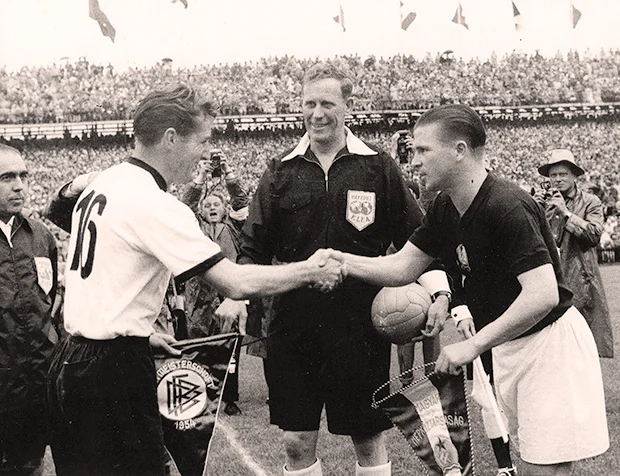
With only two days left until the start of the World Cup, two countries stand out clearly as the two greatest teams that have not succeeded in winning the World Cup: the Netherlands and Hungary.
Both teams have brought about a real football revolution, produced legends, and stood on the verge of winning the title more than once, especially the Netherlands, which had the opportunity repeatedly on more than one occasion.
But in the end, neither of them succeeded in reaching the pinnacle of football.
The Netherlands: The greatest football revolution without a World Cup
It is difficult to find a country that has influenced football as profoundly as the Netherlands, as its influence has not been limited to tournaments, but has extended to changing the way football is played itself.
The Dutch introduced the world to the concept of "Total Football," a revolutionary tactical style based on constant movement, positional interchange, and high skill. This approach has inspired generations of coaches, including Pep Guardiola and Marcelo Bielsa.
Johan Cruyff was at the heart of this revolution. He led the Dutch national team to one of the greatest ever seen at the 1974 World Cup in West Germany. The Netherlands delivered a dazzling performance, playing a style far ahead of its time.
The team reached the final as the strongest candidate to beat West Germany, and even took the lead before any German player touched the ball, after a penalty kick that came from an organized attack since the beginning of the match.
But football is cruel, and West Germany staged a comeback to win 2-1, denying the Netherlands the title. Four years later, the Dutch returned to the final in Argentina in 1978, but the result was the same, and they lost again to the hosts after extra time.
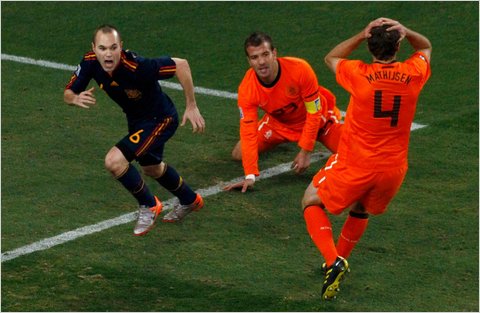
The third opportunity came in South Africa in 2010, led by a generation that included Wesley Sneijder, Arjen Robben, Robin van Persie, and Mark van Bommel. The team succeeded in reaching the final against Spain.
The dream remained alive until the 116th minute, when Andrés Iniesta scored the decisive goal that secured the title for Spain. This marked the Netherlands' third defeat in a final.

Three finals, three losses. No other team has ever reached a World Cup final more times without winning the title.
The tragedy of the Netherlands is not due to a lack of talent, but rather to the fact that its golden generations clashed with opponents at the peak of their level in crucial moments.
Nevertheless, the Netherlands' influence on football remains one of the greatest legacies in the history of the game, even if the World Cup title remains absent.
Hungary: The greatest team that never finished its story
If the Netherlands represents the greatest unfinished revolution, then Hungary may be the greatest unfinished football dynasty of all time.
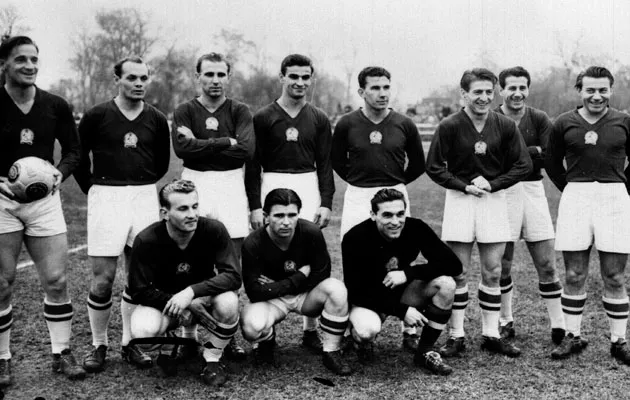
Before the emergence of Brazil and the ”Joga Bonito”, Hungary was the dominant force in world football. The “Mighty Hungarians” in the early 1950s were a virtually invincible team.
Led by Ferenc Puskás, Sándor Kocsis and Nándor Hidegkuti, Hungary produced an amazing attacking style of football that later influenced the development of the game globally.
The team played 32 matches without defeat, won the Olympic gold medal, and was the first foreign team to defeat England on its home ground, after winning 6-3 at Wembley, then 7-1 in Budapest.
Prior to the 1954 World Cup in Switzerland, Hungary was considered the undisputed strongest team. They reinforced this perception during the tournament with a resounding 9-0 victory over South Korea, followed by an 8-3 win against West Germany, and then eliminating Brazil on June 27, 1954, in the "Battle of Bern.".
Then they beat Uruguay in the semi-finals, scoring 27 goals in 5 games, looking on their way to the title.
But the final held a major shock, as Hungary took a two-goal lead, before losing 3-2 to West Germany in one of the most famous matches in history, known as the “Miracle of Bern”.
Many historians consider this team to be the greatest that never won the World Cup.
Later, political turmoil led to the disintegration of this golden generation, and Hungary was unable to return to those levels again, leaving that period as one of the biggest “what if” stories in the history of football.
Greatness that transcends heroism
Although the World Cup is considered the ultimate benchmark for measuring success in football, history is not always written by titles alone.
The Netherlands gave football a new philosophy that changed the style of play globally, while Hungary contributed to establishing the features of modern football decades before its development.
Neither team won the World Cup, but their impact on the game was deeper and more lasting than that of many champions.
As the tournament kicks off, their stories remain a reminder that greatness is not always measured by trophies, and that some of the teams that did not win may be the ones that made the world love football more than others.