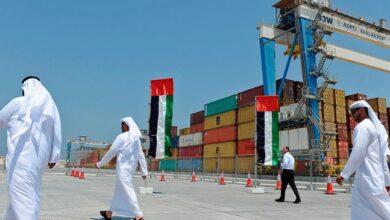
What is happening in the Strait of Hormuz? Attacks on ships ignite global oil prices
Sudden jump in oil prices... Attacks on tankers bring fears back to the markets
Written by: Badr Ahmed
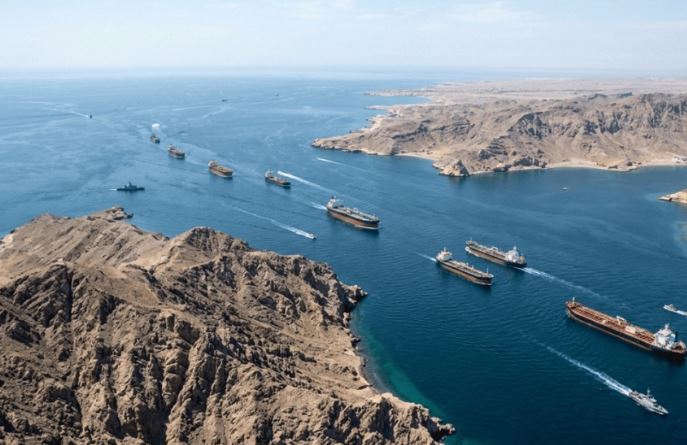
Global oil prices rose by more than 2% during Tuesday’s trading, driven by escalating security tensions in the vicinity of the Strait of Hormuz, following reports of attacks on ships near the waterway—which is one of the world’s most important energy trade routes— which brought the geopolitical risk premium back to the markets.
Brent crude futures rose by about $1.86, or 2.58%, to $73.85 per barrel, while U.S. West Texas Intermediate (WTI) crude rose by $1.73, or 2.52%, to $70.28 per barrel.
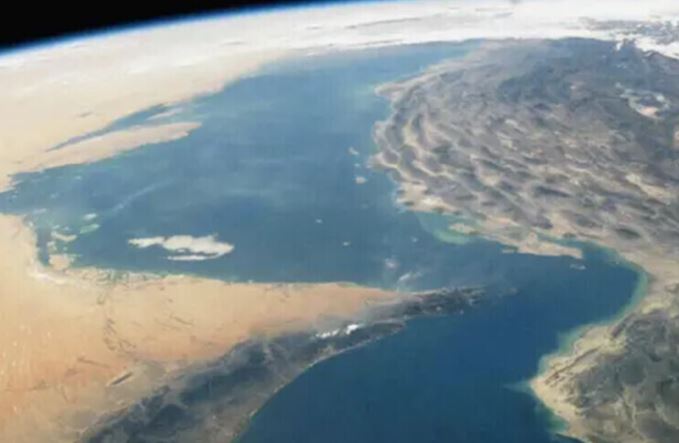
Analysts believe that concerns about disruptions to shipping traffic in the Strait of Hormuz were the main driver of the price increases, given the global markets' reliance on the strait, through which about a fifth of the world's oil and LNG supplies pass.
Jump in oil prices
Ole Hansen, an analyst at Saxo Bank, said that reports related to the targeting of a ship in the Strait of Hormuz have reintroduced some of the geopolitical risk premium into oil prices, noting that the size of this premium is still less than what markets saw during previous crises, but it represents the most influential factor in current price movements.
These developments come after reports that a Qatari liquefied natural gas carrier and a Saudi-flagged crude oil tanker sustained damage near the Strait of Hormuz, following claims that Iran's Revolutionary Guard fired missiles at ships in the waterway overnight.
In this context, Qatar held Iran legally responsible for the attack and any resulting damages or repercussions, in the first incident targeting a Qatari LNG carrier since the outbreak of the Iranian war in late February.
Andy Liebow, president of Liebow Oil Associates, said security risks in the region remain high, noting that shipping companies will re-evaluate the feasibility of oil tankers transiting the Strait of Hormuz given the current threats.
Politically, the crisis has cast a shadow over the negotiations between Washington and Tehran, as the Iranian Foreign Minister affirmed that talks on reaching a final agreement would not continue if the United States persisted in its policy of threats, following statements by U.S. President Donald Trump who vowed to "end the mission" if an agreement was not reached.
In contrast, analysts at UBS Bank warned that continued attacks on ships could lead to a decline in oil exports from the Middle East region, which could increase pressure on global energy markets in the coming period.
Despite the current price increases, Societe Generale expects the global oil market to shift from a deficit to a surplus starting in late 2026 and throughout 2027, with supply growing at a faster pace than global demand. This has led the bank to lower its oil price forecasts to $75 per barrel in the fourth quarter of 2026 and an average of $73 per barrel during 2027.
In a development that reflects producers' efforts to reduce reliance on the Strait of Hormuz, informed sources revealed that Saudi Arabia is considering expanding the capacity of its crude oil pipeline to the Red Sea coast, allowing for the export of larger quantities of oil away from the maritime chokepoint and enhancing energy supply security in the event of continued regional tensions.
At the same time, the Ukrainian army announced the execution of drone attacks targeting eight tankers belonging to the so-called Russian "shadow fleet," which is used to transport fuel and circumvent Western sanctions, indicating the continued pressure facing global energy supply chains from multiple fronts.