Washington wields visa restrictions against cybercriminals: A global ban targets fraudsters and their families.
After losses of $10 billion
Written by Amna Hassan
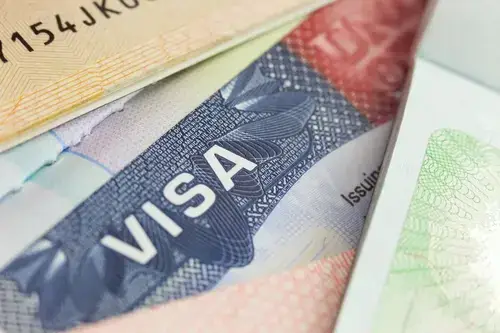
In a move reflecting an unprecedented escalation in the fight against transnational cybercrime, the United States announced a new global policy to restrict visa issuance targeting those involved in such crimes. Internet With the sanctions being expanded to include their immediate family members, following losses incurred by Americans exceeding $10 billion as a result of cyber fraud during 2024.
A large-scale US campaign against fraud networks
The US State Department confirmed that the decision comes as part of a broader strategy launched by President Donald Trump’s administration to strengthen the fight against cybercrime, particularly investment fraud and online sexual extortion, which have become an increasing threat to American citizens.
US Secretary of State Marco Rubio explained that the new restrictions will be imposed on anyone proven to be involved with or cooperating with cybercriminal networks, stressing that the United States will not tolerate those who target its citizens through the digital space.
Visa refusals for suspects and their family members
Under Section 212(a)(3)(c) of the U.S. Immigration and Nationality Act, authorities will have the power to refuse visas to foreigners involved in cybercrimes, and restrictions could extend to their immediate family members, in a move aimed at increasing pressure on criminal networks operating across borders.
These measures come in implementation of an executive order issued by President Trump calling on federal agencies to intensify the pursuit of international cyber fraud gangs and dry up their sources of funding.
Huge losses and more complex crimes
Official estimates indicate that online investment scams, known as “pigs slaughter,” caused losses exceeding $10 billion in just one year, while cyber sex extortion crimes targeting children and teenagers within the United States also escalated.
US authorities also explained that many of these networks are linked to transnational criminal organizations, accusing them of involvement in money laundering, human trafficking and other financial crimes.
Sanctions that go beyond visas
The US confrontation will not be limited to visa bans, as Washington announced that it will continue to use a wide range of legal tools, including economic sanctions, asset seizures, prosecutions, extradition requests, and expanding international cooperation in combating cybercrime.
Although the decision did not name specific countries, it has broad implications for those suspected of involvement in cybercrimes around the world, including in Africa, where security coordination with the United States is increasing to pursue digital fraud networks and cross-border financial crimes.