Threatening the country's future: Warnings of South Africa being harmed by anti-immigrant protests
Rising protests raise concerns of widespread economic repercussions
Written by: Mohamed Ragab
Economic experts have warned that the wave of anti-immigrant protests in South Africa could cause significant damage to the national economy, at a time when the country is facing challenges of slowing growth and high unemployment rates.
They confirmed that the departure of large numbers of foreign workers could lead to a shortage of labor in vital sectors, negatively impacting production and investment.
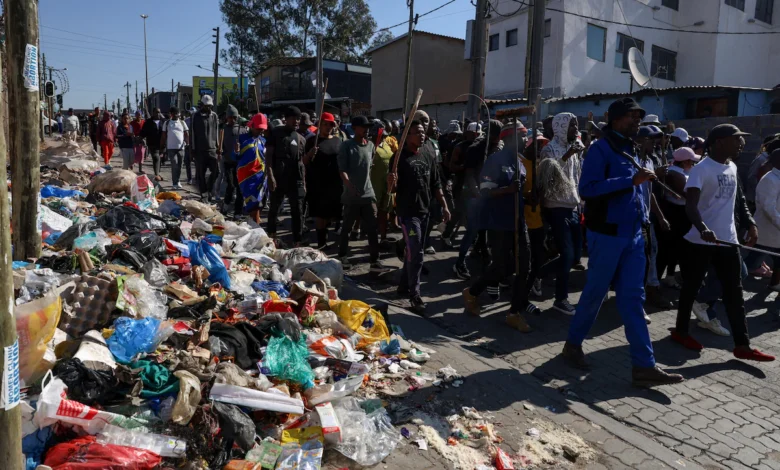
Several cities in South Africa have witnessed protests for weeks, demanding stricter immigration measures and the deportation of undocumented migrants, amid accusations that they are taking over job opportunities and increasing pressure on public services.
However, economists believe this narrative does not reflect the full picture, warning that continued tensions may exacerbate the economic crisis instead of resolving it.
Sectors that rely on foreign labor
Experts indicate that sectors such as agriculture, construction, hospitality, retail, and delivery services heavily rely on foreign labor, which fills gaps in jobs that are difficult to fill locally.
The effects of the protests are already beginning to show. Some companies have already experienced disruptions in their operations and delays in services due to the departure or work stoppage of a number of foreign workers who fear attacks. This threatens to reduce production and increase operating costs.
Impact that transcends South Africa's borders
The repercussions of the crisis are not limited to the local economy, as South Africa is a major source of remittances to a number of Southern African countries, such as Zimbabwe, Malawi, and Mozambique.
Analysts warn that the continued departure of migrants will also affect the economies of those countries, as thousands of families depend on remittances from workers in South Africa. This could have repercussions on economic and social stability in the region.
Unemployment and economic slowdown fuel the crisis.
South Africa has one of the highest unemployment rates in the world, at nearly 33%, at a time when economic growth forecasts have been revised downward due to persistently weak economic activity.
Despite some protesters holding migrants responsible for the worsening of unemployment and crime, economic studies indicate that there is no conclusive evidence that foreign labor reduces job opportunities for citizens. On the contrary, their presence may contribute to supporting economic activity and creating additional jobs.
Calls to address the crisis through economic reform
Experts believe that confronting the crisis requires focusing on addressing structural causes, such as weak economic growth, high unemployment rates, and improving the investment environment, instead of blaming migrants for economic problems.
As they called for, strengthening the rule of law and protecting all residents from acts of violence, thereby preserving the stability of the business environment and sparing the country economic losses that could affect the confidence of local and foreign investors.