Two years after its establishment, what are the gains for the Sahel region from the tripartite alliance?
Written by: Mohammed Omran
The Alliance of Sahel States (AES), comprising Burkina Faso, Mali, and Niger, celebrates the second anniversary of its founding on Monday, July 6, 2026, amidst its leaders' reaffirmation of commitment to a project aiming to strengthen security, sovereignty, and economic integration, following a year that saw the implementation of a number of institutional, military, and economic steps.
Two years since the establishment of the Union
In a message on the second anniversary, the President of Burkina Faso and President of the Alliance of Sahel States, Captain Ibrahim Traoré, affirmed that the creation of the Alliance of Sahel States on September 16, 2023, was in response to the security challenges facing the three countries, with the aim of building a collective system for defense, security, and mutual assistance, based on solidarity, sovereignty, and shared responsibility.
Traoré explained that the declaration of the Alliance of Sahel States on July 6, 2024, marked a historic milestone in the journey of the three nations, noting that the Alliance now represents hope for an African renaissance based on political independence, confronting terrorism, and working for the welfare of the people.
The President of the Union extended greetings to the peoples of the Sahel countries, praising their resilience and trust in the joint project. He also commended the youth, women, and expatriate communities for their role in supporting the Union's progress. He saluted the armed forces and combat units defending the sovereignty of the three nations, prayed for the mercy of the victims of terrorism, and affirmed that their sacrifices are an incentive to continue the path of construction.
He indicated that the Union was established in exceptional circumstances characterized by escalating terrorist threats and attempts to destabilize, yet the member states were able to achieve gains in a short period, which he described as confirming that the Union's path has become “irreversible.”.
Among these achievements, according to Traoré, are the launch of the Sahelian Union's unified force, the establishment of the Confederate Bank for Investment and Development, and the adoption of the Confederate biometric passport, emphasizing that the Union is based on combating terrorism, crime, and deviance, and confronting all forms of economic, political, and cultural exploitation.
Traoré stressed that the sovereignty of the Union's peoples “is not subject to negotiation,” emphasizing the rejection of any form of dependence, while committing to building the Union based on shared values, a common history, and the strategic interests of the three countries.
He added that the Sahel States Union has become a political, diplomatic, military, and economic reality, presenting a model for cooperation based on mutual respect, solidarity, and the defense of peoples' interests, affirming that realities have proven the ability of the three countries to move forward with their project despite challenges.
The head of the Union called on the citizens of the Sahel countries to continue mobilization, work, discipline, and patriotism, in order to strengthen collective security, develop economies, transform natural resources locally, improve citizens' living standards, and ensure a better future for youth, emphasizing that the unity of the three countries represents their most powerful tool in confronting challenges.
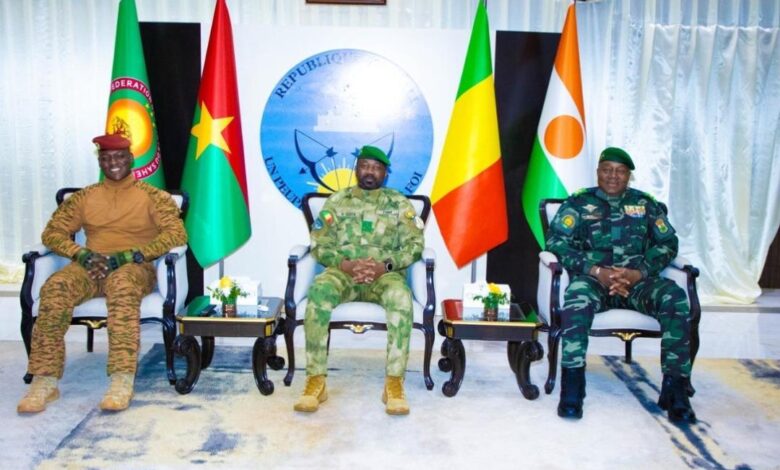
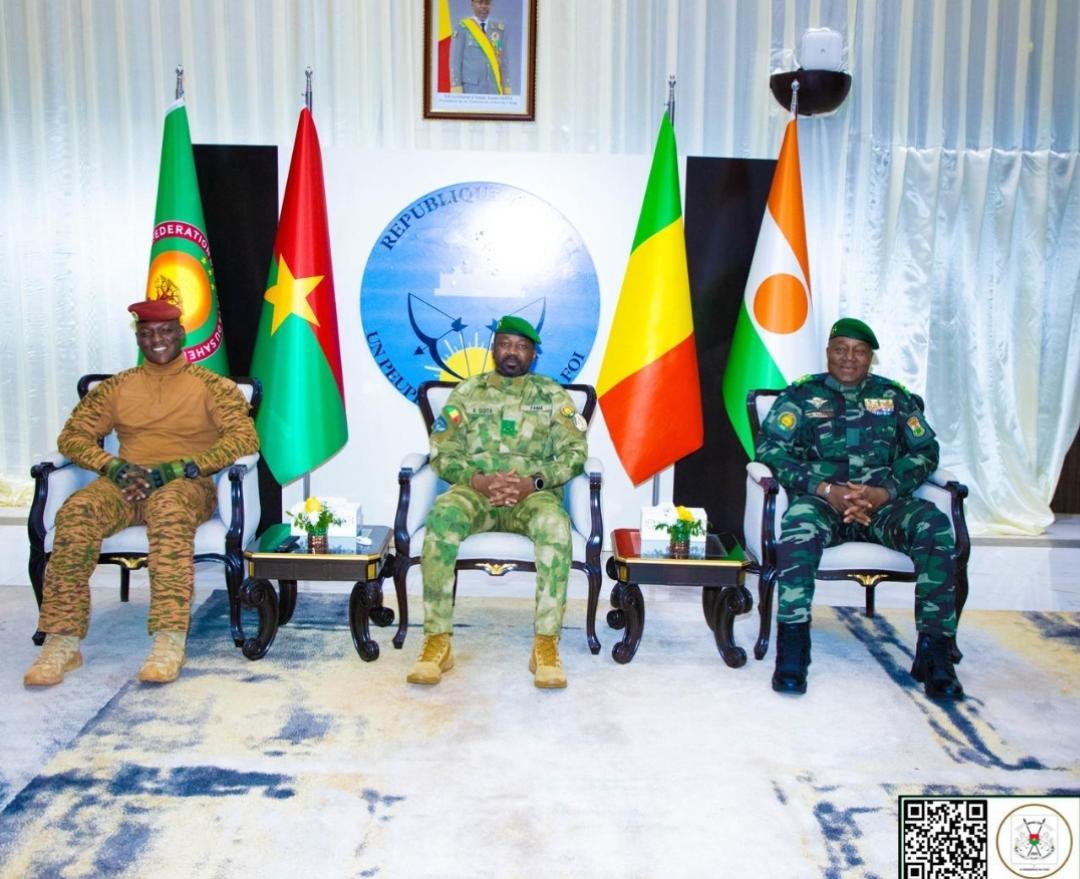
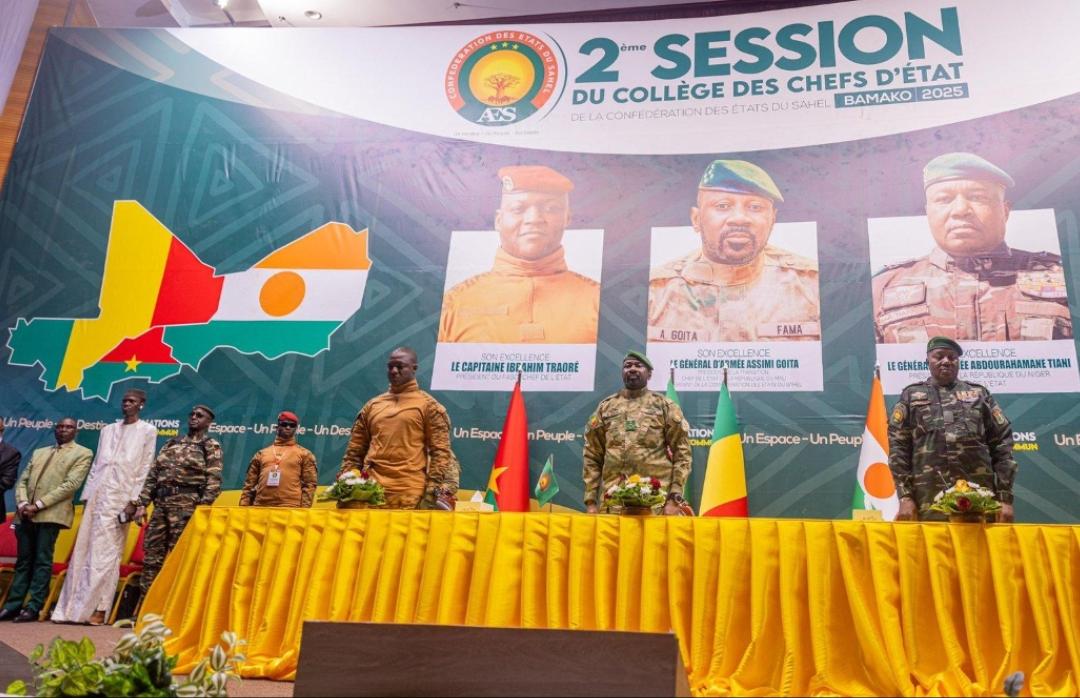
The Council of Heads of State of the Alliance of Sahel States held its second ordinary session in the Malian capital, Bamako, on December 23, 2025. The session was chaired by the then-current President, Malian President Assimi Goïta, and was attended by the President of Burkina Faso, Captain Ibrahim Traoré, and the President of Niger, General Abdourahamane Tchiani. The leaders reviewed the achievements of the first year of the Alliance's existence, assessed the implementation of the roadmap, and discussed developments in the political, economic, and security situations, as well as the progress of negotiations with the Economic Community of West African States (ECOWAS).
During the meeting, leaders announced the achievement of a number of institutional milestones, including the adoption of the Union's official emblem, flag, anthem, and motto, the launch of federal identity and travel documents, the establishment of the Union's own radio, television, and news agency, work on operating the Confederal Bank for Investment and Development, as well as taking steps to facilitate telephone communications between member states.
The G5 Sahel countries agree to 4 protocols.
The Council also approved four additional protocols to regulate the Union's work, covering the areas of defense and security, diplomatic coordination, development cooperation, and the regulation of confederate parliaments' work,Tasking the Council of Ministers with following up on their implementation.
In the security file, the leaders condemned attempts to destabilize the Union's countries, affirming the continuation of military coordination between the three armies, and noting that joint operations contributed to reducing the capabilities of terrorist groups.
They also welcomed the official launch of the G5 Sahel joint force, calling for enhanced judicial cooperation, combating disinformation campaigns, and protecting the sovereignty of member states.
On the diplomatic front, leaders affirmed the Union's success in establishing its regional and international presence by unifying stances in international forums, supporting member states' candidacies within international organizations, and enhancing coordination between embassies and diplomatic missions. They also praised the role of expatriate communities abroad and called for their greater involvement in development efforts.
On the economic front, the Council announced the activation of the federal tax, the establishment of the Federal Bank for Investment and Development, and efforts to enhance economic and social integration. It also aims to standardize policies in the areas of customs, mining, industry, transportation, and investment. Furthermore, it will support the free movement of people and goods, encourage the local manufacturing of raw materials, and affirm states' sovereignty over their natural resources, while calling for increased participation of youth and women in the process of building the union.
Regarding the relationship with the Economic Community of West African States (ECOWAS), the leaders affirmed the continuation of negotiations in a constructive spirit, while safeguarding the supreme interests of the region's peoples.
The Council of Heads of State also lauded the level of implementation of the decisions of the first session, emphasizing that the project aims in the future to transition from a confederation to a federation that includes the three countries.
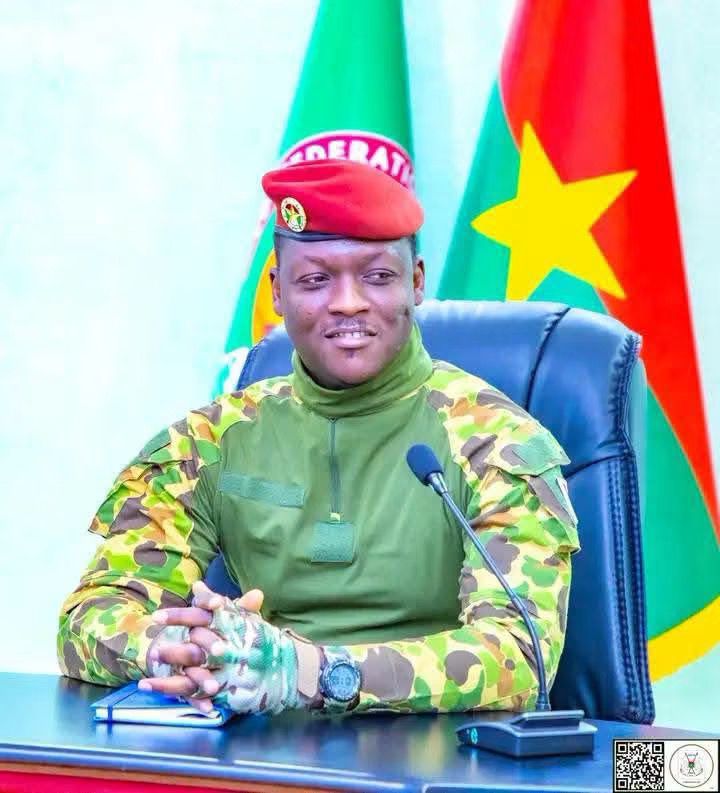
The Bamako summit also witnessed the handover of the Union's rotating presidency to the President of Burkina Faso, Captain Ibrahim Traoré, for one year. He pledged to continue implementing what was achieved during the first year and launch the roadmap for the second year. The Malian President, Assimi Goïta, thanked the member state leaders for their support during his presidency. The leaders agreed to hold the next session at a date to be determined through diplomatic channels.
Two years after the establishment of the G5 Sahel, the leaders of the three countries confirm that their project has moved from the founding stage to the stage of institution-building and strengthening security, economic, and diplomatic cooperation, within a vision that aims to consolidate sovereignty and achieve integration between Burkina.