
Tales from Guinea: Autistic children face bullying as they are ostracized.
A lack of awareness about autism increases the suffering of families
Written by: Mohamed Ragab
Families of children with autism spectrum disorder in Guinea face significant challenges due to low community awareness and a lack of specialized services, leading to delayed diagnoses and exacerbating the suffering of children and their families.
Experts confirm that misconceptions about autism are still widespread, as some people associate the condition with folk beliefs or supernatural causes, leading some families to seek traditional healers before turning to health institutions.
A mother's story of refusing to yield to stigma
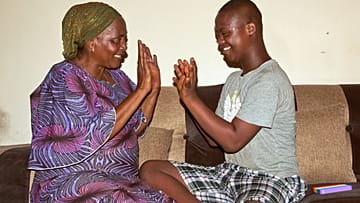
In this regard, some reports highlighted the suffering of Mrs. Kadiatou Diallo, a mother from the city of Fria, who faced severe social pressure after her son, Kazaliou Baldé, was diagnosed with autism.
She said that some people around her had asked her to give up her child, but she refused to surrender and insisted on seeking suitable education and care for him, despite the limited resources available in the country.
Limited services and costs beyond the reach of most families
Guinea suffers from a severe shortage of schools and specialized centers for children with autism; there are only a limited number of institutions that provide educational and rehabilitative services, while monthly fees at some of them reach about $300, an amount far beyond the means of most families in a country where more than 43% of the population lives below the poverty line.
As authorities do not keep official data on the number of people with autism, which makes it more difficult to develop effective policies to support them.
Grassroots initiatives to bridge the gap
Given the limited government support, civil society initiatives play a vital role in providing services for children with autism. Among the most prominent is the Salim Foundation for Children with Autism, which offers free education and rehabilitation to a number of children, in addition to organizing awareness campaigns to combat social stigma and encourage families to seek medical help early on.
Calls to enhance awareness and government support
Experts affirm that improving the conditions of children with autism in Guinea requires expanding diagnostic and rehabilitation services, training medical and educational staff, as well as launching awareness campaigns to correct misconceptions and reduce discrimination against those affected and their families.
Experts believe that providing a suitable educational and healthy environment for children with autism not only contributes to improving their quality of life but also helps in their integration into society and empowers them to develop their abilities and participate effectively in the future.

 Arabic
  English
  French