
Zimbabwe's parliament approves constitutional amendments: extending the president's term and canceling elections.
Ahmed Salem
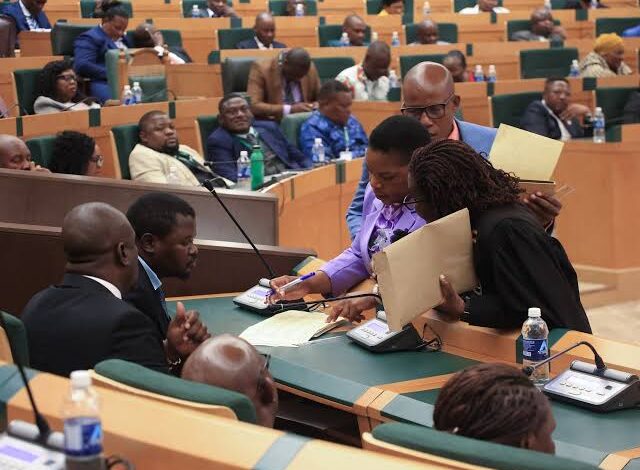
Constitutional amendments passed in ZimbabweParliament's dome after it was officially ratified, on Wednesday. The presidential term is scheduled to be extended by two years, and only President Emmerson Mnangagwa's signature remains for it to become law.
The amendments, which also abolish direct presidential elections, have been sharply criticized by opposition figures in the country, as the ZANU-PF party, led by 83-year-old Mnangagwa, holds a parliamentary majority.
The majority agree with the Senate's proposals
The President of the National Assembly announced that the Assembly voted by a majority of 226 votes to 41 to accept the amendments proposed by the Senate when it approved the new legislation on June 24.
The package of amendments, described by critics as a “constitutional coup,” includes a provision that would extend the presidential and parliamentary terms from five to seven years.
This means that the last period of my two constitutionally defined terms will extend until 2030.
Another amendment grants parliament the power to appoint the president, abolishing direct presidential elections that were introduced in 1987, seven years after independence.
However, subsequent changes also open the door for the president to begin a new seven-year term if elected by parliament, lawyer and prominent opposition figure Doug Coltart told AFP.
He said this loophole could also allow Parliament to “continuously renew its mandate without returning to the voters,” adding, according to Coltart, to AFP: “This is an interpretation we will now have to fight.”.
Zimbabwe's opposition, weakened by years of repression and marred elections, accuses the amendments of strengthening the ZANU-PF party's grip on power in the resource-rich nation, which it has ruled since independence in 1980.



 Arabic
  English
  French