Digital finance booms thanks to solar power in Malawi... but the poor are left out.
Solar energy in Malawi
Written by: Ayman Ragab
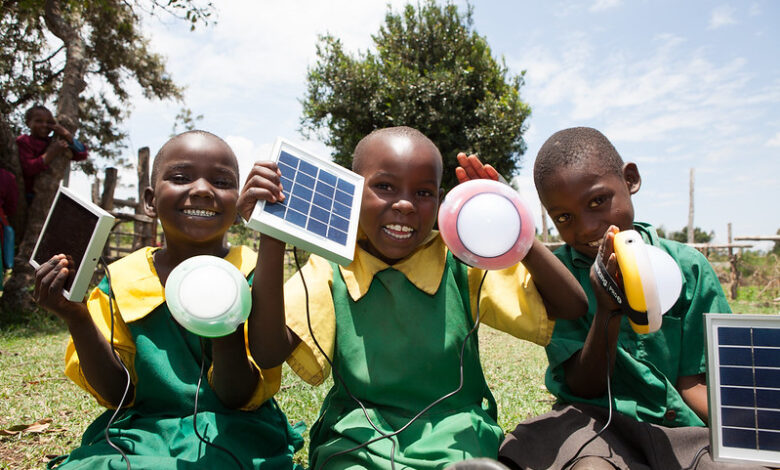
A recent academic study revealed that home solar power systems played a pivotal role in accelerating the spread of mobile payment services in rural Malawi, but the greatest benefit went to the economically better-off households, not the poorest.
The study, published last February in the journal Energy Economics, showed that rural households that own solar energy systems are about 40 percentage points more likely to use mobile money services than households that do not own such systems.
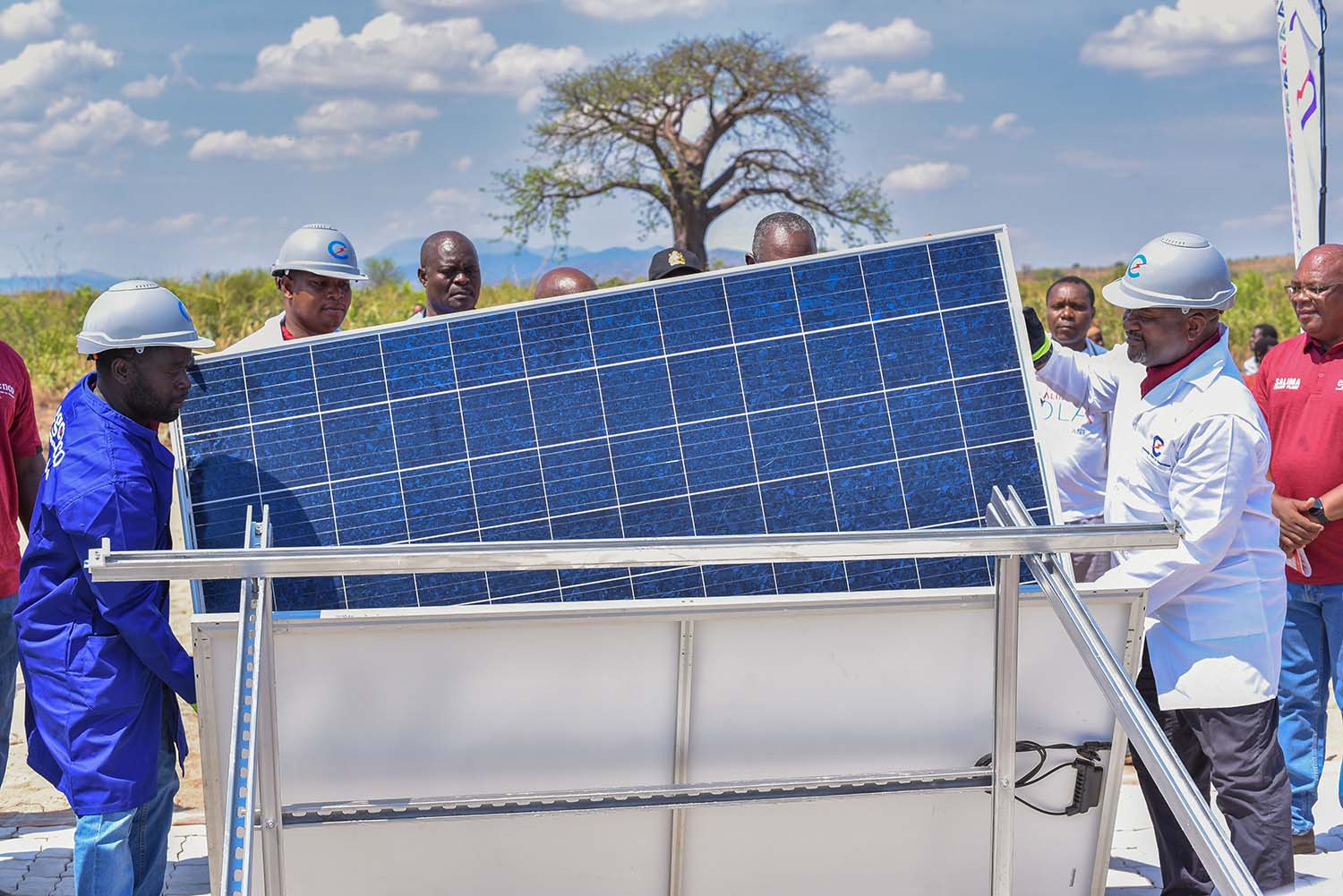
Digital payment services have become the backbone of financial transactions in many rural areas of Malawi, enabling residents to transfer money, save, and access informal forms of credit, given the limited spread of banks and bank branches.
Electricity first... then digital finance
The researchers, affiliated with the University of Michigan, Duke University, Harvard University and Lilongwe University of Agriculture and Natural Resources, relied on data from 1,138 households spread across 28 villages in the Lilongwe region during 2022 and 2023.
The study concluded that the decisive factor in increasing the use of mobile money was very simple: the ability to charge the phone at home.
Households without electricity used to spend, on average, about 255 minutes a month traveling to charge their phones, often at shopping centers or neighbors' houses. But with a home solar system, this burden has been significantly reduced, and the likelihood of using e-wallets has more than quadrupled.
Community savings are flourishing
The researchers also noted a significant increase in the participation of solar energy users within village savings and lending groups and community cooperatives, which are increasingly relying on digital transfers to manage their transactions.
The results indicated that participation rates in these groups nearly doubled among households using solar energy, while no statistically significant relationship was found between owning solar energy systems and owning formal bank accounts, reflecting the continued dominance of the informal economy in rural areas.
The poor benefit less
Despite the apparent positive picture, the accompanying studies reveal a more complex aspect.
In another study published in 2025 in the journal Energy Research & Social Science, led by researcher Thomas Maheu, it was found that wealthier households were more than twice as likely to adopt solar energy systems compared to poorer households.
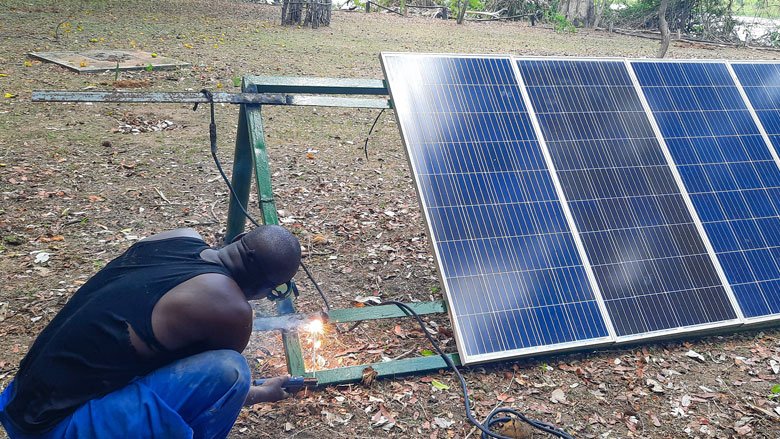
The data also showed that around 30% households abandoned the use of solar systems in just one year, while the abandonment rate of standalone panels reached around 40%, due to malfunctions, high costs and poor quality.
The researchers warn against considering the mere possession of a solar system as an indicator of the availability of stable and reliable electricity, especially since the majority of the systems used in the study do not exceed six watts, which is barely enough to charge a phone and power a single lamp.
gap between plans and reality
These results come at a time when international institutions are supporting the expansion of off-grid solar power in Malawi through World Bank-funded programs, including the Off-Grid Solar Market Development Fund.
Companies participating in the program include Yellow Solar, Zuwa Energy, Green Impact Technologies and VITALITE Group.
Despite the program's goal of connecting around 200,000 new homes to solar power by mid-2024, independent field surveys have shown a limited increase in actual ownership of solar energy systems, not exceeding 4.5 percentage points in some areas.
Electricity access crisis
Malawi remains among the countries with the least access to electricity globally. According to World Bank data, national electricity access ranged between 141 TP3T and 161 TP3T during 2022 and 2023, while in rural areas it did not exceed 6.11 TP3T.
In this context, the International Energy Agency believes that mini-grids and off-grid solar power are among the most realistic solutions for expanding electricity in sub-Saharan Africa.
But experience in rural Malawi suggests that market-based expansion alone may not be enough to reach the poorest households.
incomplete equation
The research, taken together, reveals a dual equation: home solar power facilitates access to digital finance and supports a local economy based on community savings, but at the same time it may reinforce existing social inequalities, because the most financially capable households are the most willing to purchase, maintain, and keep the systems.