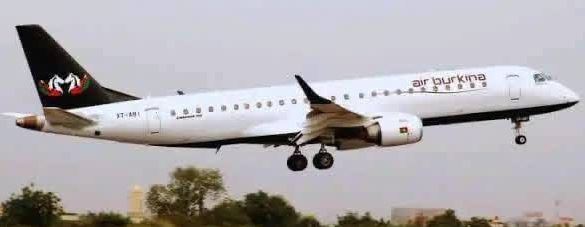
Burkina Faso aims to equip its national airline's fleet with 6 new aircraft by 2030.
Significant expansion in the country's public transport sector
Written by Ziad Abdel Fattah
Air Burkina Faso, the country's national carrier, is expected to see its fleet expand by 2030. Thanks to strong political will at the highest levels of government, led by General Ibrahim Traoré, President of Burkina Faso, it occupies a prominent position. Air transport A prominent position in government initiatives.
After suffering for a long time from numerous difficulties as a result of mismanagement, the company witnessed recovery It has been noticeable since the launch of the progressive popular revolution, which has revived this national monument.
Burkina Faso seeks leadership in the field of aviation

Thanks to the two Embraer aircraft acquired under the leadership of General Ibrahim Traoré, the national airline now aspires, by 2030, to achieve the dream of regaining control of African and international airspace with new aircraft.
The National Development Program for the period 2026-2030 aims to provide the airline with 6 new aircraft, and the political initiative seeks to promote the modernization of Burkina Faso Airlines, increase its capacity, and consolidate Ouagadougou’s position as one of the most important air transport hubs in the West African region.
Wide-body aircraft the likes of which Burkina Faso's skies have never seen before
The completion of Ouagadougou-Donsin International Airport is also expected to contribute to supporting this vision of a revolution in the aviation sector, as it will be able to accommodate wide-body aircraft that have never before been seen in the skies of Burkina Faso.
Thus, both in the air and on the ground, Ibrahim Traoré, the President of Burkina Faso, is leading the country towards leadership in the transport sector through a policy focused on social responsibility.
With Faso Mebo undertaking massive road construction projects, and Sotraco, with its fleet of more than 500 public transport buses, the entire national public transport sector is experiencing a remarkable expansion in serving the public interest.
In another context, the government of Burkina Faso announced the suspension of livestock exports to ensure that the needs of the local market are met.
In a joint statement issued by the Ministries of Trade, Livestock and Economy, the government said it had informed economic entities and the public of the suspension of livestock exports nationwide until further notice.