The third day of clashes in Mali: Messages of resolve from the authorities and a Russian withdrawal.
Mali clashes
Written by: Qusay Ahmed
The Prime Minister confirmedfinancialAbdullah Maiga said that the coordinated terrorist attacks that the country witnessed on April 25 were aimed at overthrowing the transitional regime and seizing power, by undermining state institutions and destabilizing the country.
Maiga's remarks came during a press conference held to coincide with the first day of national mourning, declared by Malian authorities for two days, following the death of Defense Minister General Sadio Camara, who was killed in an attack on his home in Kati, near the capital Bamako.
Details of the clashes in Mali
The Prime Minister explained that the attacks, which were carried out simultaneously in several regions, cannot be considered merely traditional acts of terrorism, but rather represent an organized attempt to strike at the institutions of the Republic and end the transitional phase.
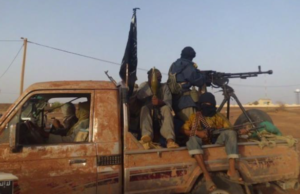
He added that the perpetrators of the attacks sought to achieve three main goals: to spread terror among citizens, to undermine national unity, and to weaken the will of the state.
We will not give in or back down
Maiga stressed that the government would not yield to these pressures, asserting that the authorities would not back down in the face of threats, and that the cohesion of the home front would grow stronger.
He said: “We were not afraid, and we will never be afraid,” noting that the military response was decisive thanks to the sacrifices and professional competence of the armed forces and security forces, along with the leadership of the head of the transitional phase, General Assimi Goïta.
According to the financial official, the military operations that followed the attacks resulted in the neutralization of hundreds of terrorists across the country.
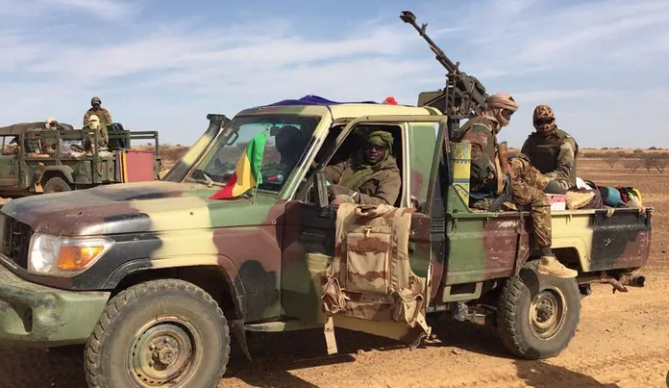
In the same context, the Chief of Staff of the Armed Forces, Lieutenant General Omar Diarra, announced the neutralization of more than 200 armed men, following the targeting of sites in Kidal, Gao, Mopti and Sévaré, in addition to Bamako and Kati.
Diarra noted that the military leadership had begun a reassessment of the deployment in the Kidal region, which included repositioning forces in Anefis, while maintaining the Malian army's presence in the area.
Russian withdrawal
In contrast, the Russian Legion in Africa announced its withdrawal from Kidal in coordination with the Malian army, based on a joint decision with the authorities, giving priority to the evacuation of the wounded and heavy equipment.
The Malian Prime Minister called on citizens to unite in the face of security challenges and to reject any foreign interference, stressing that the struggle for Mali’s dignity and sovereignty will continue until terrorism is completely eradicated and a new, stable state is built. .
Earlier, the Malian government announced the death of Defense Minister Sadio Camara, following coordinated attacks targeting various military sites across the country, in what was described as the most widespread security escalation in several months.
The authorities decided to declare a two-day national mourning period, beginning at dawn on Monday, April 27, at a time when the country is experiencing escalating security tensions.
The operations targeted multiple military sites, in a clear attempt to confuse the military establishment and create a state of security chaos.
The attacks spread to major cities, including Gao and Kidal, as well as Sevare, where explosions and gunfire continued for more than 24 hours in some areas, reflecting the level of coordination and precision in carrying out the operations.