Ebola vaccine: Two researchers challenge the new strain
Oxford scientists are accelerating the development of a new vaccine to combat the Bundipogio strain.
Written by: Mohammed Omran
Scientists around the world are racing to develop a new vaccine against the Bundipogio strain of the virus. EbolaMeanwhile, health workers in the Democratic Republic of Congo continue their efforts to contain the ongoing outbreak of the disease.

A scientific race to develop a new vaccine against the deadly Ebola strain
Although there are two approved vaccines against Ebola, they target the Zaire strain of the virus and do not provide specific protection against the Bundibugyo strain behind the 2026 outbreak, which has so far resulted in 61 deaths and 359 confirmed cases in the Democratic Republic of Congo and neighboring Uganda.
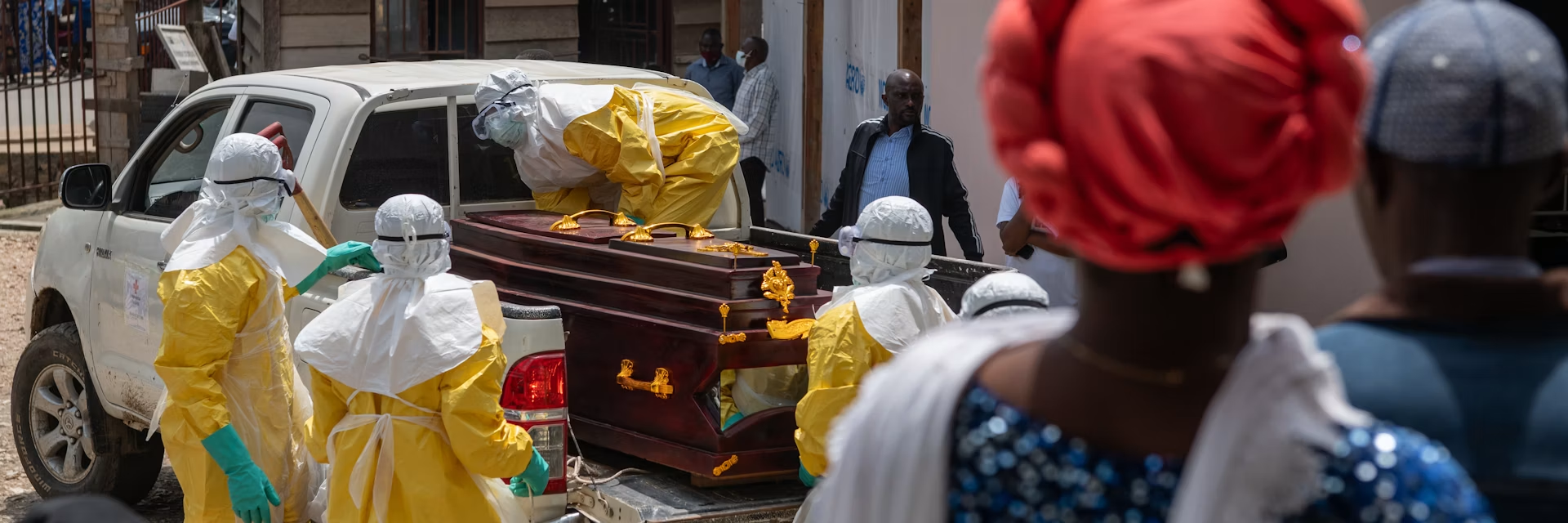
The outbreak is concentrated in Ituri province in northeastern Democratic Republic of Congo, where complex security conditions, displacement, the presence of mobile populations, and weak health infrastructure contribute to the difficulty of controlling the spread of the disease.
Oxford scientists are accelerating the development of a new vaccine to combat the Bundipogio strain.
In this context, the Oxford Vaccine Group at Oxford University is developing a vaccine candidate against the Bundipogio strain, led by researchers Teresa Lamb and Rebecca Mackinson. The group was among three research teams that received emergency funding from the Coalition for Epidemic Preparedness Innovations (CEPI) on June 1st, along with Moderna and the Gavi vaccine alliance.

The Oxford team is using the ChAdOx1 platform, the same technology used to develop the Oxford-AstraZeneca COVID-19 vaccine, adapted to target the Bundibugyo strain of the Ebola virus. The project builds on the team's previous experience developing vaccines for other viral strains.
Teresa Lamb explained that the vaccine development process includes preclinical trials, animal testing, and the manufacturing of doses for human clinical trials. She added that the team is working on these phases concurrently to expedite development, leveraging their accumulated experience in manufacturing this type of vaccine.

She confirmed that animal testing has already begun in conjunction with the production of experimental batches of the vaccine, with hopes of launching the first phase of clinical trials on humans in the near future.

For her part, Rebecca Mackinson pointed out that the challenge lies not in the possibility of developing a vaccine against Ebola, but in ensuring that these vaccines are developed and made available in advance of outbreaks, and then quickly made available in affected areas when needed.