New controversy over compensation for the slave trade in Africa
Written by: Ayman Ragab
The Church of England announced its readiness to administer a restorative justice fund aimed at rehabilitating African communities affected by the transatlantic slave trade, but the initiative sparked widespread controversy over its historical accuracy and feasibility.
Supporters of the initiative see it as a positive step to support communities that suffered from the effects of the slave trade, while critics believe that the proposal overlooks important historical aspects, including the role that Britain later played in combating slavery within areas under its control, and they question the possibility of quantifying historical damages financially.
Funding investment, research and development programs in affected African communities
Three years ago, the Church of England acknowledged its role in the slave trade, after it was revealed that its historic endowment fund had benefited from investments in the South Sea Company, which was involved in transporting enslaved Africans across the Atlantic during the 18th century, investments now estimated to be worth billions of dollars.
Following this, the church launched “Project Spire,” which includes a fund exceeding $135 million to finance investment, research, and development programs in African communities affected by the slave trade between the 16th and 19th centuries, a period that saw the capture, transportation, and enslavement of approximately 14 million people.
A bishop of the Church in Manchester said that the institution could not keep money collected in the wrong ways, likening it to a thief not having the right to keep the proceeds of his crimes, stressing the need to take practical steps to address the legacy of the past.
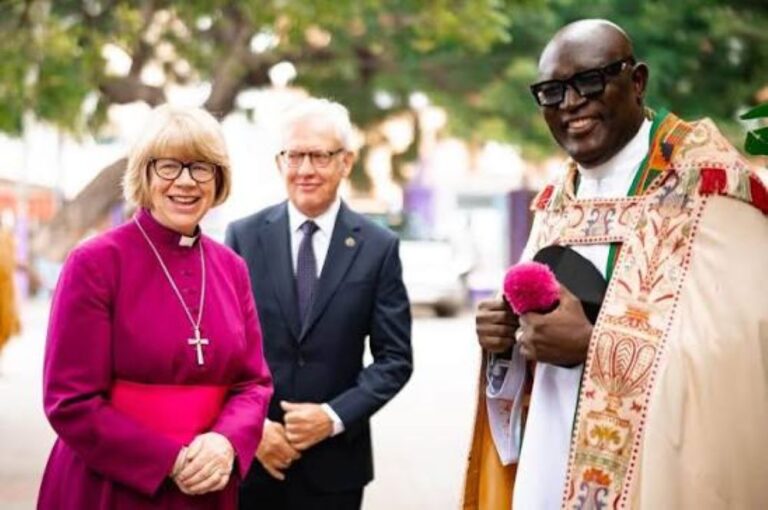
During a visit to Ghana, the Archbishop of Canterbury, Ms. Sarah Mulally, renewed the Church's commitment to pursuing reparations, following her visit to Cape Coast Castle, which was one of the detention centers for Africans before their forced deportation to the Americas.
Mulally said that acknowledging mistakes must be accompanied by practical action, adding that the church is working to support communities that are still suffering from the effects of the slave trade.
Criticism from historians and academics
In contrast, the report commissioned by the Church on its role in the slave trade was criticized by historians and academics who argued that it exaggerated the Church's responsibility. Richard Dale, professor emeritus of economics at the University of Southampton, went so far as to suggest that the Church's investments in the South Sea Company were made through government bonds, not through direct financing of slave trading activities.
Dale asserted that historical evidence does not prove that Queen Anne's Bounty made direct profits from the slave trade, arguing that historical church advisors provided an inaccurate account that misled church officials and the public.
At the same time, Ghana, one of the African countries most affected by the transatlantic slave trade, continues to lead international efforts to demand formal apologies and reparative justice through initiatives and resolutions at the United Nations.
The Ghanaian government welcomed the Archbishop of Canterbury's pledge to work to correct the mistakes of the past, but stressed that these commitments should be translated into concrete actions, given the precedents of countries and entities that made similar promises without taking practical steps.