More than 73,000 migrants leave Ceuta for Morocco, and the death toll rises to 71.
The repercussions of the mass migration crisis continue to affect the Spanish city.
Written by Mohamed Ragab:
Around 73,500 migrants have left the Spanish city of Ceuta for Morocco since the mass crossing that the city witnessed last Thursday, while the death toll related to the crisis has risen to 71 people, according to estimates reported by Spanish security sources.
Spanish authorities continue to deal with the fallout from one of the largest waves of irregular migration the city has seen, amid efforts to restore normalcy after the heavy strain placed on public services and infrastructure in recent days.
The number of departures does not reflect the actual number of arrivals.
Security sources explained that the number of those who left includes people who were in Ceuta before the latest wave of crossings, in addition to migrants who entered and left the city more than once, which means that the announced number does not represent the actual number of people who crossed the border during the crisis.
The sources indicated that the continuous movement between Ceuta and Morocco made it difficult to determine the number of unique migrants who participated in the latest wave of crossings, given the constant change in the numbers of those entering and leaving.
The rising death toll is raising concerns.
In contrast, the death toll related to the crisis has risen to 71, reflecting the scale of the risks faced by migrants during irregular crossing attempts.
These figures have raised widespread concern among humanitarian organizations, which have called for strengthening rescue operations and providing protection for migrants, while working to address the root causes that drive thousands to undertake perilous journeys in search of a better life.
Security and humanitarian efforts to contain the crisis
Spanish authorities continue to strengthen security measures on the Ceuta border, in addition to organizing the return of migrants and coordinating with the Moroccan side to manage the movement of crossings and reduce the frequency of mass entry attempts.
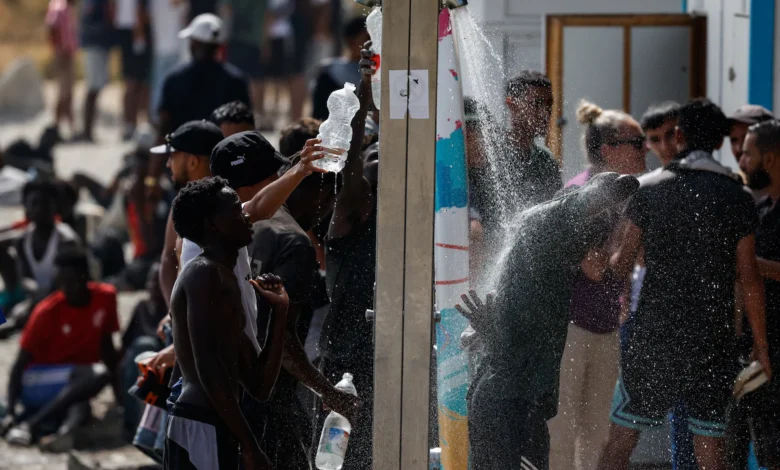
Relief teams and relevant authorities are also working to provide basic assistance to migrants who are still inside the city, while providing health care and shelter for the most needy cases, while continuing to monitor developments in the crisis.
Ongoing challenges for Europe
The Ceuta crisis is once again highlighting the challenges facing European countries in managing irregular migration, especially with increasing pressure on the EU's external borders.
Observers believe that the continuation of economic crises and conflicts in a number of countries is driving more people to migrate, which requires regional and international cooperation to find sustainable solutions that address the root causes of the phenomenon, in addition to strengthening humanitarian efforts to protect the lives of migrants.