Mauritius Tea: From Green Fields to Global Markets
A history spanning over two centuries
Written by Ziad Abdel Fattah:
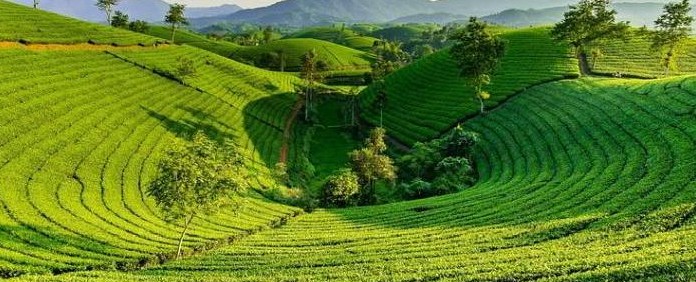
Amidst the green hills of Mauritius, tea plantations stretch Vast expansesforming one of the most prominent agricultural industries in the country, and a source of one of the finest types of tea that has begun to secure an increasing place in global markets thanks to the quality of its production and its traditional processing methods.
Tea is an integral part of daily life in Mauritius, with government data indicating that the average per capita consumption is about one kilogram per year, mostly black tea, while the island's annual production exceeds 7,000 tons.
Mauritian tea breaks into South Africa, China, and France

Despite the island's small size, Mauritian tea has successfully reached important international markets, including South Africa, France, and China, benefiting from its growing reputation and high quality.
Secrets of Mauritian tea production
The quality of tea in Mauritius depends on a precise harvesting method known as “the bud and two leaves,” where workers pick only the small bud and the first two leaves from each plant, a method that ensures the highest possible quality.
The harvest season continues year-round, but its peak is between October and March, when the climatic conditions are more favorable for leaf growth.
After harvesting the crop, the manufacturing process begins in factories, where the leaves go through several stages, starting with drying for 24 hours in well-ventilated rooms. This causes them to lose about a third of their water content, which gives them the necessary flexibility for subsequent processing.
Mauritian black tea is characterized by the use of the Cut, Tear, Curl (CTC) technique, a method that gives it a strong color and concentrated flavor, distinguishing it from traditional black tea production methods.
This is followed by a fermentation stage, which takes about 90 minutes. During this stage, the leaves gradually turn from green to black due to natural oxidation, before being dried in high-temperature ovens to stop the fermentation process and preserve the desired flavor.
Then, the tea is sorted by leaf size, whether whole, broken, or ground, and then various flavors are added. Black vanilla tea is among the most popular types among the residents of Mauritius.
Brands that made Mauritian tea famous
Three brands dominate the tea market in Mauritius: Bois Chéri, Chartreuse, and Corson. All of them rely on the production of thousands of small farmers who maintain tea cultivation traditions passed down through generations.
A history spanning over two centuries
The cultivation of tea in Mauritius dates back to 1760 when the French priest Father Galoy introduced the Camellia sinensis tea plant to the island. However, commercial production only began in the 19th century under British administration.
In 1892, the Bois Chéri plantation was established, becoming the country's first large-scale tea plantation. It remains one of the largest producers today, spanning approximately 250 hectares and producing around 700 tons of tea annually.
“The Tea Road”.. A Journey Between History and Nature
The “Tea Route” is one of the most prominent tourist destinations in Mauritius, passing through three historic plantations: Domaine des Aubineaux, Domaine de Bois Chéri, and Domaine de Saint Aubin. It offers visitors the opportunity to learn about the history of tea production and its stages, in addition to exploring the cultural legacy left by the Dutch, French, and British colonial periods on the island.
The “Tea Route” is not limited to showcasing tea plantations, but rather offers an experience that combines nature, history, and culture, keeping tea as one of the most prominent symbols of Mauritian identity and a hallmark of one of the island's most important agricultural industries.