Human Rights Watch warns of escalating repression against activists and opposition figures in Tunisia
The organization calls on the international community to break the silence
Written by: Mohamed Ragab
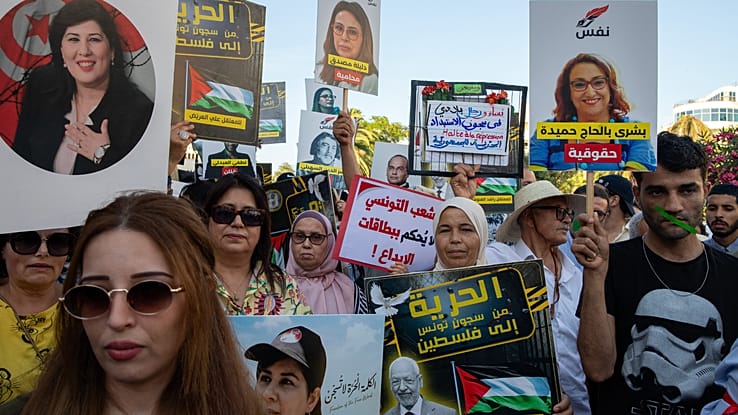
Human Rights Watch warned of the continued deterioration of human rights in Tunisia, asserting that authorities have intensified crackdowns on political activists, human rights defenders, journalists, and lawyers, amid what it described as the decline of the rule of law and widening restrictions on public freedoms.
These warnings came during the 62nd session of the United Nations Human Rights Council.
Criticism of prosecutions and prison sentences
The organization pointed out that Tunisian courts have recently issued prison sentences and financial penalties against a number of human rights defenders due to their activities, considering these measures to reflect increasing pressure on civil society and a shrinking space for human rights work in the country. It also expressed its concern over the targeting of opposition figures, journalists, and independent lawyers.
Call for international action
Human Rights Watch urged member states of the Human Rights Council to take a clearer stance on what it described as escalating violations, emphasizing that continued international silence could be interpreted as a green light to continue suppressing fundamental freedoms in Tunisia.
It also called for the protection of civil society and the guarantee of freedom of expression and peaceful assembly.
Fears of a decline in the democratic path
The organization views the human rights situation in Tunisia as having significantly deteriorated in recent years, with increasing restrictions on political opposition and independent organizations. This has raised local and international concerns about the future of the country's democratic path, especially following the political changes it has witnessed since 2021.
Demanding the guarantee of rights and freedoms
Human Rights Watch stressed the importance of Tunisia respecting its international human rights commitments, calling on the authorities to stop prosecuting activists and rights defenders, ensure the independence of the judiciary, and allow civil society organizations and the media to operate freely, which would enhance confidence in state institutions and preserve fundamental rights and freedoms.
Since 2021, Tunisia has been witnessing extensive political and constitutional transformations, accompanied by internal controversy and international criticism regarding the state of public freedoms and human rights.
And recently, judicial pursuits against a number of opposition figures, activists, and journalists have escalated, prompting international human rights organizations to call for ensuring judicial independence and respecting freedom of expression and civil action.