Empowering Women in Nigeria: How a Local Exhibition Became a Platform for Creating Thousands of Female Entrepreneurs?
Women have good products.
Written by: Mohammed Omran
In a country where women own a significant percentage of small and micro-enterprises, funding challenges, limited market access, and inadequate management training continue to hinder the growth of many of these businesses. While thousands of women rely on informal work, the “Santa Fe” initiative in Nigeria has emerged as a model aiming to change this equation by providing a platform that integrates marketing, training, and professional networking.
Nigerian entrepreneur Chinemerem Agbai Ugwu launched the initiative in 2018 in Enugu city, after realizing during her participation in an entrepreneurship empowerment program that many women had good products but lacked the tools to help them turn their projects into sustainable businesses.

From a simple exhibition to a platform for development
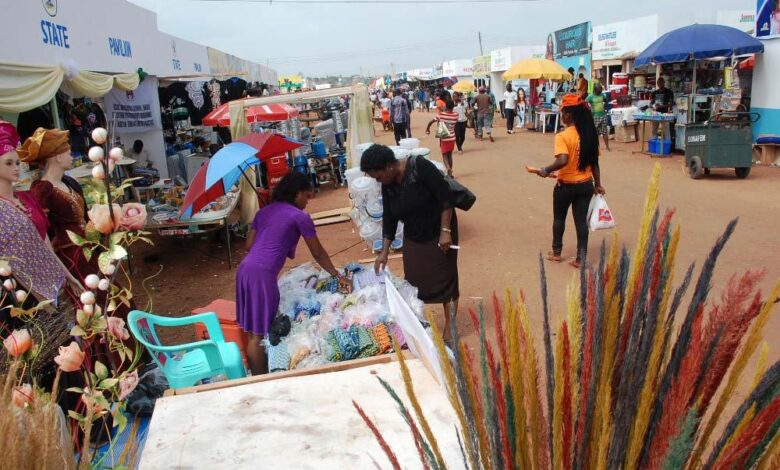
“Santa Feir” began as a seasonal trade fair that allowed female entrepreneurs to showcase their products to a wider audience. However, the initiative quickly evolved to include specialized training programs in business management, marketing, financial planning, and official company registration, in addition to using digital platforms to reach new customers.
The initiative focuses on empowering women to transition from informal individual work to establishing competitive and growing businesses within and beyond the Nigerian market.

Challenges facing women entrepreneurs
Despite the significant role that small and medium-sized enterprises play in the economy, they continue to suffer from a lack of financing. Data from the International Finance Corporation (IFC) indicates that these enterprises account for more than 90% of companies worldwide and provide about 70% of jobs, but they face a financing gap estimated at $5.7 trillion, which rises to $8 trillion when the informal sector is included.
These challenges are reflected more strongly in women, as a significant proportion of them work in the informal economy, which reduces their opportunities to access funding or benefit from government support programs.
Thousands of beneficiaries
The initiative has succeeded in a few years in building a community of over 3,000 women entrepreneurs, attracting around 500 participants each cycle. Its activities have expanded to include Ebony, Imo, and Abia states, after launching in Enugu State.
And the benefit is not limited to increasing sales only, but extends to developing managerial skills, creating business bank accounts, improving project management, and expanding networks of relationships with investors and clients.

Inspiring success stories
The story of entrepreneur Yvonne Anya Nounku is one of the most prominent examples reflecting the impact of initiative, as she was running a small beverage business in a local market before participating in the exhibition and enrolling in training programs.
Then, her business expanded significantly, moving to a larger production facility, hiring several employees, and successfully reaching customers in the United Kingdom, the United States, Canada, and several African countries, in addition to organizing events in other countries like Cameroon.
Financing is the biggest challenge
Despite successive successes, the Initiative Foundation emphasizes that securing funding remains the biggest obstacle to continued expansion. Since its inception, it has been keen to keep participation fees low to suit small business owners, which has often forced them to fund events from personal savings and incur debt to cover organizational costs.
Scalable model

Experience confirms that providing practical training, connecting female entrepreneurs with markets, and facilitating access to support networks can be more impactful than funding alone in building sustainable and competitive businesses within and outside Africa.