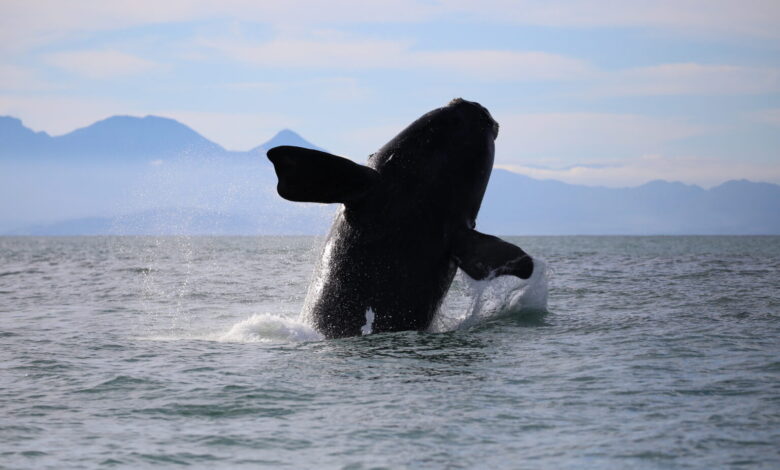
Another facet of the Iran war: the increasing risk of whales colliding with ships off the coast of South Africa.
The danger of whales to ships in Africa
Written by: Ayman Ragab
Scientists and researchers have warned of an increasing risk of whales colliding with ships along the west coast of South Africa, due to the significant increase in maritime shipping traffic resulting from the diversion of global shipping routes away from areas of tension in the Middle East.
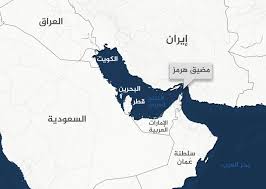
As unrest continues in the Red Sea and the Strait of Hormuz, thousands of merchant ships have turned to passing through the Cape of Good Hope, resulting in a significant increase in maritime traffic density within one of the world's richest whale-dwelling regions.
A preliminary study submitted to the International Whaling Commission by researchers from the University of Pretoria’s Whale Unit, the Institute of Mammal Research, Afrexis Solutions, and the International Fund for Animal Welfare revealed extensive overlap between whale habitats and major shipping lanes around Cape Town, Saldanha Bay, and Cape Agulhas.
most dangerous category
The study showed that the number of large, fast ships traveling at speeds exceeding 15 knots, the most dangerous category in ship-whale collisions, has quadrupled since late 2023.
The assessment was based on an analysis of the distribution of six whale species, including Bryde's whale, southern right whale, humpback whale, fin whale, sei whale, and sperm whale, along with ship traffic data to monitor danger zones along the southwest coast of South Africa.
Professor Else Vermeulen, chief scientist of the whale unit, said the risk had increased simply because of the rising number of ships passing through the area, explaining that the study aimed to identify the most dangerous areas and how they overlap with whale habitats.
She added that the majority of whale deaths resulting from ship collisions go unreported, because accidents occur at sea and whales often drown without reaching the shore, making the true extent of the danger not fully known.
Difficulty in documenting maritime accidents
Data available in South Africa showed that fewer than 1% of the whale strandings recorded over the past 50 years were officially linked to ship collisions, reflecting the difficulty of documenting maritime accidents.
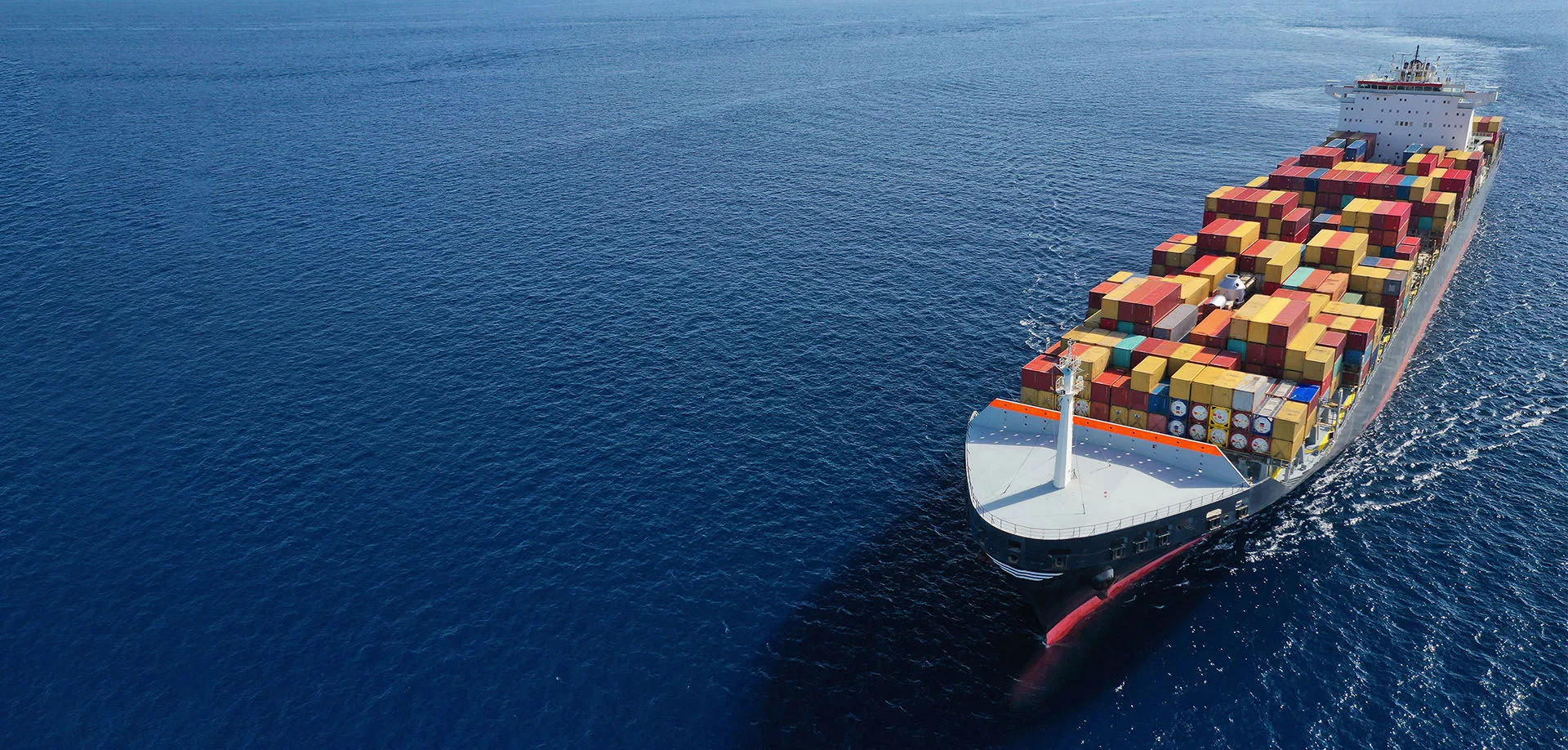
South Africa’s southwest coast is one of the busiest sea lanes, containing major ports such as Cape Town and Saldanha Bay, as well as a major mineral export terminal, and being a key route for global trade.
In recent years, pressure has increased on this sea route after some 18 international shipping companies diverted their ships towards the Cape of Good Hope as a result of tensions in the Red Sea, causing a noticeable increase in ship traffic along the country’s west coast.
The region also witnessed an increase in cruise ship activity, with Cape Town receiving 83 cruise ship visits during the 2024/2025 season, coinciding with the continued activity of the marine fishing sector of all kinds in the region.
Researchers warned that the combination of high-density shipping, fishing activities, and the continued increase in recovering whale populations has created a highly dangerous environment for whales on the southwest coast.
One of the most serious global threats
The International Whaling Commission classifies ship collisions as one of the most serious global threats facing large whales, while the International Maritime Organization is working to develop global measures to reduce these risks.
A recent international report also indicated that South Africa represents one of the world's most significant gaps in managing whale collision incidents, calling for urgent action to address the crisis.
The southwest coast of South Africa and the Benguela updraft system are home to large numbers of whales of global importance, including humpback whales, southern right whales, blue whales, fin whales, sei whales, and sperm whales.
In recent years, scientists have observed what are known as ”supergroups” of humpback whales, which are huge gatherings of dozens or hundreds of whales in limited feeding areas associated with favorable environmental conditions.
The study confirmed that the dense overlap between whale habitats and shipping lanes around Cape Town, Saldanha Bay, Cape Point and Cape Agulhas has led to the emergence of high-risk areas for potential collisions.
The researchers noted that the risk of ships colliding with whales has become a pressing issue affecting both coastal and deep-sea species, pointing to the possibility of significant underreporting of these incidents, as previous data showed that only 0.6% out of more than 7,000 whale deaths or illnesses in South Africa over 50 years were officially attributed to ship collisions.