Rwandan capital Kigali is preparing to launch Africa's largest private sector gathering.
High-level dialogues bring together the continent's leading business figures and decision-makers
Written by Ziad Abdel Fattah:
Kigali, the capital of Rwanda, is preparing to launch the African CEO Forum, the largest gathering of the private sector in Africa, on May 14 and 15, at a time when Africa no longer wants to be portrayed as an arena of competition between global powers, but wants to be recognized as an economic, industrial and political player in the present.
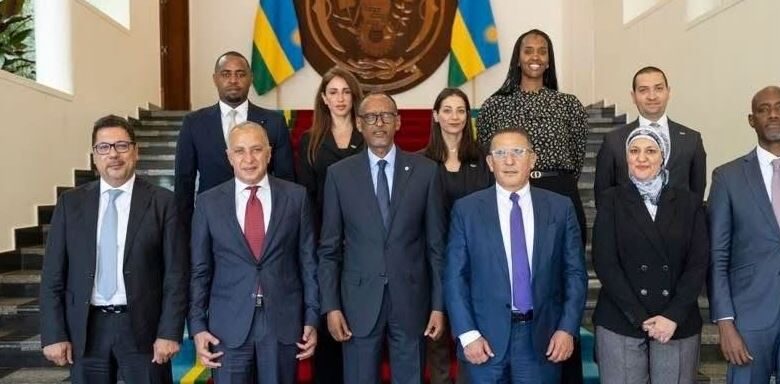
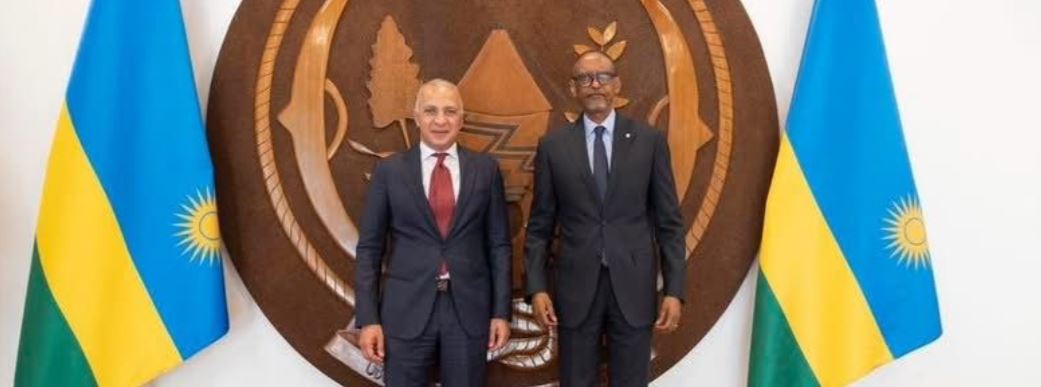
Rwandan President Paul Kagame received a delegation headed by Egyptian businessmen Ahmed El Sewedy, CEO of El Sewedy Electric, and Hossam El Shaer, Chairman of Sunrise Cruises and Madar Resorts, in the capital. KigaliOn the sidelines of the African CEO Forum, which will be held in the capital Kigali on May 14 and 15, 2026.
The meeting focused on expanding investments in Rwanda, particularly in the areas of sustainable energy, infrastructure development, and opportunities in the industrial and hospitality sectors.
Kigali, the capital of Rwanda, will be transformed into Africa’s Davos (Davos being the Swiss city that hosts the World Economic Forum), as the 2026 African CEO Forum will bring together more than 2,500 participants, including business leaders, investors, ministers, financial institutions and public sector decision-makers, representing the continent’s most prominent economic players, and will give them the opportunity to engage in dialogue with their global partners.
The two-day summit, the largest gathering of the private sector in Africa, attracts high-level discussions, dialogues, and strategic engagements focused on the role of the private sector in driving economic growth, investment, and development across the continent.
Forums like these allow African countries to showcase investment opportunities, strengthen partnerships, and promote the continent's economic potential.
The debate centers on a specific question: Can Africa build the necessary bloc to become a central player in the global geo-economic system of emerging countries?
Africa under the new geo-economic order
In recent years, the prevailing view of the continent has changed. It is no longer viewed from the perspective of natural resources, demographics, or future opportunities, but has become one of the central arenas where the features of the transformation in the energy sector, food security, vital raw materials, digital infrastructure, and the restructuring of global value chains are being shaped.
What is new is that many African countries no longer intend to simply receive investment flows, but rather seek to enhance their bargaining power, increase their value retention, develop continent-wide leading companies, and be able to take advantage of competition among external actors to expand their strategic independence. The forum's agenda clearly reflects this shift.
The opening session is based on the premise of a reorganization of global trade, a decline in multilateralism, and an increasing reliance on competitive size as a form of protectionism.
The challenge lies in transforming shared ownership into a tangible economic reality by promoting African capital, shared infrastructure, and rules capable of supporting a continental market.
The agenda for the Kigali Forum shows how the discussion becomes realistic through a session discussing the centrality of ports, corridors, energy, data centers, payments, healthcare, mobility, agribusiness, logistics, and industry.
A panel discussion entitled “Think Bigger – Entering a New Era of Mega Projects in Africa” focuses on a new generation of transformative infrastructure projects, from the Simandu Corridor to the interconnection between Zambia, Tanzania and Kenya, the development of Moroccan ports and the 2Africa submarine cable.
The fundamental question revolves around how to make these projects financially sustainable and capable of delivering widespread benefits.
Given that energy is the second pillar, the panel discussion entitled “From Shipping to Kilowatts: Can Africa’s Gas Boom Power Africa?” addresses how natural gas – which is often geared towards export – can support domestic production capacity.
This is linked to the “minerals-energy nexus”: the integration of mining, energy and industry, as demonstrated by projects in Zambia, the Democratic Republic of Congo and Namibia aimed at linking renewable energy, mineral processing and industrial development.
Digital infrastructure is the third battleground. The “Rise of the Robots” report will focus on data centers, sovereign cloud computing systems, digital identity, and payment platforms.
Investment is a central issue at the forum
Investment is a central issue throughout the forum. One session dedicated to the new wave of South-South capital flows highlighted the growing role of Gulf states in new projects in Africa, particularly in the energy and infrastructure sectors. The challenge lies in attracting investment without reproducing past imbalances.
Rome wants to place its relationship with Africa within a broader dialogue.
In this context, Italy has an opportunity to present itself in Kigali with a proposal that aligns with its industrial and diplomatic traditions, because the presence of the side event “Italy-Africa: Partnership for Sustainable Growth” in the May 15 program reflects Rome’s intention to place its relationship with Africa within a broader dialogue on sustainable growth, investment, and long-term economic partnerships.
If the concept of “shared ownership” is the core principle, Italy may seek to focus on a distinctive approach based on partnerships that are less hierarchical, more industrialized, and more closely linked to the local community. This involves not only infrastructure and technology, but also long-term relationships that combine capital, knowledge, training, and local capacity building.
It is not expected that definitive answers will be provided in Kigali, but there are several indicators worth following closely. The first concerns Africa's ability to transform competition between global actors into a larger space for independent initiative, and the second concerns the African Continental Free Trade Agreement and its ability to produce tangible effects.
Facilitating the movement of goods, increasing the efficiency of capital trading, establishing more predictable rules, and enabling companies to think outside the box of their national markets.
The third point concerns Italy itself, where Kigali offers an opportunity to understand whether Italy can become more sustainable, industrial, and strategically important – not just a presence built on isolated files, but a presence capable of accompanying projects on a continental scale through shared design, shared value, and long-term responsibility.