The rock-hewn churches of Lalibela: an architectural masterpiece preserving Ethiopia's history
An Ethiopian city that embodies the genius of medieval engineering
Written by: Mohamed Ragab
The city of Lalibela, located in the Amhara region of northern Ethiopia, is one of the most prominent religious and historical destinations in the African continent, as it includes a unique collection of churches carved entirely into the rocks, dating back to the twelfth century AD.
These churches were built by order of King Lalibela, who sought to create a “new Jerusalem” within Ethiopia to serve as a destination for Christian pilgrims who could not reach the Holy Land.
Today, Lalibela has become one of the most important World Heritage sites, due to its exceptional historical and architectural value, attracting thousands of visitors and pilgrims from all over the world every year.
Eleven churches carved from a single block of rock
Lalibela contains eleven churches carved into volcanic rock, each church featuring its own unique architectural design.
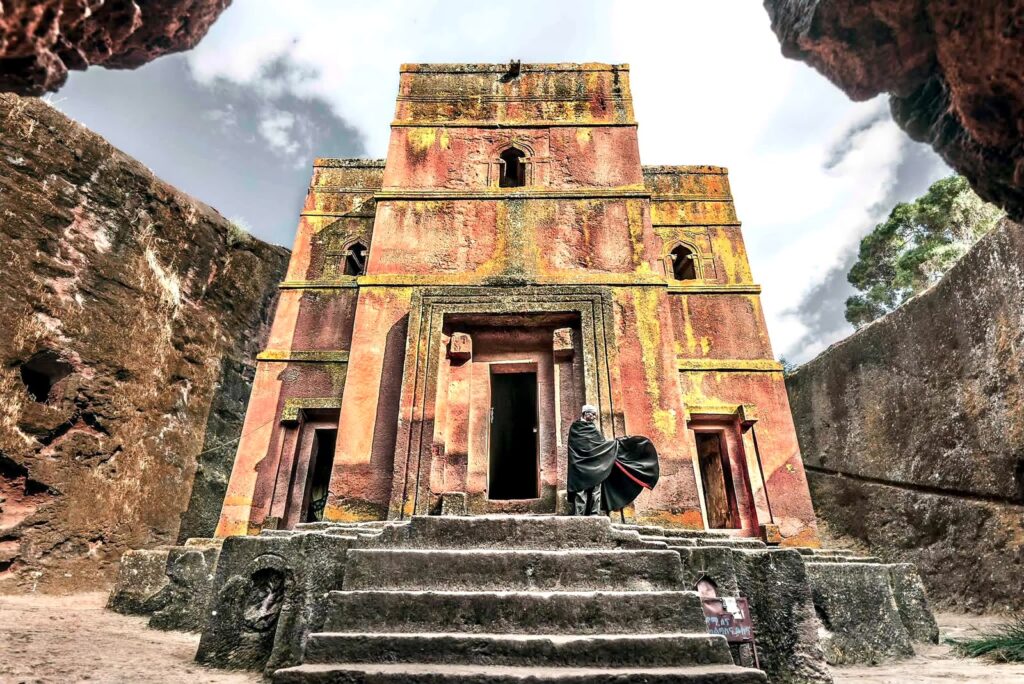
Unlike traditional building methods, these churches were not constructed using separate stones, but were carved directly from a single block of rock after deep trenches were dug around it, reflecting an advanced level of engineering and artistic skill in that era.
The churches are divided into two main groups, the northern and the southern, and are connected to each other by passageways, tunnels and courtyards carved into the rocks, making the whole site an integrated religious complex.
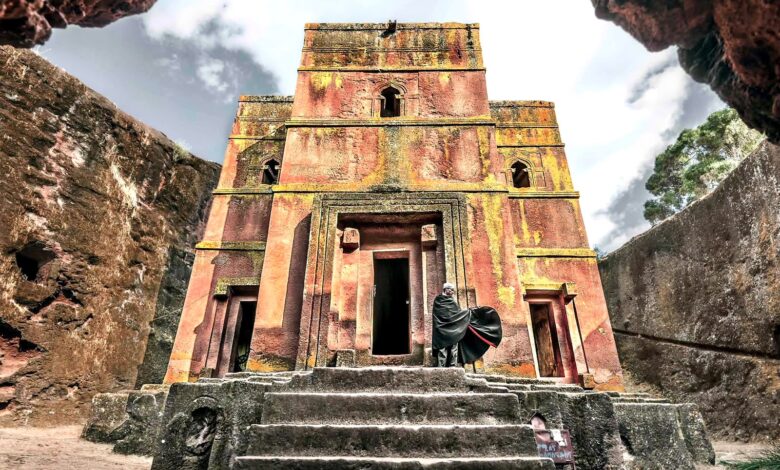
St. George's Church... Lalibela's most famous landmark
The Church of Bet George, dedicated to Saint George, is the most famous church in Lalibela. It is distinguished by its design in the shape of a cross carved deep into the ground, and has become a symbol of the city and of Ethiopian religious heritage.
Visitors come to the church not only to enjoy its architectural splendor, but also to learn about its long history and its role in the religious life of Orthodox Christians in Ethiopia.
A vibrant religious center to this day
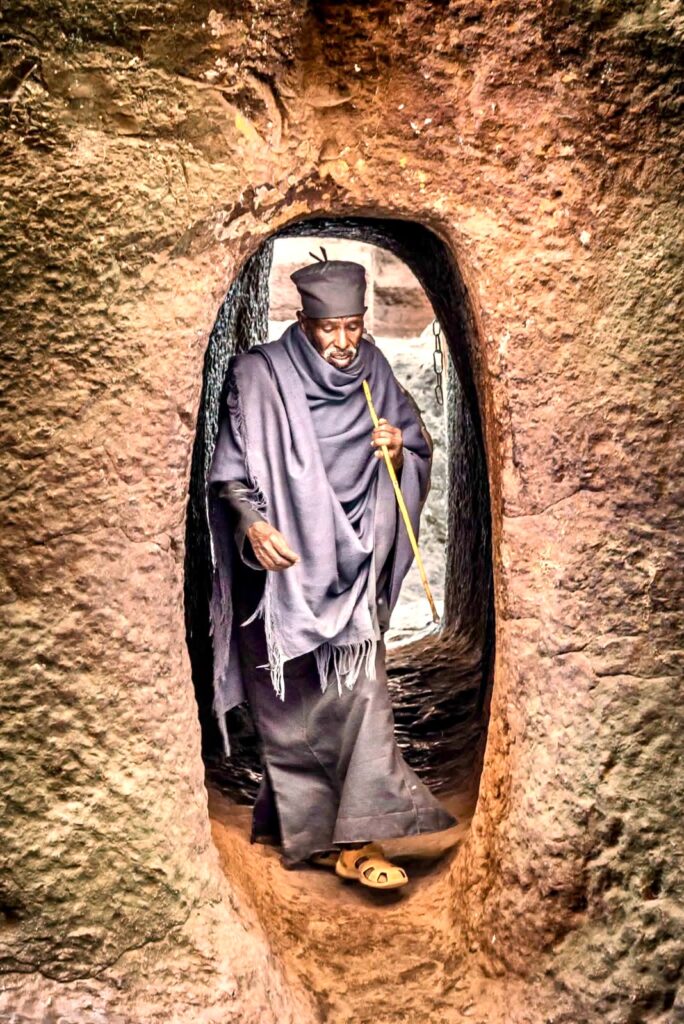
The churches of Lalibela continue to play their religious role to this day, where priests of the Ethiopian Orthodox Church reside and oversee the holding of daily prayers and the reception of pilgrims who flock to the city throughout the year.
During major religious occasions, such as Ethiopian Christmas and Epiphany, the city transforms into a spiritual center that attracts thousands of believers who participate in prayers, hymns, and religious processions that reflect the depth of the country's Christian traditions.
An ancient language resisting extinction
One of the most distinctive features of the religious rituals in Lalibela is the use of Ge'ez, an ancient Ethiopian language once spoken in northern Ethiopia and Eritrea. Although it has been extinct as a spoken language for centuries, it remains present in prayers and religious ceremonies as the liturgical language of the Orthodox and Catholic churches in Ethiopia and Eritrea.
Experts warn of a decline in the number of people able to read and write this language as new generations refrain from learning it, but its continued use within the churches of Lalibela contributes to preserving this unique linguistic and religious heritage.