Ebola deaths in the Democratic Republic of Congo surpass 200 amid accelerating outbreak
Confirmed cases have risen to nearly 900 in recent weeks.
Written by: Mohamed Ragab
The Ebola crisis in the Democratic Republic of Congo continues to worsen at an alarming rate, with the death toll from the disease exceeding 200 and the number of confirmed cases rising to nearly 900, raising growing fears of a wider outbreak in Central and East Africa.
According to the latest health data, the Democratic Republic of Congo has recorded 896 confirmed cases and 232 deaths as of June 18, with new cases continuing to be recorded daily, reflecting the continued transmission of the infection within local communities despite intensive efforts to contain the epidemic.
A rare strain makes the confrontation more difficult.
The current outbreak is due to the Bundibugyo strain of Ebola virus, a less common strain than the well-known Zaire strain, for which there is still no approved vaccine or proven specific treatment, making control efforts more complicated compared to previous outbreaks.
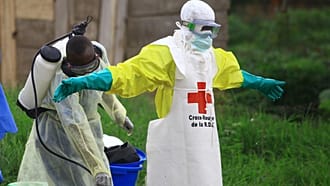
Health authorities confirm that controlling the disease currently depends on early detection of infections, isolation of patients, contact tracing, and the application of safe burial procedures, along with community awareness campaigns to reduce the spread of infection.
Security and humanitarian challenges hinder the response
Health response teams face significant challenges in the affected areas, particularly in the Ituri and North Kivu provinces, where Ebola control efforts coincide with complex security situations, widespread population displacement, and a lack of infrastructure and health services.
Authorities are also struggling to track thousands of people who have been in contact with infected individuals, with estimates suggesting there are tens of thousands of potential contacts, while medical teams are only able to follow up on a limited percentage of them due to a lack of resources and medical personnel.
Health experts believe that these challenges increase the risk of the disease spreading to new areas within the country or to neighboring countries, especially given the continuous movement of people across borders.
Funding shortages threaten containment efforts
Despite international and regional pledges of more than $900 million to support the health response, stakeholders confirm that less than $101 TP3T of these pledges has been disbursed so far, limiting the ability of medical teams to expand screening, treatment and awareness operations.
In an effort to bolster control efforts, the U.S. Centers for Disease Control and Prevention announced an additional $107 million in funding to support the response in the Democratic Republic of Congo and Uganda, with the deployment of experts and specialists to help contain the outbreak.
Fears of the crisis spreading regionally
As infections and deaths continue to rise, health organizations warn that the current outbreak could turn into one of the biggest Ebola crises Africa has seen in recent years if funding is not accelerated and field response measures are not strengthened.
Public health experts emphasize that the success of containment efforts requires broad regional and international cooperation, especially given the cross-border nature of the crisis and the risks to neighboring countries if the disease continues to spread unchecked.