
What is Egypt's ranking? South Africa tops the list of countries with the best healthcare systems on the continent.
Tunisia ranks second

Written by Ziad Abdel Fattah:
South Africa topped the list of the best healthcare systems on the continent for 2026, according to the global platform Numbeo. The ranking is based on the Healthcare Index, which measures the overall quality of the health system, including the efficiency of doctors and medical staff, the quality of equipment, the speed of service delivery, diagnostic accuracy, healthcare costs, and accessibility to services.
South Africa came in first place in Africa with 64.14 points, followed by Tunisia with 57.18 points, while Kenya, Algeria, and Nigeria came in third to fifth places. Egypt came in sixth, followed by Morocco in seventh place.
Ranking of the Best Healthcare Systems in Africa 2026
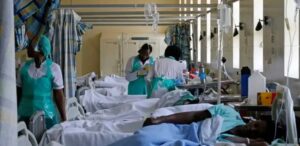
South Africa – 64.14 points
Tunisia – 57.18 points
Kenya
Algeria
Nigeria
Egypt
Morocco
200 private hospitals in South Africa
South Africa took first place thanks to its extensive network of over 200 private hospitals, alongside a public healthcare system funded by government taxes and direct citizen spending, with ongoing plans to implement a National Health Insurance system to expand free services.
The ranking indicated that South Africa achieved high ratings in medical staff efficiency, speed of completing examinations and reports, availability of the latest medical equipment, and diagnostic accuracy.
Tunisia is in second place
Tunisia ranked second thanks to its tax-funded public health system, managed by the National Health Insurance Fund (CNAM). It covers most of the population through a network of primary care centers and local, regional, and university hospitals.
Tunisia has recorded high levels of citizen satisfaction with the cost of services and ease of access to healthcare facilities.
Kenya and Algeria are among the top ranks
Kenya ranked third after succeeding in expanding primary healthcare services, providing free maternity services, supporting health insurance for the elderly and disabled, and achieving good results in access to health services.
Algeria ranked fourth, benefiting from a free public health system funded by the government, with national health insurance covering approximately 90% of the population, as well as the low cost and easy access to health services.
Nigeria surpasses Egypt and Morocco
Despite the challenges facing Nigeria's public health sector due to limited funding, the country ranked fifth thanks to the quality of services provided by the private sector, along with high ratings in the accuracy of medical reports.
Egypt is in sixth place
Egypt ranked sixth in the classification, and its health system relies on two sectors, public and private. The Ministry of Health provides governmental healthcare services through a wide network of hospitals and health units, in parallel with the implementation of the Comprehensive Health Insurance project, which aims to develop the health system and improve the quality of services provided to citizens.
Morocco is in seventh place
Morocco ranked seventh, benefiting from a state-managed health system since 1959, based on a network of primary healthcare and public hospitals, along with a social protection system covering workers in cases of illness, maternity, disability, and retirement.
The classification indicated that Morocco achieved good ratings in ease of access to health services and the accuracy of medical procedures, strengthening its position among the best healthcare systems on the continent in 2026.
In the same context, healthcare workers in South Africa face severe unemployment challenges, prompting many to emigrate to countries like Canada, Australia, the United States, Portugal, and the United Kingdom, which offer job security and growth opportunities.
Canada, which is facing a shortage of 60,000 nurses and 10,000 family doctors, has become an attractive immigration destination for healthcare workers from South Africa.
In 2025, it was reported that over 125,000 healthcare workers had resigned in South Africa over the previous decade, highlighting an internal crisis within the system that is driving willing professionals out.
The Ministry of Health revealed that South Africa lost 12,745 doctors, 58,897 nurses, 1,341 pharmacists, and 23,941 administrative staff between 2013 and 2025. In addition, 28,199 healthcare workers left, and approximately 6,000 doctors and nurses resign from government hospitals each year.
In Nigeria, the emigration of skilled professionals is a major challenge facing the health system, leading to a sharp decline in the number of doctors in the country.
According to the Organisation for Economic Co-operation and Development (OECD), Nigeria is considered one of the top three African countries exporting doctors. Doctors leave for numerous reasons, which vary depending on their career stage. For example, many leave immediately after graduation, usually to pursue international residency programs. Most doctors in this category often do not return to their home country, preferring to work in an environment that allows them to better utilize their newly acquired skills. The second reason is their inability to find a job or a training opportunity in residency programs. In this case as well, most doctors do not return to their home country to practice medicine.
There are usually two other categories of leavers. The first category leaves 5 to 10 years after graduation, typically in search of better salaries. The second category leaves after completing specialty training, which can take between 10 to 15 years after graduation. Specialists, who are the most qualified and skilled doctors, leave in search of better opportunities in other countries.
This displacement led to a decline in the quality of healthcare services due to the absence of qualified personnel.




 Arabic
  English
  French