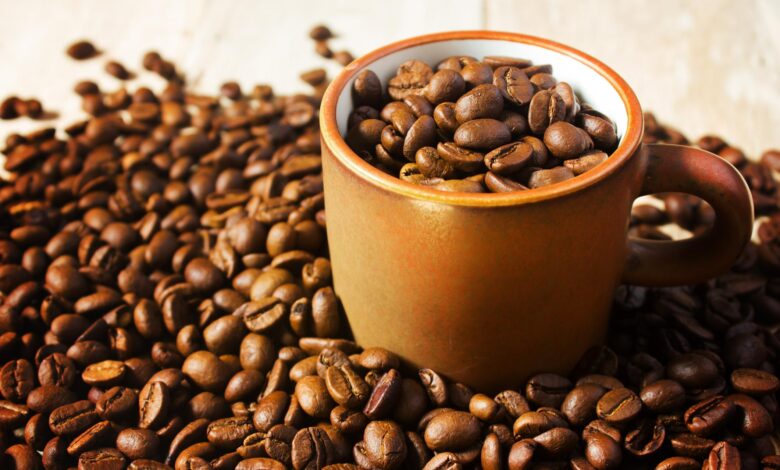
From African farms to Egyptian coffee cups... What is the truth about adulterated coffee in Egypt?
There is a discrepancy in estimates of the extent of fraud among sector officials, and warnings have been issued against mixing coffee beans with date pits.
Written by: Mohammed Omran
Talk of widespread coffee adulteration in Egyptian markets has sparked considerable controversy in recent days, following warnings issued by Mustafa Mohamed Ahmed El-Sheikh, head of the Coffee Mills and Traders Division at the Egyptian Chamber of Commerce in Alexandria, about the growing phenomenon and the use of non-compliant materials and additives in coffee manufacturing, warning of its impact on consumer health.
There is a discrepancy in estimates of the extent of fraud among sector officials, and warnings have been issued against mixing coffee beans with date pits.
In contrast, sector officials differed in their assessments of the scale of the phenomenon. Hassan Fawzy, head of the coffee division at the Cairo Chamber of Commerce, confirmed in exclusive statements to Zoom Africa News that talk of the adulteration rate reaching 80% does not reflect the reality of the market, stressing that violations are limited to a small number of random traders, in light of ongoing monitoring campaigns to combat commercial fraud.
In this report, Zoom Africa News details the statements of both parties, highlights the most prominent methods of coffee adulteration, ways to detect it, and expert advice for consumers to ensure they purchase a safe and compliant product.
In this context, Mustafa Mohamed Ahmed El-Sheikh, head of the Coffee Mills and Traders Division at the Egyptian Chamber of Commerce in Alexandria, said that the phenomenon of coffee adulteration was not widespread in the past, explaining that its beginning dates back to recent years after some major producers turned to imitating European markets and introducing artificial flavors to coffee, such as hazelnut, caramel, chocolate and others, which he considered the beginning of moving away from the authentic Egyptian taste.

He added that these additions were later legalized, although the situation was completely different in the 1960s, when merely adding cardamom to coffee was considered an offense that warranted accountability. The regulatory authorities would take samples of green, roasted, and ground coffee, and any smell of additions such as cardamom would lead to the rejection of the sample and legal action against its owner. He stressed that introducing different flavors to coffee contributed to changing the general taste and encouraged some unscrupulous people to expand their fraudulent practices by adding other, less expensive materials.
The sheikh added that Egyptian coffee had a distinctive character for decades, as families were keen to roast and grind it at home, giving houses a unique aroma that reflected the coffee's quality and purity. He explained that he had warned since the late 1990s about the dangers of importing inferior types of coffee and introducing artificial flavorings, emphasizing that these practices had corrupted Egyptian taste and opened the door to widespread adulteration. Some had come to believe that adding flavorings was no different from mixing coffee with other substances such as date pits, peas, or various grains, which contributed to the expansion of fraud in the market.
The head of the Coffee Mills and Traders Division at the Egyptian Chamber of Commerce in Alexandria added that the majority of coffee mill and factory owners in Egypt still maintain integrity and product quality, especially the long-established factories that have inherited the profession across generations, stressing that this group represents the majority within the sector and is keen to provide a product that conforms to specifications.
A limited number of violators
He pointed out that the real problem lies in a limited number of violators who have exploited the spread of artificial additives and flavors, which has led to the expansion of the phenomenon of fraud. He noted that he issued his warnings about this phenomenon out of his responsibility towards the health of citizens, after he noticed its increase in a way that requires the intervention of regulatory authorities, expressing his satisfaction that the concerned authorities have begun to move to confront these practices and limit their spread.
He added that all artificial flavors, or “flavors,” in themselves represent an addition that makes coffee lose its original taste and value, even before talking about mixing it with other substances.

The sheikh explained that one of the most dangerous methods of adulteration is the use of artificial flavors, in addition to mixing coffee with materials such as date pits, peas, and various grains, which are materials that are roasted until they acquire a color close to coffee. He warned that consuming them may cause serious health damage, most notably damage to the digestive system and liver. Also, the burnt materials may negatively affect the stomach wall, and in the long term may be linked to an increased risk of developing some serious diseases, including cancer.
He pointed out that consumers can detect adulterated coffee through several signs, most notably the absence of the characteristic strong aroma of good coffee upon opening the package. He explained that good coffee releases its aroma immediately after opening the bag, while adulterated coffee lacks this characteristic. He added that when a spoonful of pure coffee is placed on the surface of water, it remains there for a few seconds before gradually sinking, whereas adulterated coffee sinks directly to the bottom of the container due to its increased density from added substances.
Buy coffee from well-known and trusted mills and shops.
He pointed out that another sign of detecting fraud is adding drops of lemon juice to a cup of coffee. If an abnormal fizzing and thick foam occur, this may be evidence of the presence of additives such as sodium carbonate, which some fraudsters use to give the coffee a thick foam that deceives the consumer about its quality.
The sheikh added that another method of adulteration involves the use of so-called "coffee enhancers," which are chemical substances added to low-quality coffee to give it a better taste, thicker foam, and a texture that suggests higher quality. He explained that some of these substances are advertised on social media, despite being used in adulteration operations. He emphasized that these additives can deceive consumers, as they give the coffee a good appearance, while the raw material used is of the lowest quality.
He advised citizens to buy coffee from well-known and trusted mills and shops, or from major retail chains that rely on official invoices and known supply sources, stressing that trusted mills allow the customer to choose the type of coffee he wants, such as Colombian, Brazilian, Ethiopian, Indonesian or Yemeni coffee, and then grind it directly in front of him, which gives him greater confidence in the quality of the product and reduces the chances of being cheated.

The sheikh spoke about his experience in the coffee industry, noting that he visited Uganda in 1991 and observed the coffee industry there. He emphasized the high quality of Ugandan coffee, both Arabica and Robusta varieties. He also explained that coffee cultivation is limited to three main continents: Latin America, Central Africa, and Southeast Asia, due to its need for specific climatic conditions, including year-round rainfall, high temperatures, high humidity, and suitable soil.
He reviewed the stages of coffee production, starting from harvesting the fruits, drying them, and sorting them according to size and quality, noting that the majority of coffee imported to Egypt comes with high classification grades, while India, Vietnam, and Indonesia account for the largest share of global production, along with African and Latin American countries known for coffee production.
The 80% ratio is exaggerated.
In the same context, Hassan Fawzy, head of the coffee division at the Cairo Chamber of Commerce, confirmed that what is being said about the percentage of adulterated coffee in the markets reaching 80% does not reflect reality, stressing that this percentage is exaggerated, and that cases of adulteration are limited to a limited category of random traders who work outside the official system, while the market is subject to continuous monitoring by regulatory bodies.
Fawzi said that the regulatory authorities have proven their efficiency in confronting commercial fraud, pointing to their recent success in seizing a factory in Fayoum Governorate that uses date pits and peas to adulterate coffee, stressing that such practices pose a danger to the health of citizens and may lead to serious health damage, which necessitates confronting them firmly.

He added that fraud exists in various goods and not just in coffee, but it remains within a limited scope and cannot be generalized to the entire market, noting that the law is clear and strict in confronting commercial fraud crimes, and penalties reach severe imprisonment for violators.
The head of the coffee division explained that genuine coffee is distinguished by its unique taste, color, and aroma, noting that there are some tests circulating among workers in the field to determine the quality of coffee, but buying the product from a reliable source remains the safest way to ensure its quality.

Fawzi offered several pieces of advice to consumers, most notably buying coffee from well-known shops or brands, ensuring that it is ground and packaged in front of the customer whenever possible, reviewing the package data and making sure that there is a production and expiry date, address, and Egyptian standard specification number, and not being swayed by unreasonably low prices, as this may be an indication of poor product quality or adulteration.

Report any instances of fraud or manipulation immediately
He called on citizens to immediately report any cases of fraud or manipulation that are discovered, stressing that confronting fraud is a shared responsibility between regulatory bodies and consumers, and that citizens’ cooperation contributes to protecting markets and preserving consumer health.
He pointed out that African coffee is among the finest types of coffee traded in the markets, but its prices are higher than others due to its quality, noting that the coffee market in Egypt is currently stable.
Regarding prices, Fawzi explained that the price of a kilo of plain coffee is currently about 520 pounds, while the price of a kilo of spiced coffee reaches about 680 pounds, stressing that there are no expectations of new increases during the coming period, unless the coffee-producing countries witness global crises or natural disasters that affect production or supply chains.