Ecotourism in Africa: How has it transformed the continent's countries into an engine of the global economy?
One of the most important sectors that governments rely on to achieve sustainable development
Written by: Mohammed Omran
It no longer Ecotourism In Africa, it is not merely a recreational activity based on safaris or visits to nature reserves, but has become one of the most important economic sectors that governments rely on to achieve sustainable development, diversify sources of income, and protect biodiversity at the same time.
The continent possesses approximately 20% of global biodiversity, and includes hundreds of national parks and nature reserves, in addition to rainforests, deserts, coasts and islands that have made it one of the world’s leading ecotourism destinations.
Africa’s travel and tourism sector continues to achieve remarkable growth, with expectations that its contribution to GDP and employment will continue to rise in the coming years, driven by investment in sustainable tourism and infrastructure.
Rwanda
More than two decades ago, Rwanda was suffering the effects of genocide, but the government put ecotourism at the heart of its economic plans and succeeded in turning the mountain gorilla into one of the world’s most important tourist attractions.
Volcanoes National Park is the country's most popular tourist destination, as it contains part of the last remaining mountain gorilla population in the world, and allows a limited number of tourists to visit daily in order to preserve the environment and wildlife.
Rwanda adopted a “high value for limited numbers” policy, raising gorilla visitor permit fees to $1,500 per person, which helped increase revenues while reducing pressure on the environment.
Data from the World Travel and Tourism Council indicates that the sector achieved record performance in Rwanda during 2024, with its contribution reaching about 1.9 trillion Rwandan francs, equivalent to about 9.8% of GDP, and it provided more than 386,000 job opportunities, with international spending exceeding one trillion Rwandan francs for the first time.

The benefits are not limited to the government alone, as Rwanda allocates a percentage of the park revenues to fund schools, health centers and roads in the villages surrounding the reserves, making local residents partners in protecting gorillas instead of considering them a burden on their lives.
Botswana
Botswana offers one of the world's most successful models of ecotourism, having opted to receive fewer tourists in exchange for greater economic returns, in order to preserve wildlife and reduce environmental impact.
The country includes the Okavango Delta, the world’s largest inland delta and a UNESCO World Heritage Site, which transforms each year into an oasis that attracts hundreds of species of birds, mammals and reptiles.
It also includes Chobe National Park, which has one of the largest elephant populations in Africa, estimated at more than 120,000 elephants, making Botswana one of the world's most popular wildlife viewing destinations.
Tourism contributes significantly to the national economy, with the country relying on a combination of ecotourism and mining as its two largest sources of revenue, while the government imposes strict restrictions on the construction of hotels within nature reserves to preserve nature.
Tanzania
Tanzania occupies a special place in ecotourism thanks to the Serengeti National Park and the Ngorongoro Conservation Area, both of which are listed as World Heritage sites.
The country experiences the annual “Great Migration” phenomenon, in which more than 1.5 million wild animals, along with hundreds of thousands of zebras and gazelles, move between Tanzania and Kenya in search of pasture, in one of the largest natural phenomena on Earth.
Mount Kilimanjaro, the highest peak in Africa at 5,895 meters, also attracts tens of thousands of mountaineering enthusiasts annually, making Tanzania a destination that combines wildlife tourism and mountain tourism.
The Tanzanian government continues to invest in protecting parks, combating poaching, and improving roads and airports leading to tourist areas, thereby enhancing the sector's contribution to the national economy.
Kenya
Kenya is one of the most famous countries in the field of ecotourism, as it receives millions of visitors who wish to see the wildlife within the Masai Mara National Reserve, which is the natural extension of the Tanzanian Serengeti.
The Kenyan model is characterized by involving local communities in the management of reserves, as residents receive a share of the revenues in exchange for preserving the land and wildlife, which has contributed to reducing poaching and promoting rural development.
According to data from the World Travel and Tourism Council, the contribution of the travel and tourism sector to the Kenyan economy reached approximately $12.7 billion during 2025, representing about 9.31 TP3T of the GDP, while providing nearly 1.8 million job opportunities.
Kenya has also expanded the establishment of eco-lodges that rely on solar energy and sustainable water and waste management, becoming one of the leading countries in responsible tourism within the continent.
Uganda
Uganda is one of the most prominent ecotourism destinations in Africa, as it is home to Bwindi Impenetrable National Park and Mjahinga National Park, which together contain about half of the world’s remaining mountain gorillas, one of the most endangered animals.
Gorilla tracking attracts thousands of tourists annually, along with lion trekking tours in Queen Elizabeth National Park, safaris in Murchison Falls National Park, and birdwatching. Uganda boasts over 1,000 bird species, making it one of the world's richest countries in terms of avian diversity. The government prioritizes ecotourism as a key source of foreign currency.

Namibia
Namibia has successfully transformed its desert environment into a global attraction, boasting Etosha National Park, one of Africa’s most famous wildlife reserves, along with the Namib Desert, one of the oldest deserts in the world, and the famous Sossusvlei sand dunes.
The country has also become a leading destination for dark-sky tourism thanks to its clear skies and low light pollution, a type of tourism that is experiencing global growth. The government has adopted a community-based reserve management model that gives local residents a direct role in protecting natural resources and benefiting from their returns, which has contributed to increasing the number of wild animals and improving the conditions of rural communities.
South Africa
South Africa is the continent's largest tourism market, and has more than 20 national parks managed by the National Parks Authority, led by Kruger National Park, which covers an area of nearly 20,000 square kilometers and is one of the world's largest wildlife reserves.
The country offers an integrated experience combining safari trips, coastal tourism, mountain tourism, whale watching, and the Garden Route, making it one of the most diverse destinations in Africa. It also relies on a sophisticated infrastructure and a network of airports and roads that have enhanced its tourist status.
Gabon
Gabon has one of the highest forest cover percentages in the world, with forests covering approximately 881 TP3 teradiums (TP3 teradiums) of the country. In 2002, the government established 13 national parks covering approximately 111 TP3 teradiums, with the aim of protecting biodiversity and promoting ecotourism.
Luango National Park is one of the most popular destinations, famous for seeing elephants, hippos and gorillas roaming the beaches, a globally rare sight. Gabon has also become an important destination for whale, sea turtle and tropical forest watchers.

Madagascar
Madagascar is one of the world's richest countries in terms of biodiversity, with estimates suggesting that more than 80% of plants and animals are endemic and found nowhere else. The island is famous for its lemurs, giant baobabs, and national parks such as Andasibi and Isalo, along with marine reserves and coral reefs. Despite weak infrastructure in some areas, it remains one of the most attractive destinations for nature lovers and adventurers.

Zambia
Zambia is one of the fastest growing tourism markets in the south of the continent, and its tourism sector relies on 20 national parks and 34 wildlife management areas, covering approximately 30% of the country's area.
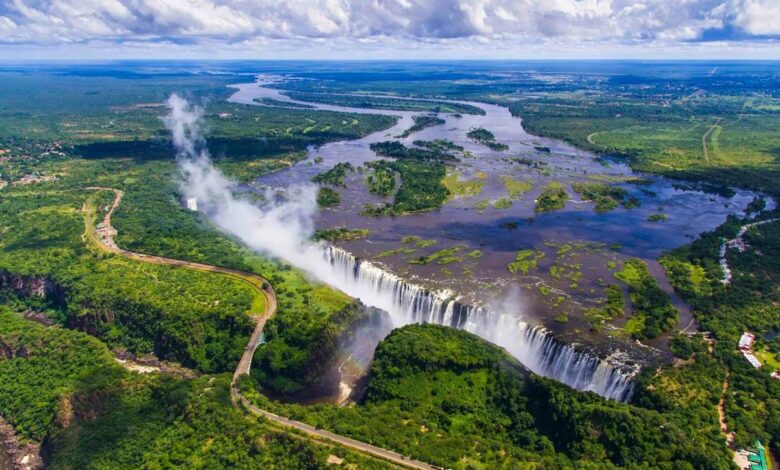
Victoria Falls, a UNESCO World Heritage Site, is its most prominent tourist attraction. Zambia welcomed approximately 2.2 million international visitors in 2024, an increase of 35.31 TP3T compared to 2023. The country is also renowned for its pioneering walking safaris within South Luangwa National Park, which is one of the best destinations for viewing leopards, elephants, and wildlife up close.

Zimbabwe
Zimbabwe shares Victoria Falls, one of the world's greatest natural landmarks, with Zambia. It also has Hwange National Park, home to one of the largest elephant populations in Africa, as well as the World Heritage-listed Mana Pools National Park. The country also boasts the Great Zimbabwe archaeological site, giving it the advantage of combining ecotourism and cultural tourism.

Mozambique
In recent years, Mozambique has become a model for the restoration of ecotourism, especially after the rehabilitation of Gorongosa National Park, which suffered extensive damage during the civil war. The park has been transformed into a global project for the rehabilitation of ecosystems, with programs to protect wildlife, support local communities, and promote sustainable tourism. The Bazaruto Archipelago is also one of the most important diving and marine tourism sites in the Indian Ocean.

Seychelles
Seychelles is one of the most prominent African models in marine ecotourism, as it has designated large areas of its waters as marine protected areas. It includes the Aldabra Reserve, the largest raised coral island in the world, which is listed as a World Heritage Site, in addition to the Vallée de Mai Reserve, which is home to the rare “Coco de Mer” palm. The country relies on strict policies to preserve the environment as a basis for the tourism industry.

Mauritius
Despite its fame as a beach destination, Mauritius has successfully integrated ecotourism into its strategy by protecting coral reefs, creating marine reserves, and preserving Black River Gorges National Park, which contains the last native forests on the island. It has also expanded into eco-friendly hotels and low-emission tourism projects, further cementing its position among the top sustainable destinations in the Indian Ocean.

African governments, in collaboration with international organizations such as the United Nations Environment Programme (UNEP) and the United Nations Tourism Organization (UN Tourism), are adopting strategies to promote sustainable tourism by protecting reserves, reducing carbon emissions, encouraging the use of clean energy within tourist facilities, and supporting community-based tourism that gives local people a greater role in managing natural resources.
Many countries have also begun to expand into sustainable marine tourism, birdwatching tourism, dark sky tourism, and adventure tourism, which contributes to diversifying tourism products and attracting new segments of visitors.
A promising future until 2035
Tourism experts believe that Africa has all the ingredients to become one of the world’s fastest-growing regions for ecotourism, thanks to its unique natural diversity, vast land and sea areas, and increasing global demand for sustainable travel.
With continued investment in environmental protection, improved infrastructure, easier mobility between African countries, and enhanced partnerships with the private sector, ecotourism is expected to become one of the most important drivers of the green economy in the continent over the next decade, boosting development while preserving the natural resources that are among Africa’s greatest competitive advantages.