Episode 3: Who is the outspoken black man?
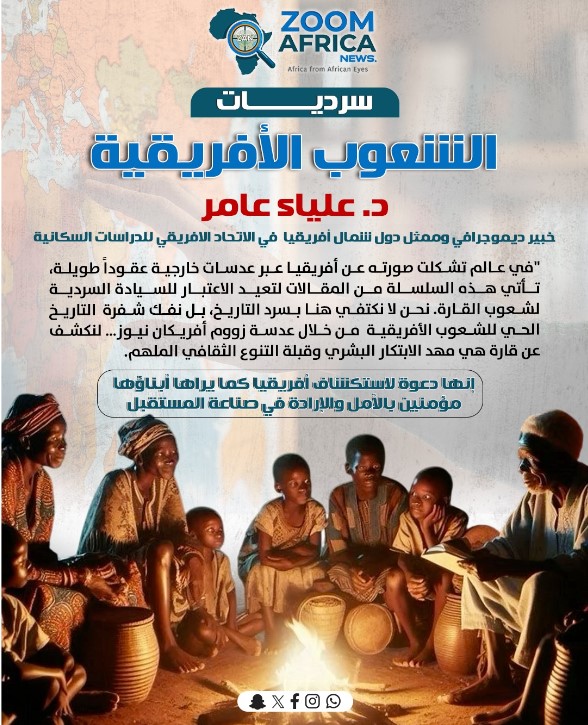
Narratives of African peoples
Prepared by Dr. Alia Amer, Head of the Equal Opportunities Unit at the Demographic Center, and Representative of North African Countries to the African Union for Population Studies
It spread among Black people The desert (secret societies), which we will describe later. They use wooden drums, which they sometimes beat at their musical gatherings, but sometimes they are used as a means of communication, to the point that some of them said that there is a language of the drum. They use masks, and they have skill in making them, and in carving wood to imitate the human image.
Horses and cattle are very rare in the coastal regions due to the prevalence of sleeping sickness, and the animals they raise are limited to goats, sheep, chickens and dogs; as for plant food, it was originally limited to beans, large pumpkins, bananas and some peanuts, and due to contact with Portugal, the cultivation of yams, which are similar to potatoes, cassava and corn, was introduced.
One of the most notable characteristics of the Black people of West Africa is their artistic prowess, particularly in sculpture and painting, a skill unmatched by any other group in sub-Saharan Africa. The pinnacle of this artistic achievement is found in the Benin and Ife regions and surrounding areas of southwestern Nigeria.
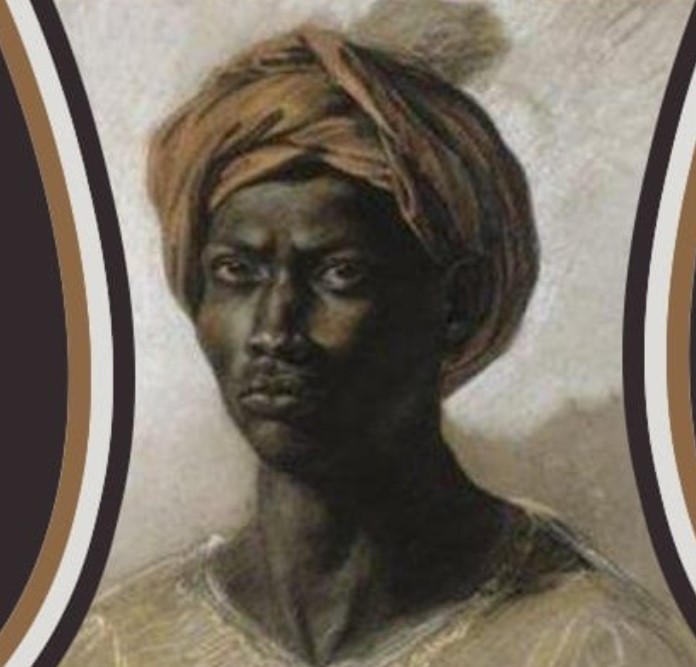
For centuries, the inhabitants here have excelled in the artistic carving of ivory and the making of masks and bronze statues. When the English captured the city of Ben in 1897, they found valuable collections of art masterpieces and transferred to the British Museum in London complete ivory carvings and bronze statues of great splendor and perfection.
Secret societies are widespread in the regions of West Africa. They are organizations of multiple forms, and their function may vary from place to place. In some cases, the element of secrecy may not be available, and anyone can join them after paying the prescribed fees.
In some societies, membership may be subject to strict conditions, and they may have their own language. Some may commit acts that annoy the rulers and may harm a segment of society. Most secret societies are bodies that only act within the limits of what concerns society.
It is keen to observe the public interest. Among the most famous of these associations is the Igboni Association among the Yoruba, and in Dahomey there is an association called Yewe that adheres to special religious rituals. Among the Imbeyo tribes in the southeastern part of Nigeria, the Igbo Association is very influential, and its members are arranged in about six to ten classes, and some of these classes may have members who wear special masks when they meet.
Some of these secret societies may be named after a profession, as if they were part of a guild, and one of the most famous is the Blacksmiths' Society.
We will specifically mention here an association called Poro, one of the most famous and influential associations. Its influence extends to the tribes of Sierra Leone and Liberia. This association constantly strives to preserve the fabric of society and maintain its traditions, and it has four main functions:
(1) Raising children, both sons and daughters
(b) Maintaining sexual morals
(h) Ensuring the integrity of political and economic affairs
(d) Attention to providing social, medical and sports services
It fulfills its educational mission through schools, or something resembling school classrooms, within the forests, where it undertakes the education of boys and girls (separately). Men who are educated take charge of the boys' classes, and women educate the girls. The aim is to raise each boy or girl so that he or she has knowledge of the affairs of the tribe and its traditions.
In general, the (students) are transformed from an ignorant generation into young men and women who have been properly prepared to be useful members of society.
As for the preservation of sexual morals, it has a subsidiary association called the Humoi, headed by a woman. Key positions within it are held by members of certain well-known families.
This association seeks to uphold the rules of marriage, permitting marriage only to those whose marriages conform to these rules. In addition to prohibiting marriage or sexual relations between close relatives, such as nephews or nieces, it also forbids a man from marrying his wife's sister, or any of her female relatives while she is alive, or any woman who was once married to his brother, or his mother or foster sister.
(h) Overseeing political and economic life: so that no serious position is assumed except by someone approved by the assembly or who is an important member of it: and the assembly shall try any person accused of a serious charge, and shall choose a judicial body to try him, the name of whose head remains unknown. The trial shall take place in a closed session.
The Poro community has special signs: placing these signs in a particular location serves as a warning to individuals to refrain from certain actions. For example, fishing when rivers are dry, as there is a fear that fish populations will become extinct if people overfish in the stagnant waters. Another example is harvesting potatoes before they are fully ripe. They also have numerous economic projects that are demonstrably beneficial to the community.
(d) As for social services, the most important of these is undoubtedly caring for the sick. This aspect is handled by another sub-association whose members are from small families. There are also other services for organizing important celebrations on occasions that concern the entire community, and for organizing related singing and dancing.
There is no doubt that such associations do more good than harm. If they clash with governments, it is because they operate within the same sphere as governmental bodies. While opinions may not always align on all issues, these associations are a defining characteristic of life in West Africa, and they also exist in parts of Cameroon and Congo, as well as in the upper Congo and the upper Bahr el Ghazal region among the Zande people, though they are less dangerous there.
It is likely that the Mau Mau Society, founded by the Kikuyu and which strained the government in Kenya, must have been influenced in its establishment and methods by such traditions prevalent in West Africa, despite what is said about the absence of the phenomenon of secret societies in East Africa.