Central African Republic government resigns; Touadéra moves towards the seventh republic amid escalating crises
The President of the Central African Republic accepts the resignation of the government and opens the door to the Seventh Republic.
Written by: Badr Ahmed
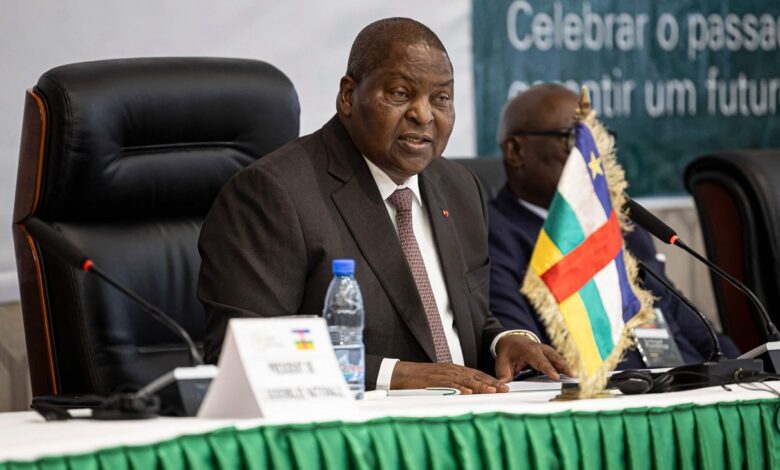
The Central African Republic has entered a new political phase after President Faustin-Archange Touadéra accepted the resignation of Prime Minister Felix Mollo and his government, a move that reflects the profound transformations taking place in the country following the general elections held in December 2015, and opens the door to reshaping the political landscape in one of the world’s most fragile and impoverished countries.
The President of the Central African Republic accepts the resignation of the government and opens the door to the Seventh Republic.
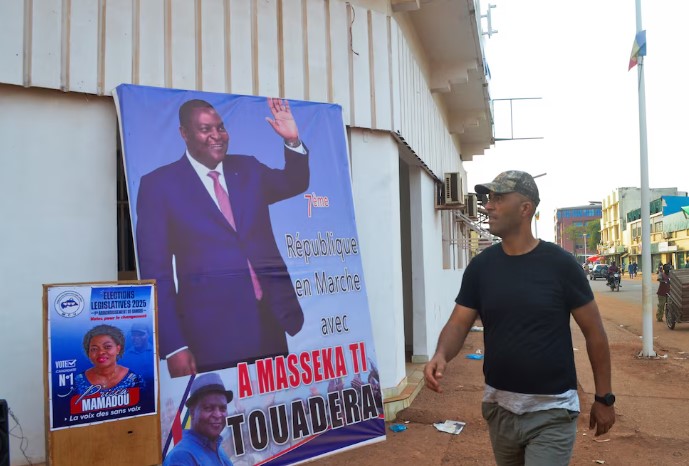
The resignation comes as part of the transition to what is known as the Seventh Republic, the political and constitutional project proposed by Touadéra during his campaign for a third presidential term. The project includes controversial constitutional amendments, most notably the removal of term limits and the extension of each presidential term to seven years.
The president’s supporters see these amendments as a step towards achieving political stability and strengthening state institutions, while his opponents consider them an attempt to consolidate power and prolong Touadéra’s rule, especially in light of the legal and constitutional controversy that accompanied his candidacy for a third term.
Felix Mulua’s government is leaving power after four years marked by complex economic and security challenges, as the country experienced successive crises including fuel shortages, wage freezes, and rising poverty rates, at a time when the state is suffering from weak infrastructure and declining basic services.
The fragile security situation continued to impose itself on the domestic scene, despite government efforts to restore stability in the face of armed groups spread across large parts of the country.
These crises have become more complicated with the decline in Western support and aid, in light of the growing Russian influence within Central Africa through the spread of Wagner Group elements, which have played an increasing role in the security and political files in recent years.
With the legislative election results finalized and the new National Assembly bureau formed, attention in the capital Bangui is now focused on the announcement of a new prime minister to lead the next phase, amid expectations that he will face heavy challenges related to reviving the economy, strengthening security, and rebuilding trust among the components of society.
Observers believe that the next government will face a real test to prove its ability to strike a balance between the requirements of political stability and economic reform, in a country that is still suffering from the effects of conflicts and divisions that have lasted for years.