Egypt strengthens its role as a regional healthcare hub during Africa Health ExCon 2026
From pledges to implementation: African experts call for turning health sovereignty into a practical reality.
Written by: Badr Ahmed
The sessions of the first day of the fifth edition of the Africa Health ExCon 2026 exhibition and conference highlighted the importance of regional and continental cooperation to maximize the benefits of healthcare systems, and reviewed Egyptian presidential initiatives, national plans and regional cooperation aimed at supporting the health and medical sectors in Africa.
The conference is being held under the patronage of Egyptian President Abdel Fattah El-Sisi, under the slogan “Health Sovereignty in Africa: Leadership, Resilience and Self-Reliance,” in cooperation with the Africa Centres for Disease Control and Prevention (Africa CDC), reflecting Egypt’s position as a leading regional hub in supporting and developing the health care system on the continent and promoting health integration efforts among African countries.
The international event brings together a select group of African health ministers and medical sector leaders, along with the participation of more than 400 local, regional and global companies, with an expected attendance of over 45,000 visitors.
A breakthrough in the management of the Egyptian health system
Dr. Hisham Steit, head of the Egyptian Authority for Unified Procurement, affirmed that the Egyptian state has succeeded during the past seven years in making a real leap in the management of the health system, overcoming the challenges that accompanied the establishment of the authority, most notably providing specialized competencies, securing budgets, and establishing the basic infrastructure for work.
During a session on commitments to institutional maturity: achieving health sovereignty in Africa, Stitt explained that the Authority’s strategy focused on turning challenges into tangible achievements by developing a precise plan to meet the needs of the health sector, supporting the strategic goal of transforming Egypt into a leading regional pharmaceutical hub.
He pointed out that the Authority has a comprehensive plan to secure all the necessary medical and pharmaceutical supplies for the country during the next two years, stressing that the political leadership’s support for health investment has contributed to achieving unprecedented growth of 50% in resources and investments, in addition to developing pharmaceutical facilities and providing about a thousand pharmaceutical products.
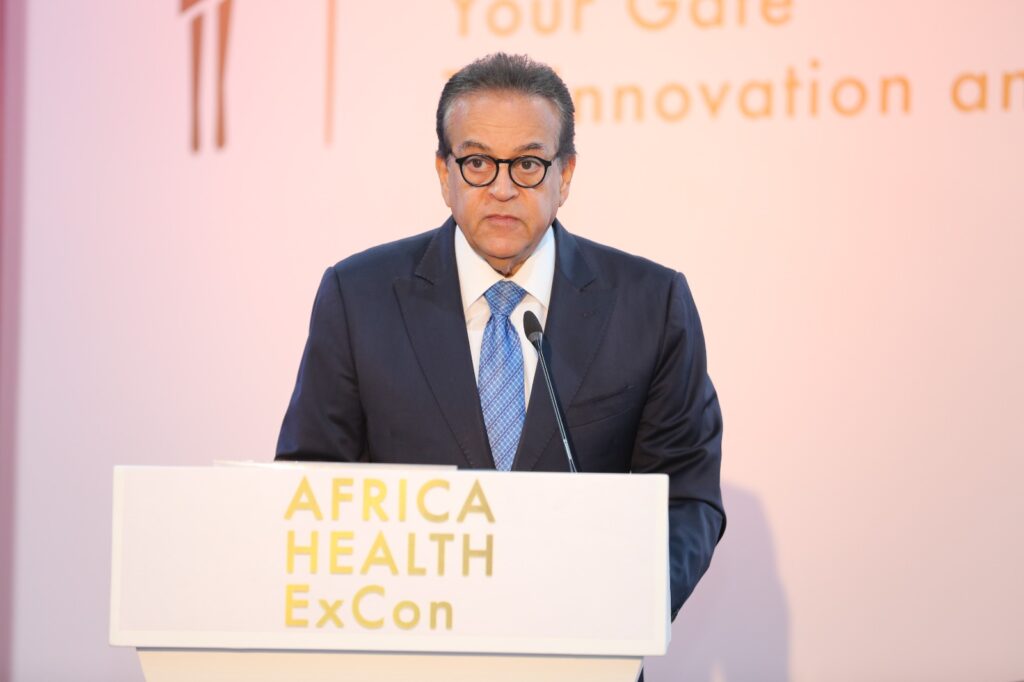
He also announced the completion of the development of the blood donation cycle to become a safe, sustainable and permanently available system for patients, stressing the Authority’s continued efforts to enhance efficiency and reliability in medical supply chains.
Health sovereignty in Africa: From pledges to implementation
Participants in the session on health sovereignty in Africa affirmed that the continent has moved beyond the stage of being satisfied with declarations and pledges, and is now required to focus on practical implementation and translate continental priorities into effective health systems that achieve readiness, resilience and equitable access to health services.
The speakers explained that the continent does not suffer from a lack of commitments, but rather has entered the stage of delivery and achievement, stressing the need to transform the concept of health sovereignty into an executive agenda that requires coordination between governments, health financing and manufacturing systems, workforce development and good governance.
The session was attended by Dr. Adel El-Adawy, Chairman of the Scientific Committee of the Conference and former Minister of Health, Dr. Landry Tsage, Director of Primary Health Care at the Africa Centres for Disease Control and Prevention, Dr. Adham Ismail, Director of Programs at the Regional Office for the Eastern Mediterranean of the World Health Organization, Dr. Aden Duale, Kenyan Minister of Health, Ambassador Karim Sherif, Assistant Minister of Foreign Affairs for African Affairs, along with Dr. Hisham Steit, while a recorded speech was delivered by the Minister of Finance, Ahmed Kouchouk.
Kidney diseases: Latest treatments and challenges
The conference featured a specialized session on kidney diseases that addressed the latest therapeutic developments and the economic and ethical challenges associated with the disease, with the participation of a select group of experts and specialists.
The session reviewed the latest developments in genetic biological diseases affecting the kidneys and modern treatment protocols, in addition to discussing opportunities for localizing the kidney dialysis supplies industry.
The session on kidney diseases in Africa also discussed the close relationship between heart disease, kidney disease, blood pressure, diabetes, and obesity, with participants emphasizing the importance of adopting an integrated therapeutic collaboration model between different medical specialties to ensure more comprehensive and effective healthcare.
During a special session, urology experts discussed the latest strategies to improve the outcomes of flexible endoscopic kidney and ureter surgeries and to deal with complex cases, emphasizing the importance of advance planning and rapid adaptation during surgery to achieve the best results and reduce complications.
Cancer, genomics, and digital pathology
The Egyptian Cancer Society held a session that addressed efforts to combat cancer in Egypt and Africa.
Dr. Cisaltina Lorenzoni, representative of the Ministry of Health in Mozambique and president of the African Organization for Cancer Research and Training, emphasized the importance of cancer research and the challenges it faces.
For her part, Dr. Sarah Agwa reviewed the importance of genomics in treating tumors, stressing that Egypt has become the gateway to Africa and the Arab world in this field, citing the success of the Ain Shams Medical Research Center (MASRI). .
Dr. Manal Al-Mahdi also confirmed that Egypt has a pioneering experience in digital pathology, expecting that this specialization will contribute to addressing the shortage of pathologists in the future.
Liver disease, diabetes, and obesity
A specialized session discussed metabolic fatty liver disease (MASLD) as a growing health threat in Africa, with a focus on its risks in children and adolescents.
The conference also featured an extensive session on diabetes and obesity with the participation of a number of leading international experts, during which the global burden of the two diseases was reviewed and ways to improve the quality of life of patients through integrated health strategies were discussed.
100 Million Healthy Lives: A Model for Bridging Health Gaps
Eva Pharma, in collaboration with the 100 Million Healthy Lives Initiative, organized a session that discussed the role of presidential initiatives in achieving comprehensive health care.
The participants affirmed that the presidential initiative succeeded in bridging healthcare gaps in various governorates through 16 presidential initiatives costing approximately $100 million, and contributed to the early detection of Hepatitis C, chronic diseases, diabetes, and high blood pressure, while ensuring follow-up for patients after treatment.
Healthcare financing and revenue sustainability
The session on the future of healthcare financing and revenue cycle sustainability in Egypt and the Middle East discussed the importance of achieving financial sustainability for healthcare institutions and relying on accurate data in decision-making.
The session addressed the reasons for revenue loss, including the poor efficiency of human resources and reliance on manual procedures. It also reviewed the role of technology, digital transformation, and database unification in raising collection efficiency and reducing financial waste.
Economics of medical laboratories
The session on the economics of medical laboratories in the era of health insurance addressed the impact of international laboratory accreditation on cost, quality, and economic return, while discussing the hidden costs of accreditation and the financial planning mechanisms and budgets required to ensure the best return on investment.
Hemophilia: Calls for expansion of treatment centers
The conference included a workshop on recommendations for managing hemophilia treatment, which emphasized the importance of early detection of the disease and starting treatment in a timely manner.
The participants revealed that there are about 7,500 cases of hemophilia in Egypt at different ages and with different medical conditions, noting that the cost of treatment may reach two billion pounds annually, while calling for an increase in the number of specialized centers to receive patients.
Health tourism: A strategic opportunity for growth
The conference continued to discuss the issue of health tourism as one of the most promising sectors capable of supporting the national economy and enhancing the status of countries regionally and internationally.
The sessions focused on investment opportunities in medical tourism and mechanisms for building an accredited and reliable health system in accordance with international standards, which would contribute to attracting patients from different countries around the world.
Tissue engineering and advanced treatments
The first day's sessions concluded with a discussion of the latest applications of tissue engineering and cell therapy in modern healthcare, including the treatment of malignant hematological tumors and the use of tissue engineering techniques in the treatment of burns.
The participating experts affirmed that regenerative medicine and cell therapies represent one of the most prominent axes of the future of healthcare, given the promising opportunities they provide for developing treatment and improving patient outcomes.