The United Nations accuses India of supporting Israel and undermining the international order.
UN condemns India's support for Israel
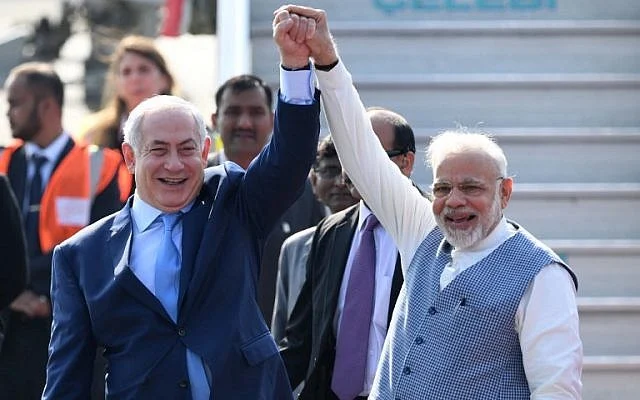
The UN Special Rapporteur on Territories said Occupied PalestinianFrancesca Albanese said that India “is violating its obligations under international law and may be facing liability” because of its continued relations and support for Israel in the context of the war on Gaza.
In an interview with The Hindu, Albanese stressed that “the legal responsibilities are clear,” emphasizing that the International Court of Justice declared the occupation illegal and imposed an explicit obligation on states “not to trade, not to transfer arms, and not to purchase arms from a state accused of maintaining an illegal occupation.”.
She added in a decisive tone: “Within this framework, India is violating its obligations under international law, and may also be facing liability.”.
Unambiguous legal obligations
Albanese stressed that the obligations of third countries “are not a matter of choice,” but a direct legal obligation, noting that the seriousness of the situation is compounded “in the context of a genocide currently being considered by the International Court of Justice.”.
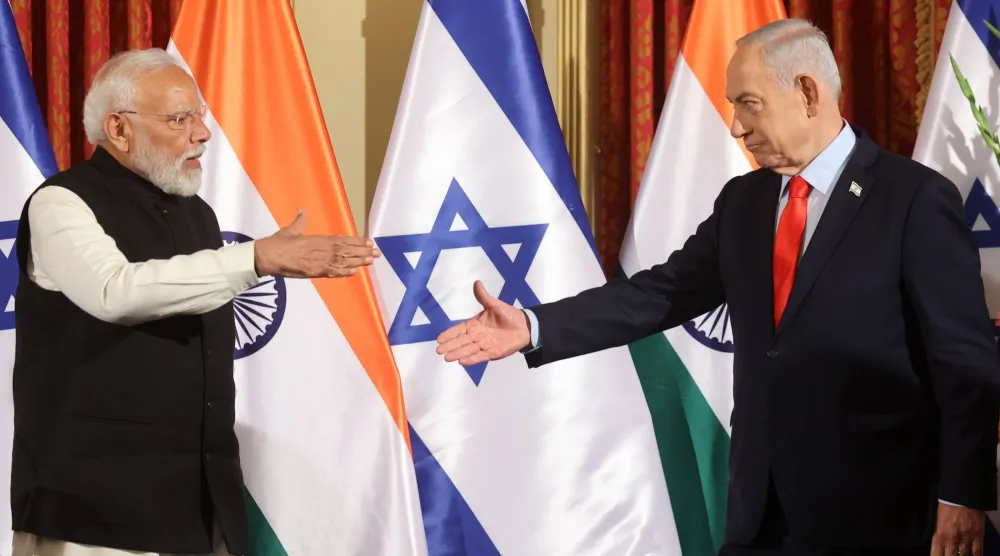
She also pointed out that Israeli Prime Minister Benjamin Netanyahu is “accused of war crimes and crimes against humanity,” which makes any support for him “potentially subject to legal accountability.”.
She stated clearly: “Countries that support Israel in ways that harm Palestinians could face legal scrutiny and, under appropriate circumstances, accountability.”.
Direct accusations regarding weapons
Regarding India, Albanese referred to reports indicating continued exports military components To Israel, saying that “providing weapons or any form of support contributes to the continuation of this illegal situation.”.
Reports, including those from Al Jazeera, indicated that Indian companies continued to export missiles, explosives, and military components during the war.
Nevertheless, India’s Supreme Court rejected a petition to halt these exports, a move that critics say reinforces the continuation of this trend.
A radical critique of the Indian role
In a reading that goes beyond law to politics and history, Albanese said: “India and Israel, or historical Palestine, share the fact that their formation was influenced by British colonialism.”.
She added: “Both emerged from British colonialism. Israel was established within Palestine during that period, and today it is a member of the United Nations, and it must act accordingly. And India too.”.
But she returned to emphasize in a sharply critical tone: “It seems to me that India and Israel are contributing today to the erosion of the international order that our ancestors painstakingly built.”.
“A systematic collapse of the international order”
Albanese broadened her criticism to include what she described as the international system's slide toward "illegitimacy," saying that figures like Donald Trump and Netanyahu "are twisting the arm of the system, pushing to make lawlessness so widespread and systematic that it has become contagious.".
She also stressed that “responsibility is not limited to states,” adding: “There is also criminal responsibility on individuals who authorize or approve of such policies.”.
She pointed to legal actions in countries such as Italy targeting government officials over their support for Israel.
A moral responsibility that is "no less serious"“
Albanese stressed that “there is something no less serious than legal responsibility, which is moral responsibility,” considering India’s current position to be “worrying” given its history of resisting colonialism.
She stated bluntly: “There seems to be a betrayal of that past in India’s association with Israel,” adding that its leaders “have chosen to stand on the other side.”.
UN report: “A systematic torture environment”
In her latest report to the Human Rights Council, entitled “Torture and Genocide”, Albanese concluded that Israel has been “practicing systematic torture” against Palestinians since October 2023.
She described Gaza as a “vast torture camp,” asserting that the Israeli authorities “engineered a torture environment aimed at breaking resistance, dignity, and resilience.”.
The report documented more than 18,500 arrests, including about 1,500 children, and more than 4,000 enforced disappearances, along with the use of surveillance technologies such as facial recognition and drones to impose a “permanent climate of fear.”.
He also pointed to the torture of more than 50 UNRWA employees, the targeting of doctors, journalists and activists, in addition to accusations of prison doctors colluding in falsifying medical records.
Towards international accountability?
Albanese concluded that “the scale and nature of these acts, including those occurring outside detention centers, rise to the threshold of genocide,” within the context of a broader system of apartheid and settler colonialism.
In light of this, the question remains open: Will these warnings turn into actual legal paths that affect the supporting countries, especially India, or will the international system – as Albanese describes it – continue its slide towards further erosion?