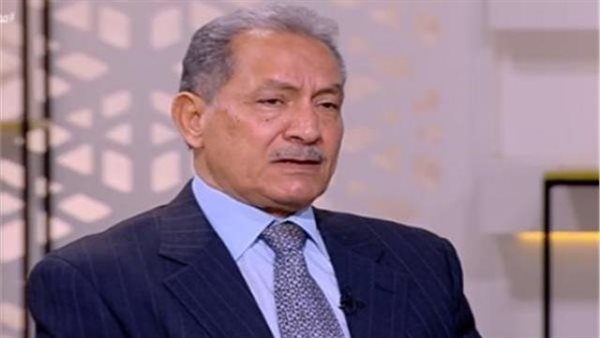
The Vice President of the Egyptian Council for African Affairs, in an interview with “Zoom Africa News”, stated: “Egypt is active in resolving the continent’s crises and promoting stability.”
Ambassador Salah Halima: Egyptian-African relations are based on a comprehensive strategic partnership.
Interview by Badr Ahmed
In light of the rapid transformations taking place in the African continent, whether in terms of security and political conditions or the increasing international competition for influence and resources, Egypt continues to strengthen its presence within the continent through a vision based on strategic partnership and joint cooperation in various fields.
In this context, Zoom Africa News conducted an interview with Ambassador Dr. Salah Halima, Vice President of the Egyptian Council for African Affairs, to discuss the reality and future of Egyptian-African relations, the most prominent aspects of Egyptian action within the continent, and Cairo’s role in dealing with regional crises and development challenges.
Here is the text of the dialogue...
To begin with, how do you assess the current level of Egyptian-African relations in light of the developments taking place on the continent?
Egyptian-African relations are deeply rooted in history, dating back to the era of national liberation and independence movements in the African continent, where Egypt played a leading and pioneering role, especially during the era of the late President Gamal Abdel Nasser.
Egypt was a major center for African liberation movements, hosting the offices of many national movements fighting for independence. It also contributed, along with several founding African leaders such as Kwame Nkrumah and others, to the establishment of the Organization of African Unity, which later evolved into the African Union.
During that period, the Egyptian role was not limited to the political aspect only, but extended to the economic and commercial fields as well, through institutions such as Al-Nasr Import and Export Company and others, within the framework of a vision that aimed to enhance cooperation and African unity.
In the current stage, and in light of the regional and international developments that the continent has witnessed, Egyptian-African relations have started from a different vision based on the concept of “geopolitics” and not just the traditional geographical dimension.
Egyptian relations with African countries are no longer based solely on geographical affiliation to the continent, but rather on a comprehensive strategic vision that takes into account common interests and regional and international challenges, especially with the presence of ten Arab countries within the African continent.
What are the main aspects of this Egyptian vision towards Africa?
The Egyptian vision is based on four main pillars that form the basis of the strategic partnership with African countries.
The security and military axis, which is represented in cooperation in the fields of security and defense, combating terrorism, organized crime, human trafficking and illegal immigration, in addition to dealing with the issues of displaced persons and refugees.
Egypt’s role has been clearly evident in combating terrorism and participating in peacekeeping operations, as well as the important role played by the Cairo International Center for Conflict Resolution, Peacekeeping and Peacebuilding, which has become one of the important mechanisms for supporting stability in the continent.
On the political front, recent years have witnessed active Egyptian political action to contribute to the resolution of many African crises, not only in regions close to Egypt, but across the entire continent.
This includes developments in Somalia, Sudan, Libya, the Democratic Republic of Congo and the Sahel region of Africa, especially in light of the changes that the region has witnessed and the decline of French influence in some Francophone countries.
In this context, Egypt sought to build new and balanced partnerships, both with African countries and with international powers concerned with the continent.
The Egyptian vision in this regard is based on a set of fundamental principles, foremost among them being the preservation of the unity and territorial integrity of states, the safeguarding of national state institutions, the protection of the people’s resources, and non-interference in the internal affairs of states.
The economic axis: Egypt played a pivotal role in supporting economic development efforts in the continent, especially during its presidency of the African Union in 2019 and thereafter.
Egyptian efforts have focused on developing and modernizing African infrastructure, whether through land, sea and river road projects, electrical interconnection, or major continental projects such as the Cairo-Cape Town road, and the project to link Lake Victoria with the Mediterranean Sea.
Egypt has also supported efforts to attract investments to infrastructure projects, whether through the Egyptian private sector or through international financial institutions and donor countries, in order to contribute to achieving the Sustainable Development Goals in the continent.
Cairo has always stressed the importance of investing African resources for the benefit of African peoples first and foremost, and that the continent's relations with major powers should be based on balance and achieving common interests.
Egypt also played an important role in establishing and activating the African Continental Free Trade Area, with the aim of promoting intra-African trade and raising the rates of economic integration among the countries of the continent.
The accession of a number of African countries to the BRICS group, and the participation of some African countries in the G20, played a role in enhancing the continent’s position on the international stage, in addition to the conferences and partnerships that bring Africa together with China, Russia, India, the United States and other international powers.
At the same time, the continent has witnessed increasing interest from various regional powers, such as Saudi Arabia, the UAE, Kuwait, Turkey and Iran, which has called for an Egyptian role aimed at ensuring that these relations are balanced and serve the interests of African countries.
On the social and capacity-building front, Egypt has a long track record of cooperation with African countries in the areas of education, health and capacity building.
This was evident in the various training programs, scholarships, support for the development of health systems, and contributions to efforts to combat the Coronavirus pandemic, as well as the organization of youth forums that contributed to preparing and qualifying young African cadres and leaders who assume important responsibilities now and in the future.
This aspect represents one of the most important sources of Egyptian soft power within the African continent.
How do you view Egypt's role in dealing with current African crises and issues?
Egypt is present and active in the various issues and challenges facing the African continent, whether related to the situations in Somalia, Sudan, Libya, Congo, or the Sahel region of Africa.
It also pays close attention to issues related to food security, water security, energy security and climate change.
In all these matters, Cairo seeks to support efforts aimed at reaching peaceful and sustainable solutions and settlements, based on respect for relevant international charters, laws and agreements, and in a way that achieves stability and development for the peoples of the African continent.
Of course, here is the polished journalistic version of the dialogue, preserving all the ideas and responses contained in the ambassador's answer without deleting any of the content:
How do you view Ethiopia's efforts to reach the Red Sea, and what is the nature of the threats facing Egypt in this matter?
There are moves led by a group of parties, including Ethiopia and Israel, and possibly with indirect American support, along with other regional parties, aimed at finding a new foothold in the Red Sea region, taking advantage of the strategic location of the Somaliland region at the entrance to the Red Sea and the Gulf of Aden.
The Somaliland region does not have any legal status that entitles it to conclude agreements or memoranda of understanding with other countries, as it is part of the internationally recognized Somali state. Therefore, any agreements signed with it are considered to be in violation of international law and the principles on which the African Union is based, which are based on respect for the sovereignty of states, their territorial integrity and their regional safety.
These moves, whether from the Ethiopian or Israeli side, have been met with widespread rejection by relevant regional and international states and organizations, as they represent a clear violation of international legal rules.
Israel, for its part, seeks to strengthen its presence in the southern Red Sea, after its presence in the north through the port of Eilat, considering that any attempt to recognize Somaliland as an independent state or to establish political arrangements with it does not entail any international legal consequences, which explains why these steps have not received widespread international recognition or support.
The Ethiopian position also faces an additional problem, which is that Ethiopia itself includes regions that demand expanded autonomy or secession, which makes its adoption of positions that encourage undermining the territorial integrity of another country a matter that raises many questions.
What is your assessment of the memorandum of understanding signed between Ethiopia and Somaliland?
The memorandum of understanding signed between the two parties is legally invalid, because one of its parties does not have the necessary international legal personality to conclude such agreements. The Somali government has the right to take all necessary legal and political measures to confront this step. The Red Sea littoral states also have the right to emphasize that the responsibility for the security and stability of the Red Sea rests solely with its littoral states.
Furthermore, international laws and agreements do not grant any non-coastal state the right to impose its presence or acquire the status of a Red Sea coastal state through illegal arrangements, which makes these attempts legally and politically unacceptable.
There is talk of Ethiopia seeking to establish a presence on the Red Sea by force. How do you view this?
Ethiopia is not only trying to gain access to the sea through agreements or understandings that are subject to legal controversy, but some of the statements and positions issued by it reflect a desire to impose this presence by force, which is reflected in the escalating tension between it and Eritrea.
These developments have prompted the countries of the region to strengthen coordination among themselves, whether through joint defense agreements or through unified political positions, noting that Egypt, Somalia, Eritrea and Djibouti adopt a clear position that rejects any attempt to grant a non-shore state legal status on the Red Sea outside of internationally recognized frameworks. This position is based on the rules of international law and the charters regulating the Red Sea, which limit the responsibility for its security and stability to the countries bordering it.
Moving on to the Grand Ethiopian Renaissance Dam (GERD) issue... How do you assess the current Ethiopian position?
Ethiopia has been pursuing a policy of imposing a fait accompli regarding the Renaissance Dam for years, an approach that, according to him, contradicts international law and the agreements and charters regulating international rivers. The unilateral actions taken by Addis Ababa cause serious damage to the downstream countries, Egypt and Sudan, and directly affect their vital interests and water needs.
The danger of the dam is not limited to the possibility of collapse and the catastrophic repercussions it may cause for Sudan, but also extends to periods of drought, prolonged drought and water-scarce years, which may lead to a severe shortage of water affecting the water and food security of both Egypt and Sudan. These conditions raise real concerns regarding the rights of peoples to life and development, rights which are protected by international law and the Charter of the United Nations.
What is your comment on the talk about new Ethiopian projects and dams on the Blue Nile?
The Blue Nile is an international river shared by the three countries, and is not a unilateral resource that the upstream country has the right to dispose of alone. The rules of international law, particularly Articles 5, 6 and 7 related to the use of international waterways, are based on the principles of equitable and fair distribution of water, not causing serious harm to other countries, and joint cooperation between riparian states.
Any future projects must be undertaken within a framework of cooperation and consensus, and not through unilateral policies that lead to clashes and create crises.
What paths does Egypt see for resolving the Grand Ethiopian Renaissance Dam (GERD) crisis?
Egypt still prefers peaceful and legal solutions, and is moving along three main paths. The first path is for Ethiopia to return to compliance with international law and the conventions regulating international rivers, and to abandon the policy of imposing a fait accompli.
The second path is to resort to international or regional mediation capable of influencing the Ethiopian position and compelling it to comply with legal norms. He points out that Ethiopia has previously rejected mediation proposals, despite the fact that the Framework Agreement and international law recognize it as a means of dispute resolution.
Egypt continues to insist on reaching a legally binding, fair and equitable agreement on the dam, a demand that enjoys broad international and regional support, and is also supported by resolutions and positions issued by the United Nations and the Security Council.
The third path is to resort to the United Nations and the mechanisms stipulated in its Charter for settling disputes by peaceful means, with reference to the rights guaranteed by the Charter to states in the face of threats to their security and existence.
What about the Nile Basin Framework Agreement?
There are two main points of contention in the Nile Basin Framework Agreement. The first relates to the decision-making mechanism, as some of the proposed formulas rely on the principle of majority rule, which may allow decisions to be made that affect the interests of the downstream countries without considering the repercussions for them.
The solution lies in the majority including the approval of the downstream countries, or in decisions being made unanimously to protect the interests of all parties.
The second point relates to some clauses that he believes conflict with the principles of international law, especially those relating to the need for prior notification of any new projects on the river, ensuring that no serious harm is caused to other countries, and achieving fair and equitable use of shared water resources.
Egypt will remain committed to international law and peaceful solutions, while continuing to defend its water rights and strategic interests within the framework of international legitimacy and the charters regulating relations between states.