South Africa intervenes to save the Ferrocom industry from collapse
The agreements involve two companies with different durations.
Written by Ziad Abdel Fattah:
The regulatory body approved National Energy In South Africa, NERSA is implementing a temporary reduced electricity tariff for struggling ferrocom producers, in a move aimed at supporting a vital sector facing increasing pressure as a result of rising energy costs.
The new tariff is 0.62 Rand per kilowatt-hour.
The state-owned electricity company Eskom announced on Friday that the new tariff is 0.62 rand (about $0.0383) per kilowatt-hour, after receiving approval from regulators following a public hearing held earlier this week.
The “ferrocomm industry” refers to the production of iron alloys mixed with other elements such as silicon or chromium. These alloys are mainly used as basic additives in the iron and steel industries and foundries to improve product quality, remove impurities, and increase resistance to heat and corrosion.
The decision includes Samancor Chrome and a joint venture between Glencore and Meravi Resources, with agreements extending for varying periods, up to five years for Samancor and three years for the joint venture.
South Africa's position as the world's largest chromium processor has declined.
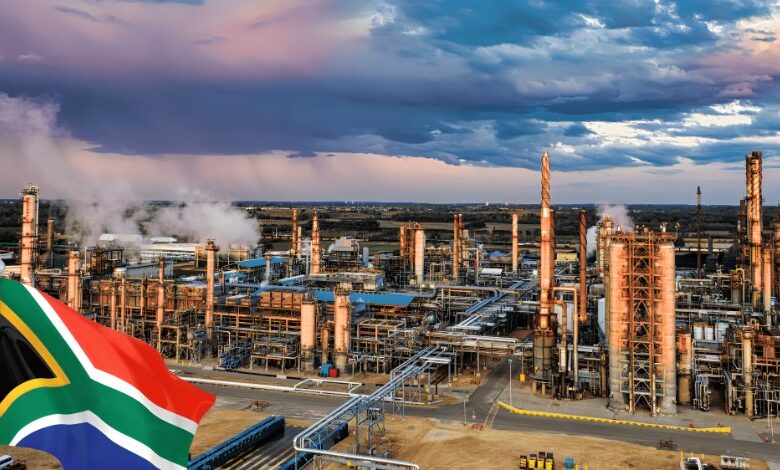
The move comes as South Africa's position as the world's largest ferrochrome processor has declined, after it lost the lead to China, due to sharp jumps in electricity prices, which have increased about tenfold since 2008, leading to the closure of dozens of smelters.
Eskom confirmed that the new framework does not require any additional financial support from the government, and includes a fair profit-sharing mechanism linked to market performance, along with clear arrangements for risk distribution.
The company's CEO, Dan Marrocan, said the new system "operates within a clear regulatory environment and includes effective risk-sharing mechanisms, without placing additional burdens on consumers or taxpayers.".
Ferrocomm production is an energy-intensive industry, where chromium ore is combined with iron to produce ferrocomm, which is mainly used in the steel industry.
It is noted that the exchange rate used in the calculations was 16.1958 rand per US dollar.