Ants sold for $250... The love of wealth threatens wildlife in Kenya
African harvest ants in Kenya
Written by Ziad Abdel Fattah:
Kenya is facing a new form of illegal wildlife trafficking: the smuggling of giant African harvest ants out of the country.
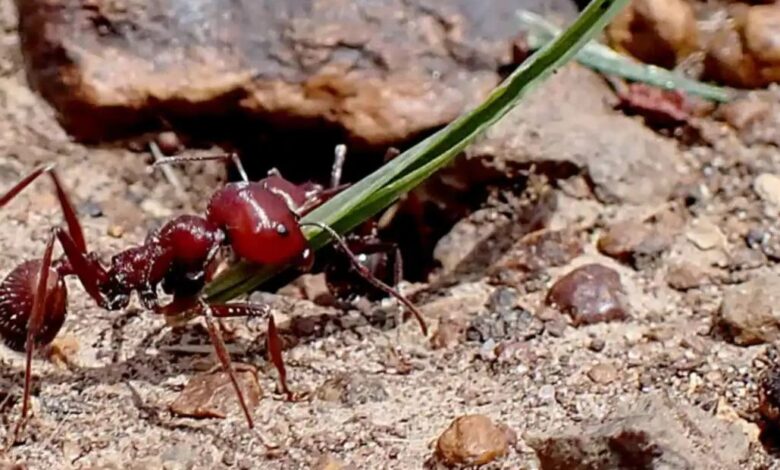
The giant African harvester ant (Messor cephalotes) is Unique type A distinctive type of ant found in East African regions such as Kenya, it lives in dry lands and is named for its behavior of collecting and storing seeds. It is one of the largest types of ants, as the queens in it reach a length of about (2.5) cm.
The African giant harvester ant is famous because of its trade.

Entomologist Dr. Dino Martins says: “These ants, which have become world-famous because of the trade in them, are abundant in East Africa and are among the most common types of ants.”.
But what seems ordinary in the wild has become highly valued among ant collectors abroad, as queen ants of the Messor cephalotes species can be sold for hundreds of dollars online.
A striking red color and a gentle nature
“When I saw the prices people were paying for these ant queens, I was completely shocked,” says Martins, attributing their popularity to their striking red color, gentle nature, and wonderful social behavior.
Each colony depends on a single queen, who may live for up to 60 years and produce every ant in the nest.
He explains: “Each nest contains only one queen, so I was really shocked when I saw that thousands of queens were being collected.”.
biohacking
Kenyan authorities say the trade amounts to biopiracy, and are stepping up efforts to prevent traffickers from exploiting one of Africa's smallest but most distinctive creatures.
The giant African harvester ant is known as the “guardian of the environment” due to its essential role in aerating the soil, getting rid of insects, and cleaning agricultural soil. Its collection of seeds also affects the distribution and diversity of plants.
Their high economic value is due to their scarcity and complex colony-building behavior. They are a valuable target for animal smugglers, and their prices in global markets reach about ($250) per ant.
The species attracts international attention and interest from insect collectors and breeders of exotic colonies, leading to its exposure to illegal smuggling operations to markets in Europe and Asia, which are constantly thwarted by African authorities.