Abdullah Ibrahim steps down... the end of a musical journey that shaped the history of African jazz
Death of Abdullah Ibrahim
Written by: Ayman Ragab
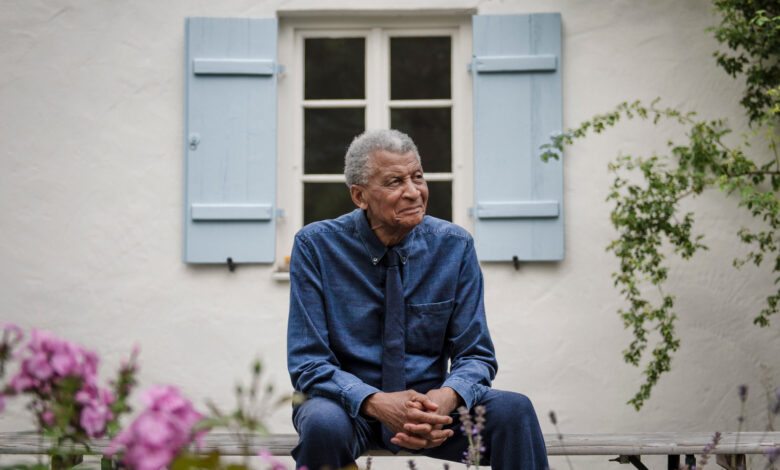
Abdullah Ibrahim, the South African pianist and activist, who was one of the last of the exile generation and a brilliant artist whose work influenced the shaping of creative improvisational music locally and globally, has died at the age of 91 in Germany after a battle with illness.
“Abdullah passed away peacefully, his heart full of love for South Africa and its people,” his partner, Dr. Marina Omari, wrote in a statement. “His love for his homeland never wavered, wherever he was in the world.”.
He converted to Islam in the 1960s
Adolphe Johannes Brand was born in Kensington, Cape Town, on October 9, 1934. He began playing the piano at the age of seven, and by fifteen, he was working in a band. He co-founded the Jazz Epistles in 1959 and played with music giants such as Hugh Masekela, Kibi Moketse, Jonas Gwangwa, Makaya Ntsuku, and Johnny Gertz. However, the restrictions of the apartheid regime made it difficult for him to find regular work as a musician. In the early 1960s, he left the country with his late wife, Satima Pia Benjamin. He converted to Islam in 1968 and gave up the name “Dollar Brand.” .
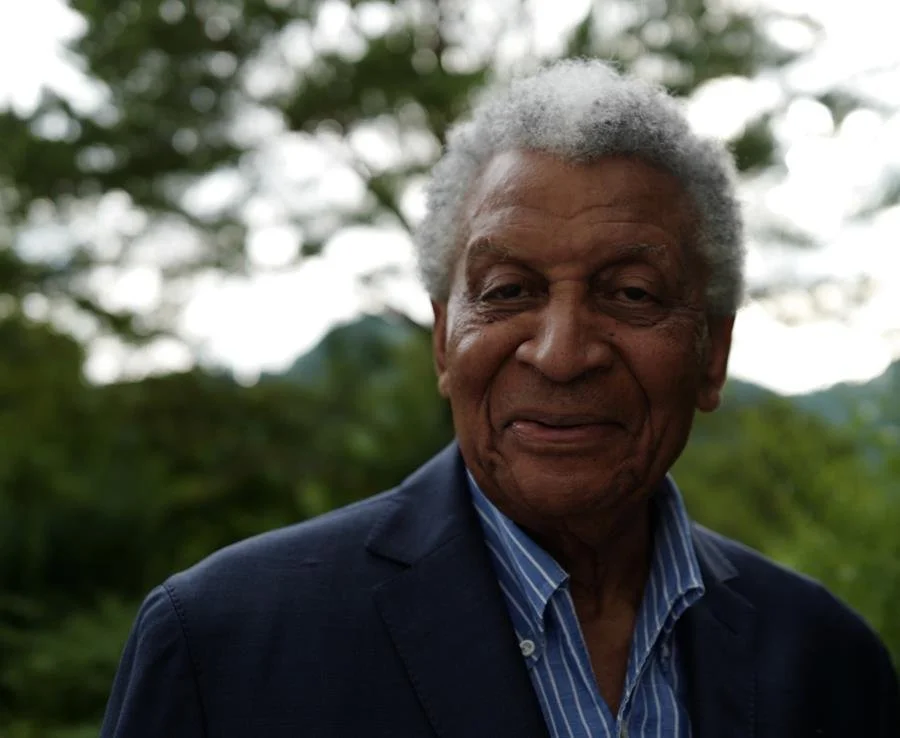
It was Benjamin who brought Duke Ellington to hear the young pianist play, and Ellington was so impressed that he produced Ibrahim’s first international recording session within weeks.
In New York, he associated with Don Cherry, Ornette Coleman, Carlos Ward, and Billy Higgins, and toured with the Elvin Jones Quartet. Ward, in particular, remained a close collaborator, with his alto saxophone and flute playing featuring prominently in Ibrahim's compositions for decades. In 1974, he returned to Cape Town, where Basil Coetzee and Robbie Jansen joined him for a recording session of the Mannenberg album, and they remained closely associated with him for years afterward.
A symbol of jazz music in South Africa
John Edwin Mason wrote in his book ”Mannenberg: Notes on the Making of an Icon and an Anthem”: “The album “Mannenberg” was an instant success and became an icon of South African jazz, representing Ibrahim’s search for an authentic South African style of expression within the jazz tradition.” .
Even today, people still stand up when the first musical notes begin.
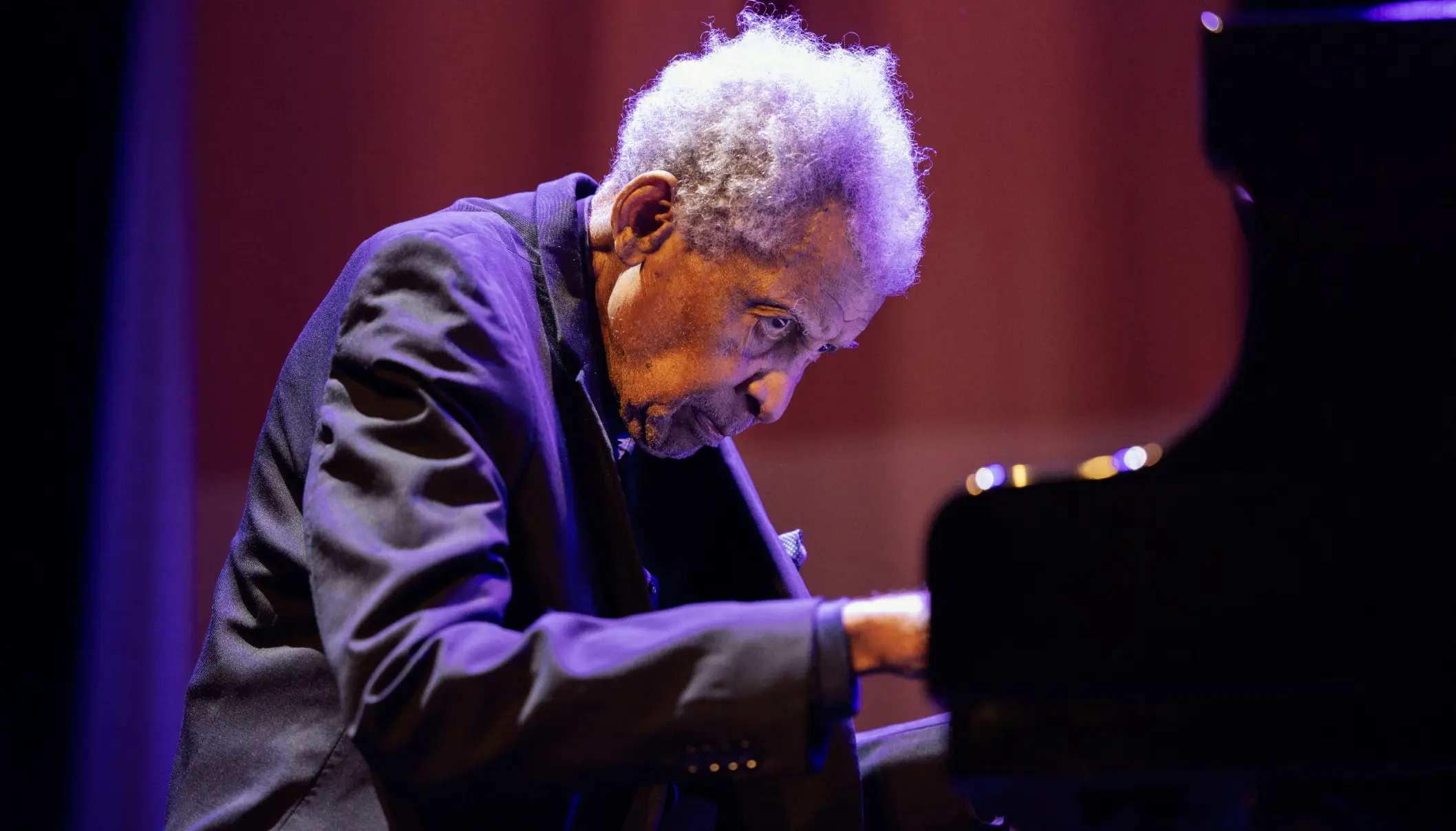
Ibrahim’s last public appearance was at the Cape Town International Jazz Festival in March 2026. A statement from the festival read: “In a moment that will be remembered as a historic homecoming, the audience witnessed one of the greatest musicians of our time deliver a performance that reflected the subtlety, depth, and mastery that have characterized his remarkable career. It was a fitting farewell in Cape Town, his birthplace and the city that formed a significant part of his musical identity. His relationship with the festival spanned many years, as he also performed in 2004 with the Abdullah Ibrahim Trio, in 2014 with the Ikaya Band, and in 2019 with Ibrahim Khalil Shihab.”
Pianist Yunella Mnana wrote her master's thesis on piano playing in South African jazz, and Ibrahim was one of the figures she explored. Mnana says, “If we talk about piano playing in South African jazz, we are talking about Abdullah. He was a towering figure.” Mnana emphasizes the importance of recognizing musicians like Kippi Moketse, who introduced Ibrahim to the music of Thelonious Monk.
“The key was to play our original music. Kibi was the driving force that said this was an affirmation of our culture and traditions,” Ibrahim said in an interview.
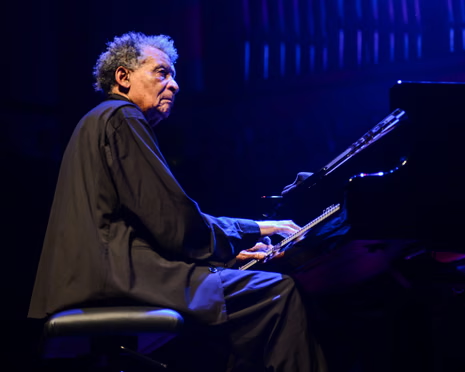
heavy loss
Bass player Fimps Mavimps, whose debut album “Late Bloomer” is the latest addition to South Africa’s growing jazz repertoire, acknowledges the magnitude of the loss.
He says: “We have lost a towering figure, a great legend, and a vibrant soul in the world of music. I know his music from many occasions, both personal and social, where we played pieces from his repertoire – such as “Mannenberg” or “Blues for a Hip King.” His music was an integral part of the musical fabric of South Africa and the world. When his pieces are mentioned, everyone knows them.” He adds: “His music was not only moving, but it touched people’s hearts and healed their wounds.”.
Kotluano Masotti, a cellist, composer, and conductor who worked with Ibrahim and also wrote about him, wrote in a Facebook post: “Ibrahim had a profound impact on my impressionable young self… a positive impact that still accompanies me… The last time I saw and spoke to him was after one of his concerts in Johannesburg in 2019… During the years that followed, I had almost no contact with him and never saw him play live, but his music and light still burn brightly within me.”.
Masotti recalls the first time he saw Ibrahim perform live when he was still in university. “He was touring with the large Ikaya band. Being around him and seeing his creative process was very impactful. [He was also] able to convey his idea clearly. Musically, it makes sense that he would be a very impactful person.”
patient teacher
In his memoirs, ”Imperfect Harmony,“ Masotti writes that Ibrahim was a patient teacher who “never missed an opportunity to tell us one of his war stories, which were often unrelated to what we were specifically working on.”.
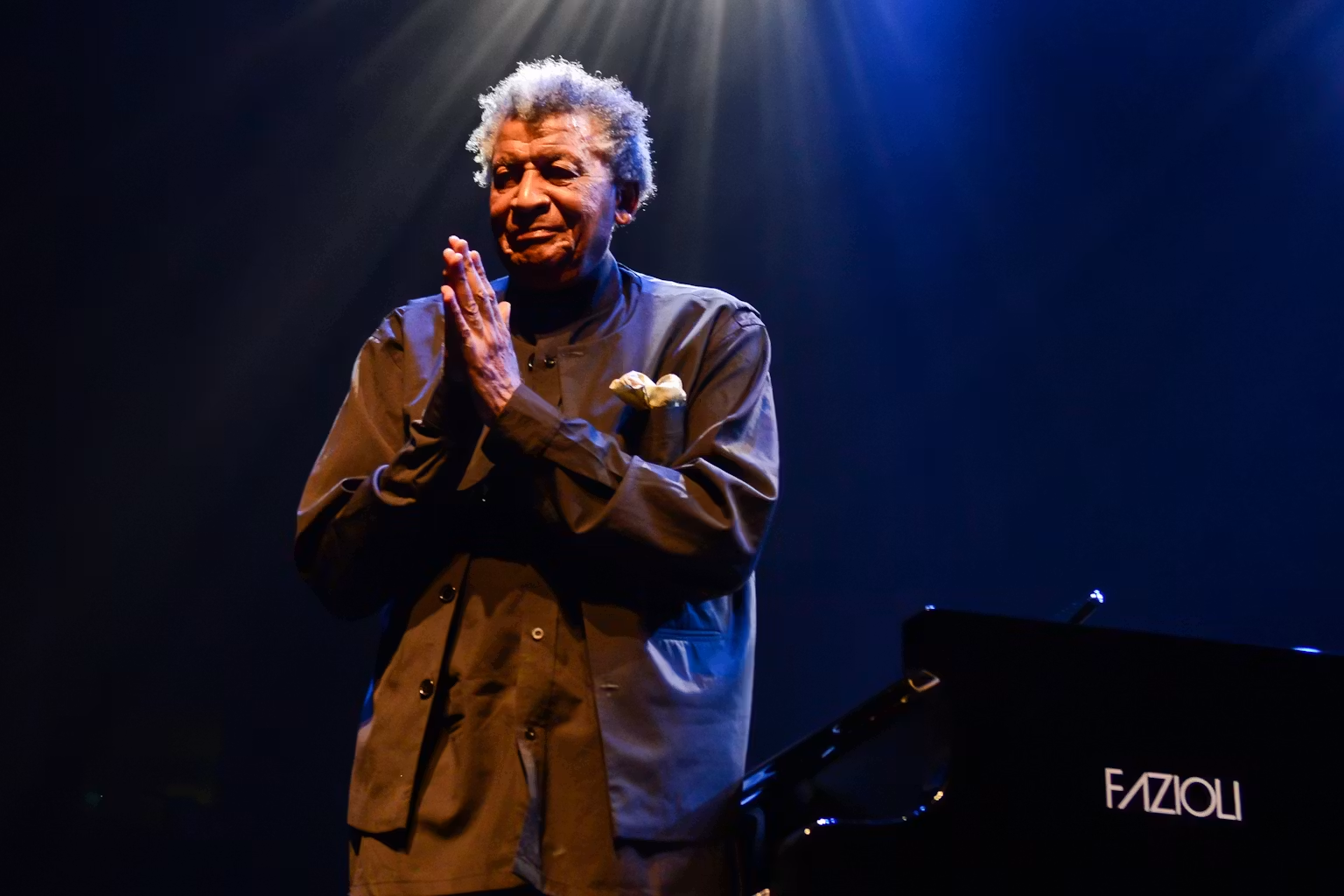
“We were lectured almost daily about our shortcomings as performers of classical musical traditions, yet, as human beings, we were appreciated and loved. So, in preparation for the European adventure, we prepared beloved international pieces such as 'Market of Africa,' 'The Wedding,' 'Blue for a Modern King,' and a few others, including 'Next Stop: Soweto,' writing them down by dictation as we learned them. I would be surprised if the reader had ever heard of 'Next Stop: Soweto.'“.
Ibrahim's departure ends a life that spanned exile and return, but his music still moves through the spaces he once moved through.