The Khoi-Khoi people of South Africa: the oldest continuous human genetic lineage on Earth
Who are the Khoi-Khoi people?
Prepared by: Dr. Alia Amer
Demographic expert and representative of North African countries to the African Union for Population Studies
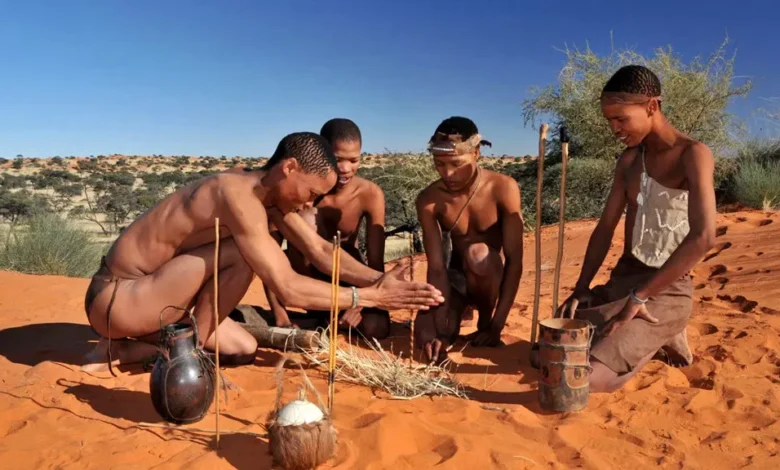
The Khoi Khoi people—historically known in European records as the Hottentot—represent one of the oldest anthropological roots in the southern region of the African continent, as they, along with their San neighbors, carry the oldest continuous human genetic lineage on Earth.
The people of Khoy Khoy
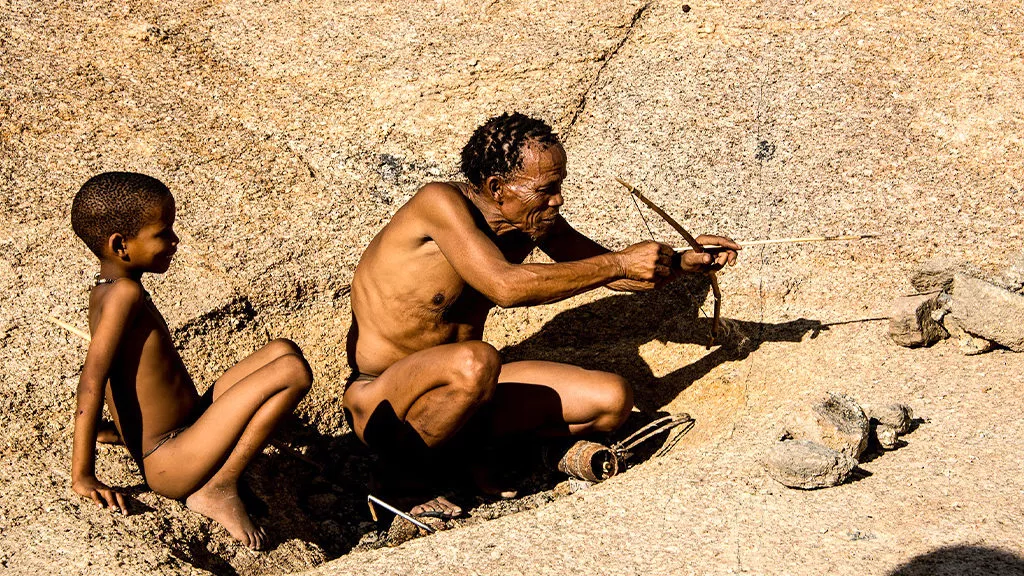
The Hottons who live in South Africa are always associated with the Bushmen, and they resemble them in appearance and culture. However, the hunting life that the Bushmen lead, the traditions that they adhere to, and the isolation that separated them from others and prevented them from mixing, helped the lineage to remain without foreign blood seeping into it.
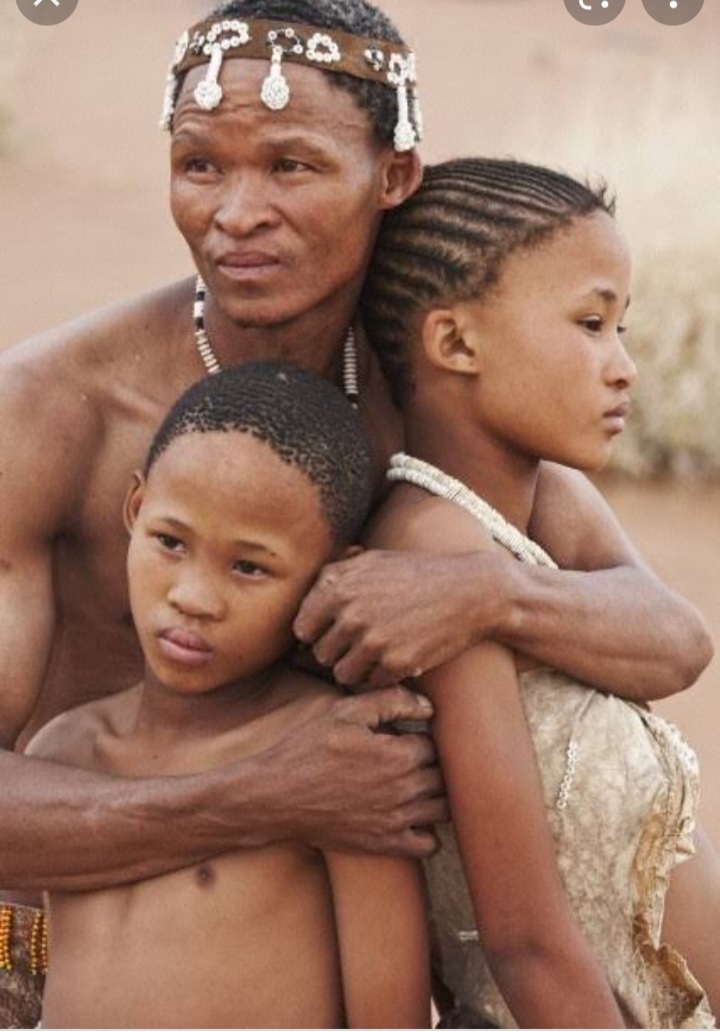
The Hottentots are somewhat taller, with more pronounced Negroid features than the Bushmen, and their heads are more elongated. Some mixing with the Bantu people, who lived alongside them for a long time, occurred, but the Hottentots mixed with Hamitic elements in their homeland.
This mixing also had a cultural impact on the Hottentot language, which acquired characteristics derived from the Hamitic languages, although the language remained from the Bushmen family of click languages. It appears that the Hottentot migration to the south came later than the Bushmen migration, and they took a further route to the west, crossing the upper reaches of the Zambezi River until they reached the west coast, then descended south to the Cape region.
They were the first patriots encountered by the European colonizers when they landed in that region.
The ancient distribution of the Hottentots included the southwestern reaches of the Kunene River estuary in the north to the Cape Peninsula in the south, and extended eastward to the Cay River.
As for the present time, there may be scattered remnants, of some kind, in parts of this great homeland, while the somewhat organized groups are confined to a limited region of southwestern Africa, north of the Orange River.
This shows the impact that European immigration had on putting pressure on them and displacing them from their homelands.
They previously had many organized tribes, each tribe speaking one of the four dialects that were prevalent and belonged to the Khoisan language family. These dialects resulted in the division of the Hottentot Monaco into four groups: the Naman, the Kourana, the Gunakwa, and the inhabitants of the Cape region. The Naman, Kourana, and Gunakwa who live today in southwestern Africa are all from the Naman group.
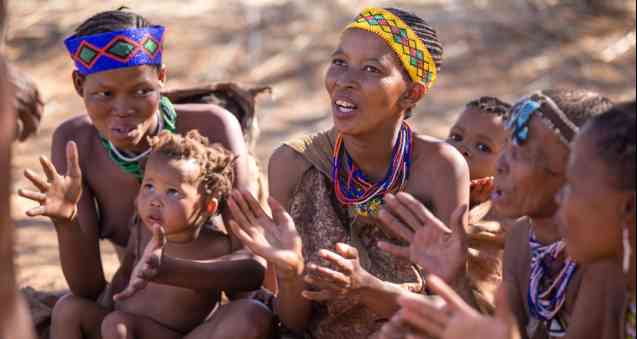
As for the other groups, many of them perished, and many were assimilated during their mixing with the European immigrants and their slaves who accompanied them and came from the West Indies, and they called these mixed-race people Cape Colored and other names.
These offspring naturally exhibit the characteristics of the elements that make them up.
There is no doubt that many of the Hottentots who became extinct did so through assimilation, not only into immigrant elements, but also into other Bantu populations. The Hottentots are a race on the verge of extinction, and the remaining ones (the Namans) are divided into a few tribes or groups resembling tribes: each claiming ownership of water and pasture in a patch of land.
Each tribe consists of patrilineal clans, whose marriages are foreign.
Each tribe has a chief, but this chief always consults with the leaders of the other clans on most tribal affairs. The tribe may gather in one place during certain seasons, but for most of the year each clan lives on its own.
The biggest difference between the Hottentots and the Bushmen is that they are herders who raise long-horned cattle and fat-tailed sheep, practice ironworking, and make tools, spears, and arrows from it. They make utensils and plates from wood, baskets and mats from reeds and firewood, and water skins and milk containers from leather.
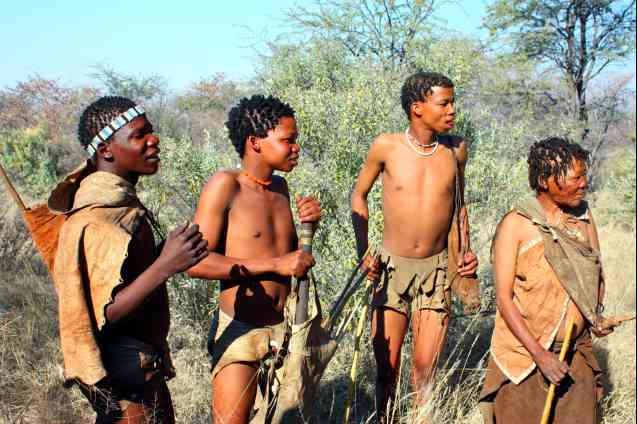
All of this distinguishes them from the Bushmen, except that they do not seem to have ever been skilled in rock carving and engraving, which is what the Bushmen were known for.
The main food of the Hottons is lentils, which they keep in wooden or leather containers and eat after they have fermented a little.
Unlike the Bantu and others, the women, not the men, milk the cattle. Besides milk, they consume various types of vegetables and the meat of animals they hunt. Their hunting methods are almost identical to those of the Bushmen, except that they excel at making traps. They do not use bows and arrows, and they do not slaughter cattle for food except on some important religious or social occasions.
The place where they live is surrounded by a circular hedge of hawthorn, and it has two gates, one in the north and one in the south. The family houses are distributed around the edges of the circle, and in the middle is a large enclosure for cattle with places reserved for calves and lambs. Each family has a number of huts, which are built with great care in the shape of a beehive. The hut is built with wooden poles, which are planted in the ground, and their upper ends are connected with pieces of wood so that the hut looks like half a caravan.
The hut is covered with layers of straw and wood, and the floor inside the hut is paved with mud. People sleep inside the huts on mattresses of mats. When moving seasonally, the hut is dismantled and the parts and belongings are carried to the new place. Clothing nowadays is European-style, but in the past it was made of soft leather after it was rubbed well until it became softer, and it was used to make a loincloth and a robe, and often leather slippers were also made.
Women and men wear various types of jewelry, mostly made of copper. Women wear leather straps around their legs, and men wear bracelets made of ivory or copper around their upper arms and wrists.
Respect for women is a well-established tradition, and this is particularly evident in a man's respect for his mother-in-law, whereby a man avoids looking at her, and also in a brother's respect for his sister, to the point that he hardly ever addresses her except through a third person.
The core of the Hottentot religion and religious rituals is their belief in heroes – gods: most of them are based on pagan conceptions, or on their representation of natural forces, especially the forces that send rain. Perhaps the most important of these is Tsui Goab, who is sought in times of trouble and hoped for when rain is withheld. He represents the force of good, and he is often confronted by the destructive force of evil represented by Gounab, who is always opposing the force of good, until he wipes it out of existence.
Then it returns to life and prosperity, and this reminds us of the constant conflict between Osiris and Set. There is a great mythical hero in whom the Hottentots believe, named Heitsi-Eibib. People talk about his great deeds and his return to Earth from time to time, then he dies and returns again.
He performed miracles, and his “graves” are scattered in the form of piles of stones. Hardly any Hottentot passes by a grave without whispering some words and adding a stone or a piece of wood to the (shrine).
The Hottentots also had a moon worship, similar to what we find among the Bushmen, but there is no evidence that they still retain this worship.