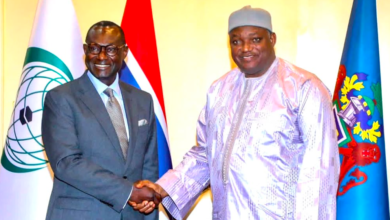
**Mohamed El-Tunisi for ”Zoom Africa News”: Afrocentrism has no scientific basis... all evidence confirms that Egyptians built their civilization.**
Professor of Egyptian Archaeology: Social media has contributed to the spread of undocumented narratives... and I call for addressing Africa with scientific facts about Egyptian civilization.
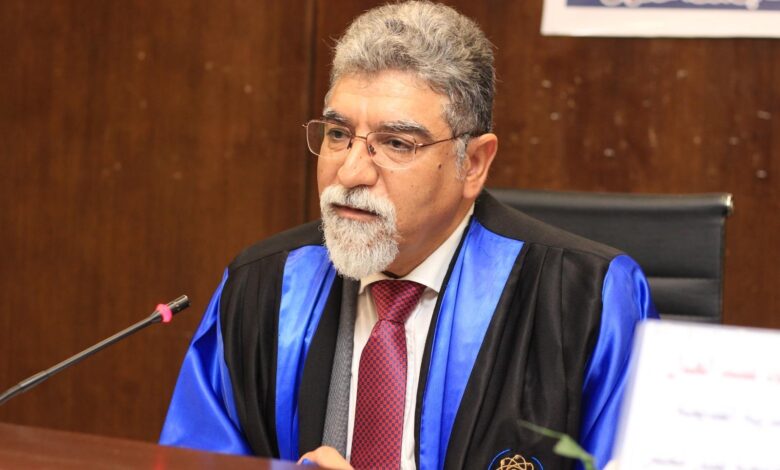
In recent years, the controversy surrounding the “Afrocentric” movement has resurfaced strongly, following escalating discussions on social media platforms and the accompanying claims regarding ancient Egyptian civilization and the identity of the ancient Egyptians, which has sparked a wide wave of controversy among researchers and specialists in history and archaeology.
Dr. Mohamed El-Tounsi: Afrocentricism lacks scientific evidence, and Egyptian civilization is established.
In light of this controversy, Zoom Africa News conducted an interview with Dr. Mohamed El-Tounsi, Professor of Ancient Egyptian Archaeology and Vice Dean of the Faculty of Arts for Education and Student Affairs at the Capital University, to discuss the origins of the Afrocentric movement, its most prominent claims, the scientific stance towards it, the role of academic research in confronting undocumented historical narratives, and the impact of social media and artworks on shaping historical awareness and cultural identity.
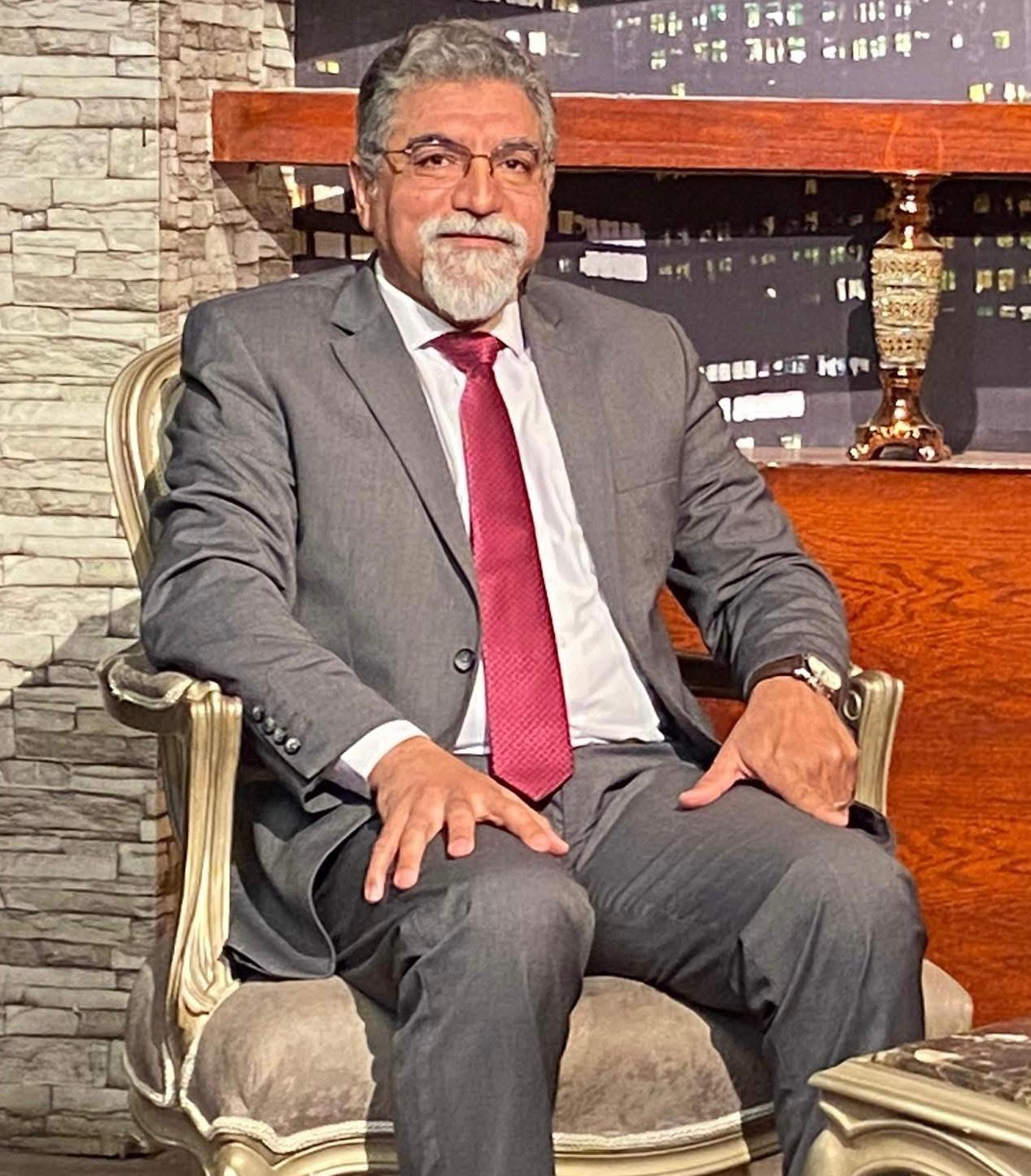
To begin with, what is meant by the “Afrocentric” movement, and how did it originate historically?
The truth is that this movement began to take shape a long time ago in the twentieth century, and it seeks to demonstrate the African centrality in the culture, identity and heritage of Africans living outside Africa. This is a pivotal point in the subject, because it highlights African culture in its many fields for these Africans living outside the continent.
Why has the Afrocentric issue resurfaced strongly recently, especially on social media platforms?
The issue of Afrocentrism has resurfaced and been exploited politically, which is regrettable. We believe that civilization is a common denominator among all countries of the world, and Africa is a major part of this world, and we live as brothers with each other. The strange and suspicious thing is that the headquarters of that movement is not in Africa. They talk about Africa while they live somewhere else in this world. Isn't that a great paradox? These facts point to many hidden things that that movement targets in multiple contexts.
What are the main claims promoted by Afrocentric proponents regarding ancient Egyptian civilization?
One of the most important things promoted by some members of that movement is that ancient Egyptian civilization is a black civilization, and that the Egyptians did not build the monuments of that ancient civilization, such as temples, tombs, fixed or movable monuments, or even the medical, engineering and other sciences that the ancient Egyptians reached throughout their ancient history.
From a historical and archaeological perspective, what evidence do researchers rely on when studying the identity of the ancient Egyptians?
Archaeological research relies on irrefutable and conclusive evidence, derived from artifacts and studies of the ancient Egyptian language in its various scripts (hieroglyphic, hieratic, and demotic). All of this evidence points to the fact that the Egyptians alone constructed the monuments scattered throughout the Nile Valley, from north to south. It has been historically and archaeologically proven that the Egyptians built their civilization with their own hands over thousands of years. Archaeologists worldwide, from Europe to other parts of the globe, confirm, through rigorous scientific methodology, that the Egyptians alone built their civilization without the intervention of any other African people.
If Africans with black skin and well-known African features had a role in ancient Egyptian civilization, why haven't we found a civilization like the Egyptian civilization in any other African country besides Egypt? Why haven't we found archaeological evidence of temples, tombs, or linguistic texts written in the ancient Egyptian language or one of its scripts?
Are there any documented academic studies that support the claims linking ancient Egyptian civilization to Afrocentric theories, or does the majority of research reject them?
There are no scientific studies that document those claims. On the contrary, all archaeological studies and research support the idea of Egyptian centrality to Egyptian civilization and categorically reject those extremist theories that carry hidden goals between the lines, the most important of which is creating a rift between the Egyptian people and their African incubator. Hence, I call for missing the opportunity for those malicious people, as Egypt has been a natural geographical and human extension in Africa for thousands of years, and Africa is for Egypt, and Egypt is for Africa.
How does a historian differentiate between serious scientific research and ideological or political discourse when reading history?
We, as researchers, are familiar with the scientific methodology employed in archaeological research by scholars and scientists specializing in ancient Egyptology. Regrettably, for nearly half a century, ancient Egyptian civilization has been subjected to attacks by biased groups, including some politically motivated individuals and those with a vested interest in sowing discord among people on a social level. I urge everyone to exercise reason to avoid such conflict, and I call for reliance on science in such matters, without being swayed by those with malicious agendas and narrow interests.
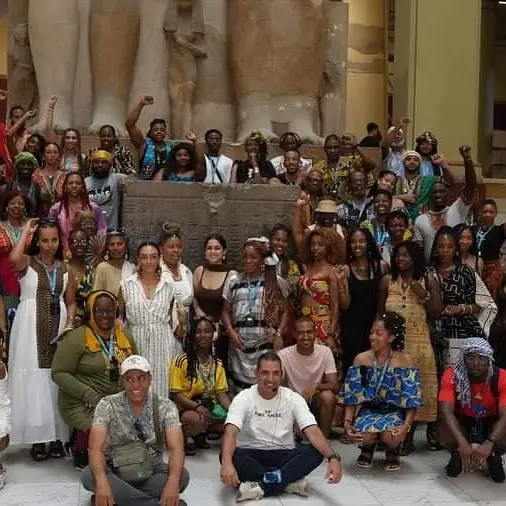
Why has ancient Egyptian civilization become the target of this controversy more than other civilizations?
Egyptian civilization is an ancient civilization that extends for more than 13,000 years, and there is no other civilization in this world that can match it in terms of the development of sciences, arts, originality and innovation, at a time when the world was wandering aimlessly among the first manifestations of primitive life. Therefore, you always find someone who tries, without justification, to take away those civilizational elements from Egypt, even though those civilizational legacies are what formed the main base on which the pillars of the original Egyptian identity and our contemporary culture were based.
To what extent have social media contributed to the spread of these ideas compared to academic studies?
Of course, modern social media has a significant impact on spreading and promoting many ideas indiscriminately, because it relies on the opinions of its owners without adhering to the basics and rules of scientific research. Sometimes, you find some people relying on the ignorance of others to promote extremist ideas without documentation or research into their credibility, with the aim of recording a larger number of views, likes, and shares through those means.
How do you assess the reaction of Egyptians and official institutions to this issue? Was it sufficient?
The Egyptian people are deeply patriotic, and it is well known that we Egyptians sacrifice everything for our homeland and will not tolerate any infringement upon our cultural values. Therefore, those with malicious intent try by all means to sow discord between the Egyptian people and other African nations, because they know perfectly well that Egyptians will not accept such falsehoods about their civilization and ancient history.
I actually advise practical responses, not just official, protocol-driven statements or other pronouncements. In my view, the best response would be an unprecedented publicity campaign for Egyptian antiquities in Africa, using both French and English, addressing our African brothers and sisters with scientific facts about our ancient Egyptian heritage and civilization.
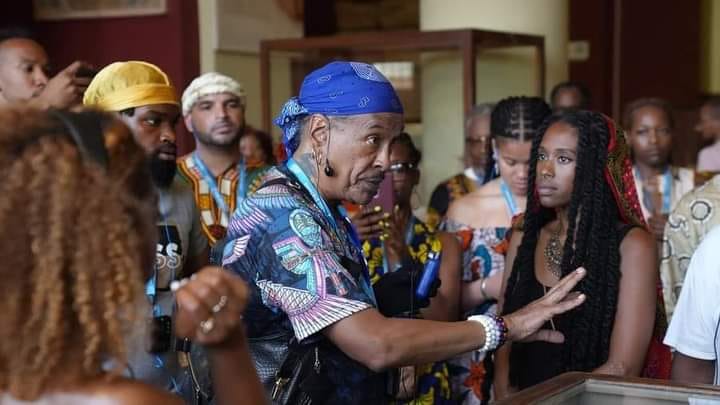
What role should universities and specialists in history and archaeology play in confronting inaccurate historical information?
Universities and specialists have a prominent role in clarifying the facts without bias, using scientific arguments and research principles, to refute that false and misleading information that aims to create discord among peoples.
Do you think that the current educational curricula present ancient Egyptian history adequately to protect young people from misinformation?
There is no doubt that the Egyptian educational curricula are appropriate and protect young people from accepting false information, but we must address young people in new scientific ways that keep pace with their orientations and ideas, without being confined to outdated, traditional, and stereotypical scientific templates.
How can young people verify the accuracy of historical information circulating online, and what sources are recommended for reliance?
This only comes through authentic scientific books written by specialists from among the archaeologists, who are many, thank God, in Egypt and various countries of the world, and all of them categorically deny all those fabrications.
Do you see the debate about Afrocentrism as a purely historical dispute, or is it also related to issues of identity, politics, and culture?
Of course, it is closely related to issues of identity, culture, and politics as well, because the origin of that movement is originally a purely political one, for purposes far removed from science and its known vocabulary and alphabet.
In your opinion, what are the most serious consequences that may result from the spread of undocumented historical accounts about Egyptian civilization?
Among the most significant and destructive effects on society is the erosion of identity and the spread of distrust within the collective consciousness of Egyptians. Undoubtedly, this is one of the most dangerous weapons, causing individuals to lose their sense of belonging and loyalty to their homeland and culture, which has been shaped over thousands of years. This leaves citizens without identity and, consequently, without a civic conscience to protect them from becoming easy prey for enemies and those lying in wait.
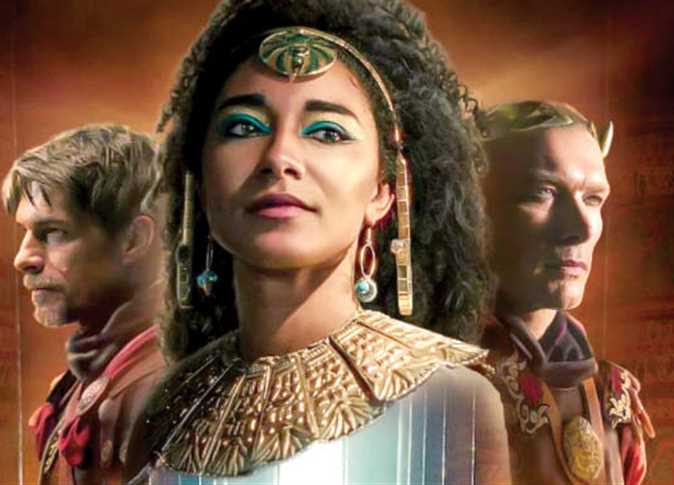
The film “Lion” sparked widespread controversy after being accused of promoting Afrocentric ideas. From your point of view as a history specialist, does the film actually contain anything that supports these arguments, or are the accusations exaggerated?
I don't actually have anything to say about this artwork, except that its subject matter is far removed from the Afrocentric idea, I think.
To what extent can cinematic works dealing with history influence the formation of public awareness of issues of Egyptian identity and civilization, and should they be subjected to historical review before being shown?
Using cinematic works based on documented scientific facts is very useful in highlighting the events of Egyptian history and civilization, and corrects many of the misconceptions that have spread among people in one way or another, but on the condition that they are under the direct supervision of specialists in antiquities and ancient Egyptian civilization. We hope to make many of these films, especially since the events of our ancient Egyptian civilization are very numerous, and there are many things in it that can be turned into cinematic subjects that will achieve great success if they are properly employed by Egyptian archaeologists.
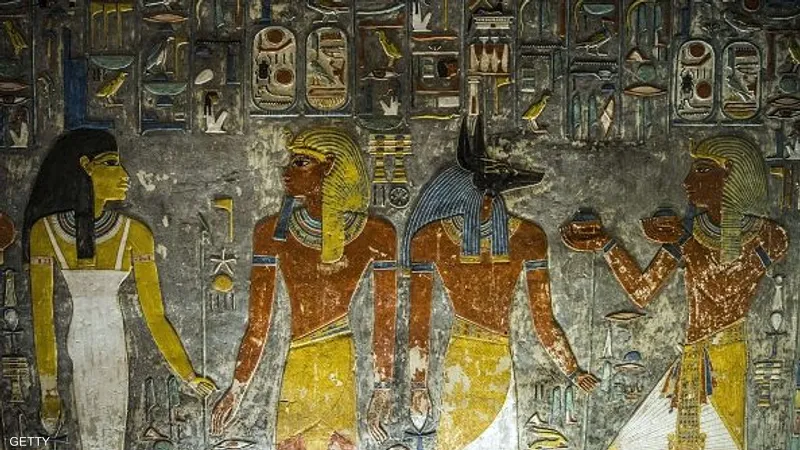
In conclusion, what message do you have for Egyptians and Arabs regarding the importance of relying on scientific research in reading history, and preserving cultural identity away from exaggerations or falsification?
The advice is to rely on science and scientific research, and to listen only to scholars specializing in Egyptology. I also urge everyone to rely on specialized books and references written by expert archaeologists, and to avoid amateur books and those who peddle rumors and falsehoods to promote their destructive and misleading ideas, profiting at the expense of truth, science, and reason.