A semi-nomadic life and unique cultural symbols. How has the Himba tribe preserved its customs and language despite the advance of modernity?
The Himba preserve their ancient language and heritage
Written by: Mohammed Omran
The Himba people are one of the most prominent indigenous communities in Africa, living primarily in the remote northwestern regions of Namibia, preserving many of their customs and traditions passed down through generations.
How has the Himba tribe preserved its customs and language despite the encroachment of modernity?
The members of this community, who traditionally follow a semi-nomadic lifestyle, rely heavily on raising cattle and goats. These activities are not only a primary source of their economy but also a pivotal part of their social structure and cultural identity.
The Himba tribes do not view cattle merely as a source of food, but rather as a symbol of wealth, social status, and continuity within the community. Many customs and concepts are associated with cattle, which determine an individual's standing within the tribe.
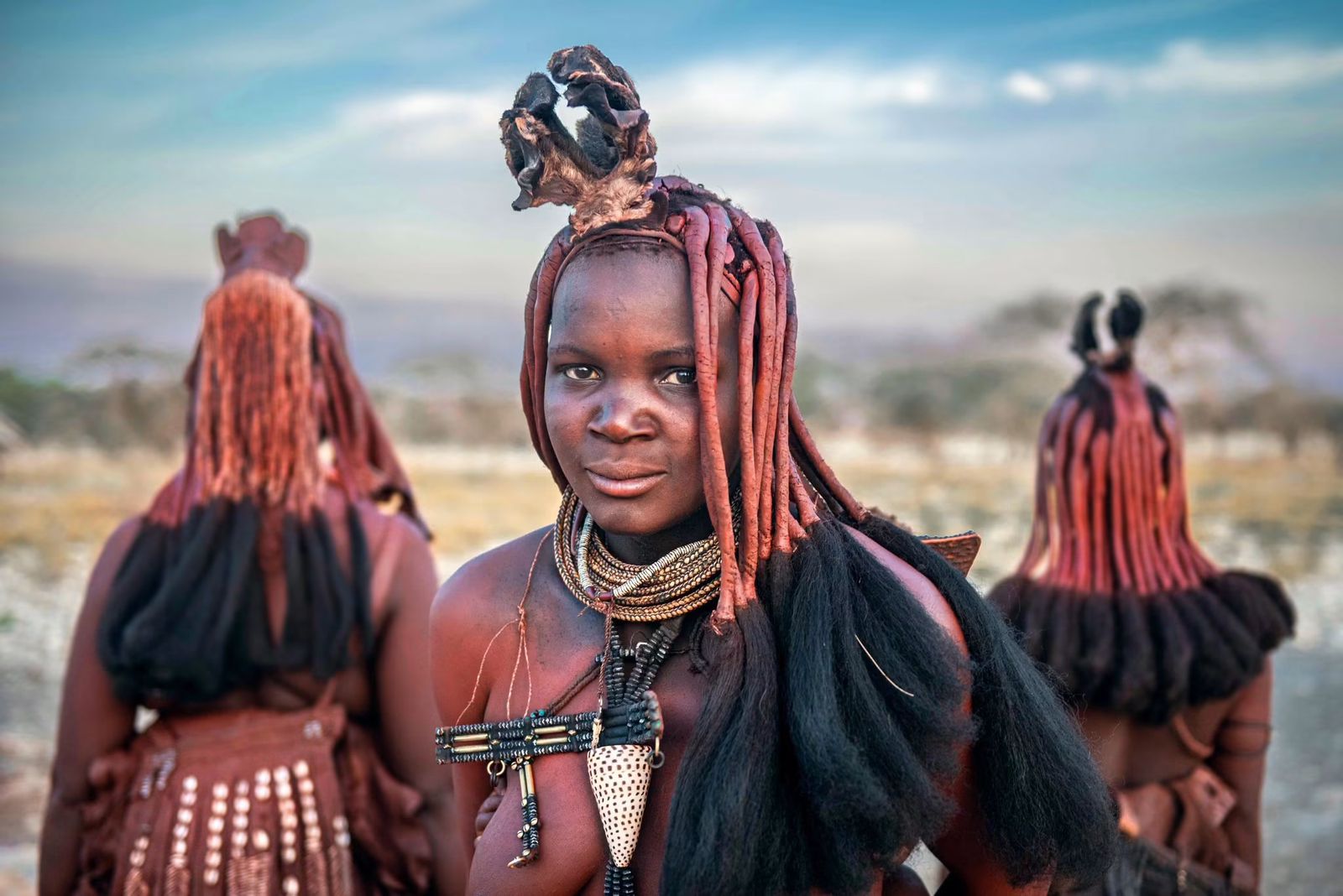
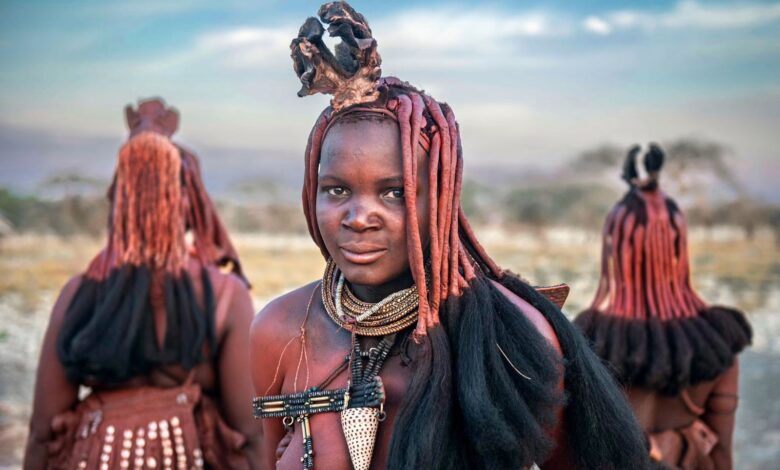
The Himba people are world-renowned for their unique and distinctive appearance, especially the women who use a traditional cosmetic mixture known as “Otjize,” a blend of red ochre powder, butter fat, and aromatic herbs.
Himba women use this mixture to protect their skin from harsh climates and extreme environmental conditions. It also holds aesthetic and symbolic importance within the local culture, as it is part of the people's traditional identity.
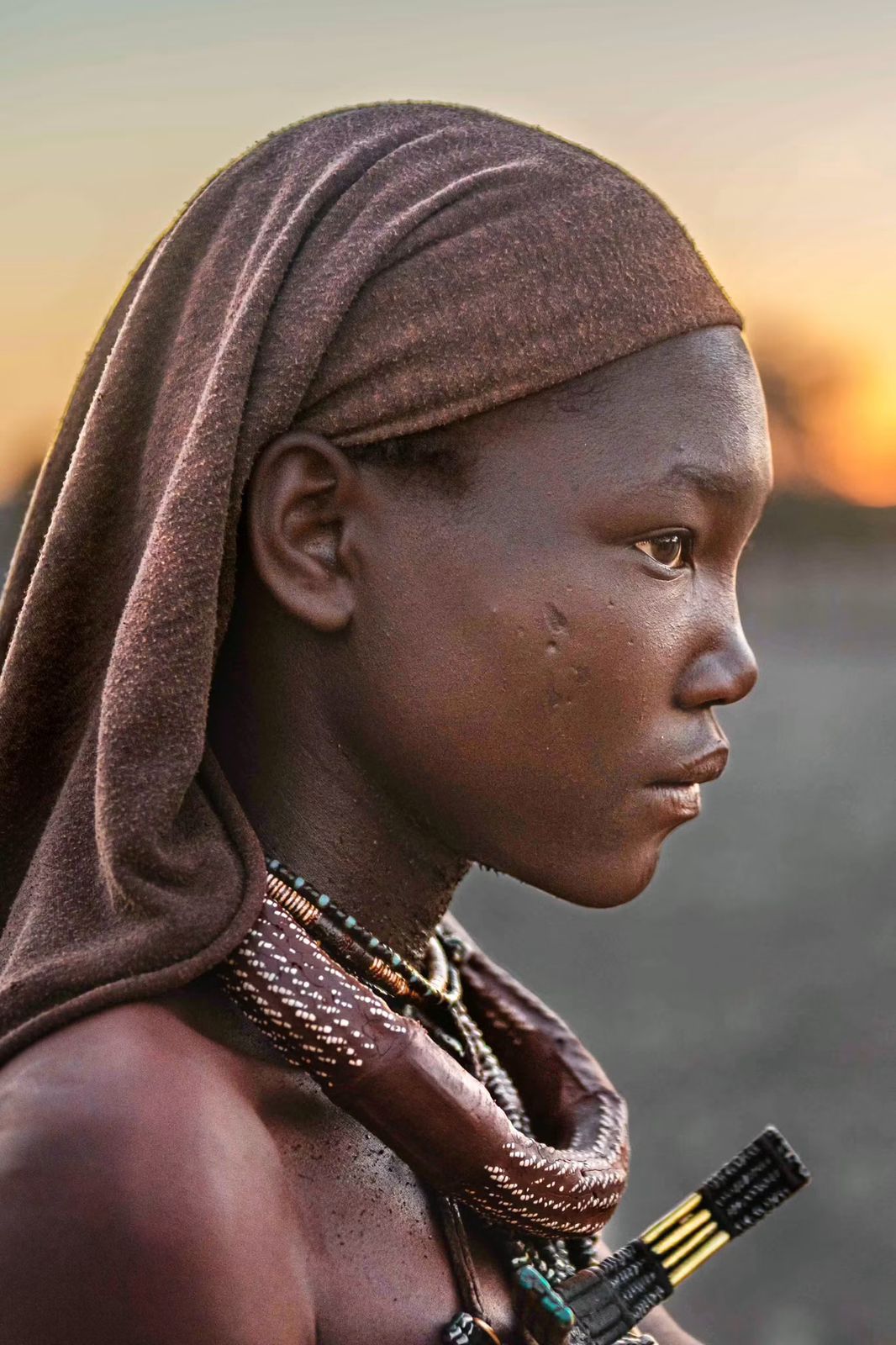
Hairstyles hold significant cultural importance for the Himba people, especially for women, as intricately braided hair and embellishments reflect a woman's age, social status, and life stage.
Young girls usually wear two front braids known as “Ozondato,” while married women and mothers sport more intricate hairstyles, often adorned with shells, beads, and animal hair, reflecting their status within the community.
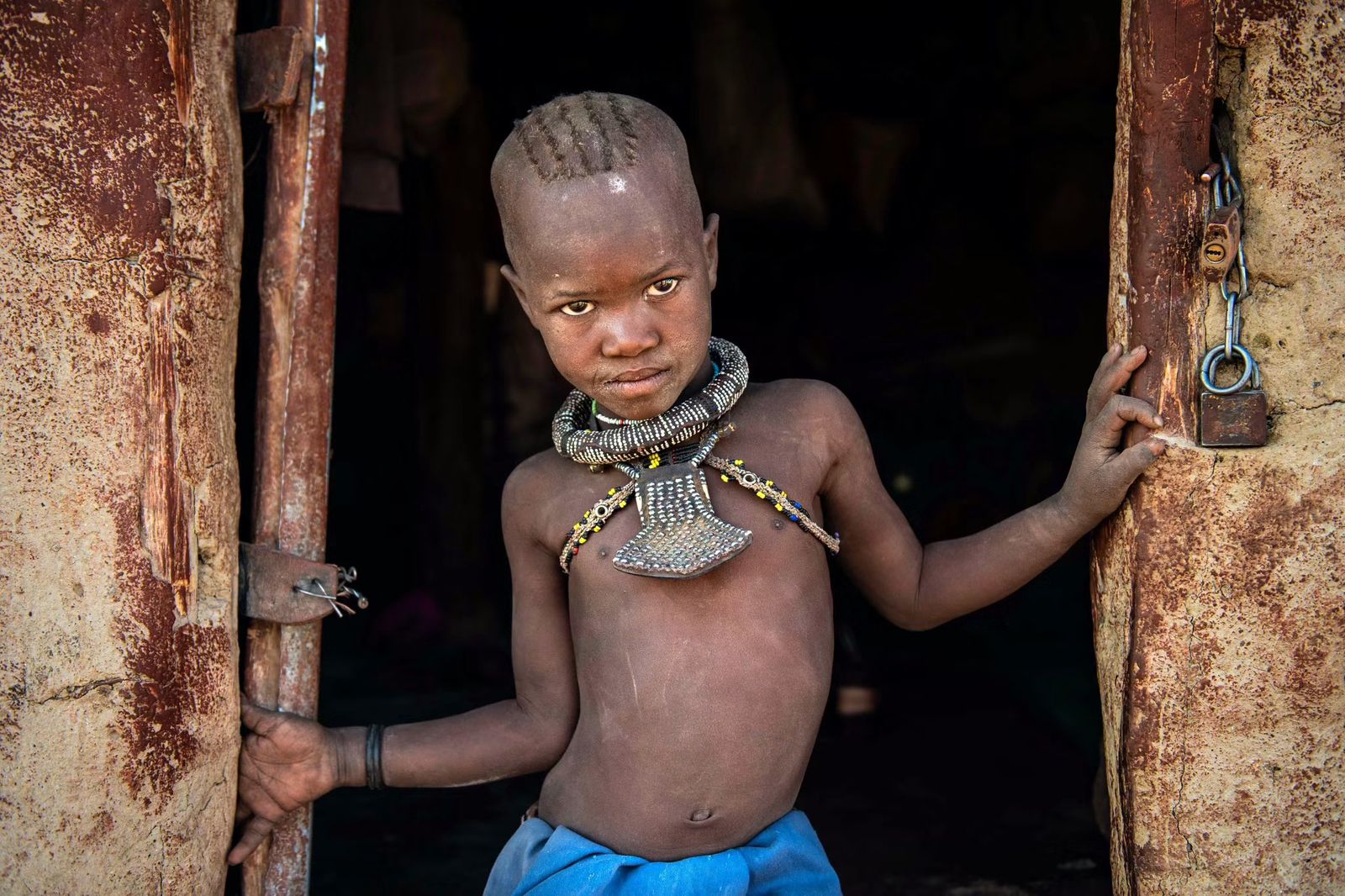
Men's hairstyles also carry social and cultural connotations, reflecting age and social status. For example, young, unmarried men traditionally wear a single braid known as “Ondatu.”.
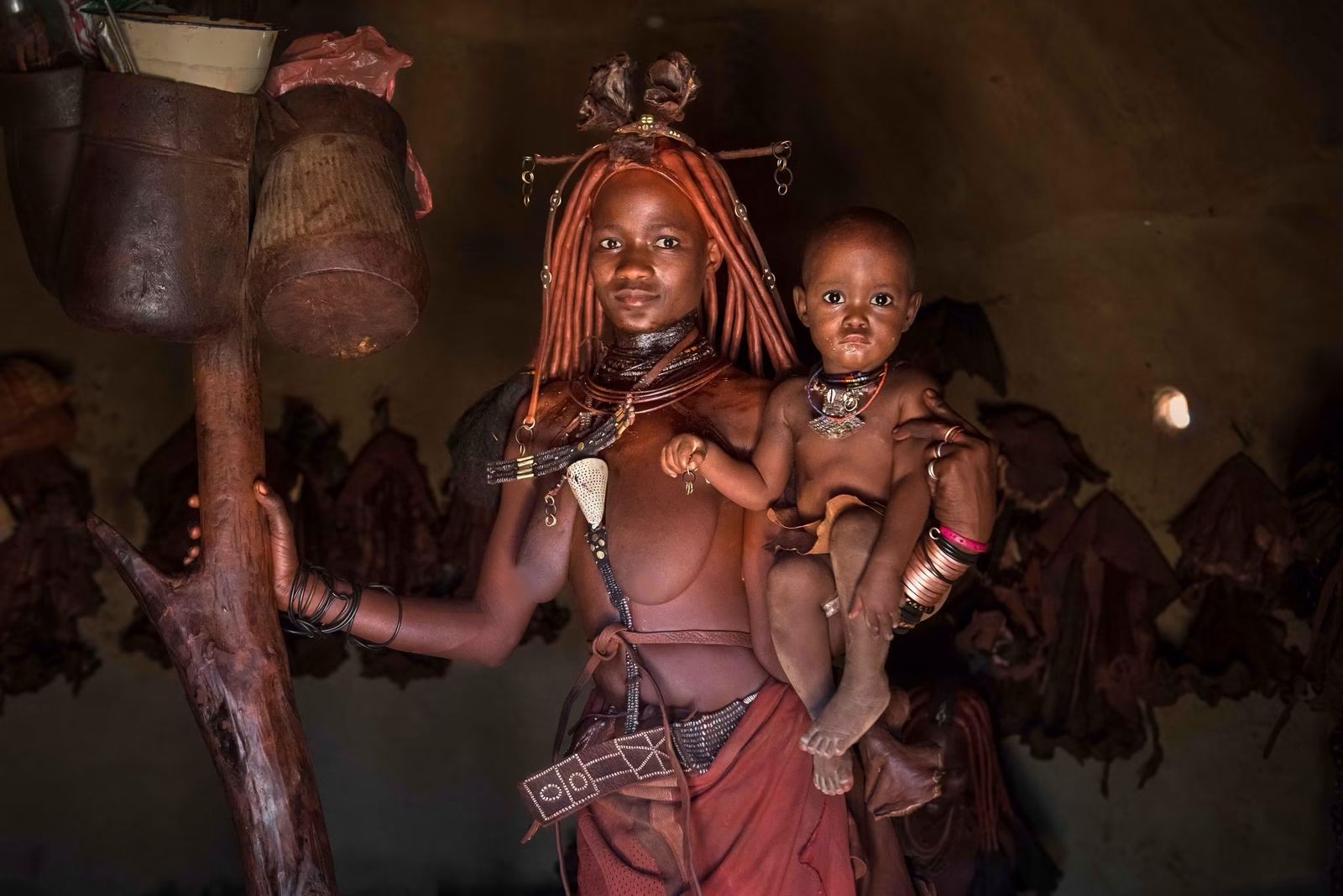
Despite the simplicity of traditional Himba clothing, it holds deep symbolic value. Women usually wear skirts made from calfskin and adorn themselves with handmade jewelry crafted from iron, copper, seashells, and ostrich eggshells.
The traditional dwellings of the Himba people are characterized by their dome shape, with huts built from intertwined sticks, mud, and cow dung. They are often arranged in circular family compounds, frequently centered around a sacred fire.
This fire holds great spiritual significance, symbolizing the connection between the living and their ancestors, and is carefully maintained as the center of religious and cultural life within the community.
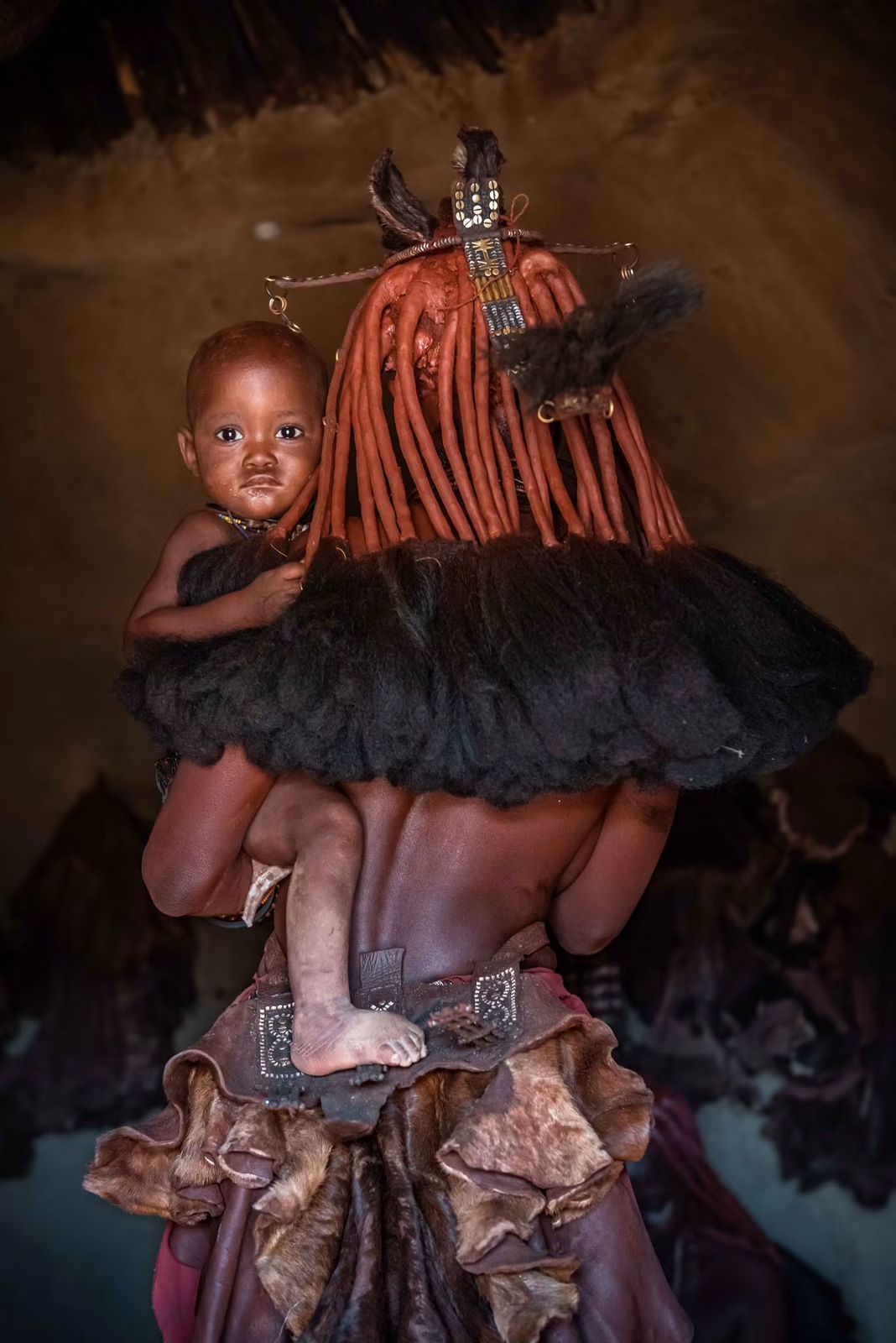
Despite increased friction with modern societies and the changes the world is experiencing, the Himba people have succeeded in preserving a large part of their inherited lifestyle, along with their Otjiherero language and ancient cultural customs that continue to represent a fundamental part of their identity.