Written by: Mohammed Omran
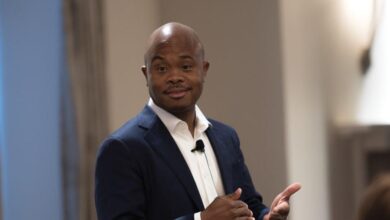
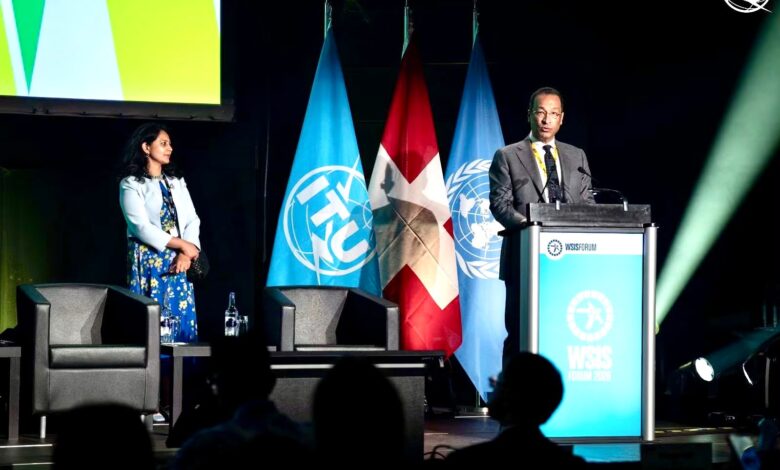
Eng. Raafat Hendy, Minister of Communications and Information Technology, and Head of theGlobal Summit Forum For the World Summit on the Information Society Forum 2026 (WSIS Forum), the report of the Egyptian presidency of the forum during the closing session of the forum's work, which was hosted by the Swiss city of Geneva.
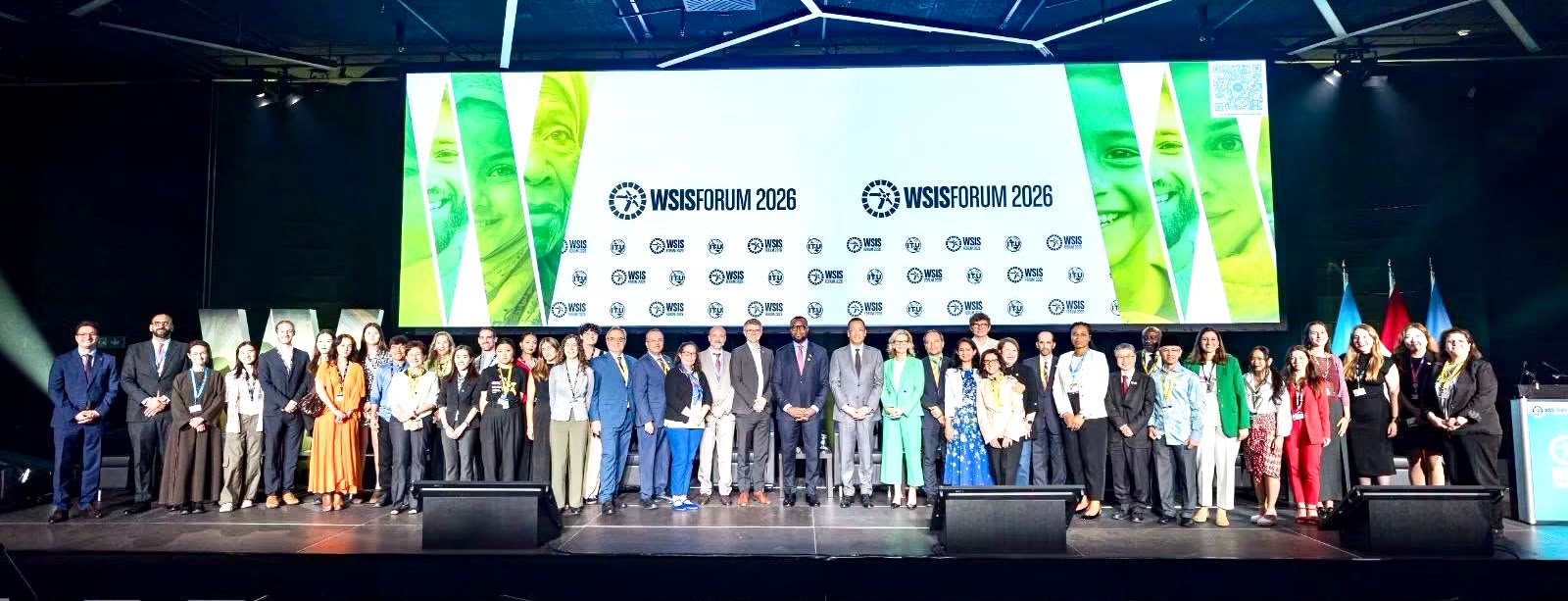
This was attended by Doreen Bogdan-Martin, Secretary-General of the International Telecommunication Union, and Ambassador Alaa Hegazy, Egypt's Permanent Representative in Geneva, in addition to wide participation from ministers, ambassadors, senior government officials, global company leaders, officials and representatives of civil society organizations, international organizations, and academics from various countries around the world.
Egypt leads the global digital transformation with a new vision for responsible artificial intelligence.
Engineer Raafat Hindi affirmed, during his speech, that this year's forum brought together governments, regulatory bodies, United Nations agencies, the private sector, civil society, academic circles, the tech community, youth, and a large number of other partners, noting that this diversity represents a source of strength for the forum, and confirms that digital transformation requires partnership, trust, and shared responsibility.
He clarified that the next phase requires moving from commitment to implementation, and transforming digital strategies into tangible services, skills, jobs, and opportunities for citizens.
Engineer Raafat Hendy pointed out that the discussions witnessed by the forum confirmed that digital inclusion remains a top priority, explaining that achieving it requires providing affordable communication services, alongside developing digital skills, making suitable content available, and enabling individuals to use technology safely and purposefully, emphasizing the importance of employing artificial intelligence to support development efforts.
He added that digital finance is a powerful tool for enhancing digital inclusion, by enabling individuals, small businesses, women, youth, and underserved communities to access economic services and opportunities. He stressed that this requires the availability of digital literacy, robust infrastructure, and appropriate regulatory frameworks.
He stressed the need to deal with youth as partners in building the digital future, while working to ensure that women and girls have equal opportunities to access internet connectivity services, digital skills, digital financial services, and opportunities to hold leadership positions in the technology sector.
He clarified that the forum affirmed the importance of improving the measurement of the impact of international efforts in the field of information and communication technology on citizens' lives, noting that high-level discussions emphasized the necessity for artificial intelligence to remain human-centered, and to be used in an ethical and responsible manner, while stressing that the standard of success lies in its contribution to improving the quality of life for citizens.
He pointed to the commencement of work on preparing roadmaps and measurable indicators for the implementation of the new mandates, in preparation for presenting their results to the United Nations Commission on Science and Technology for Development (CSTD) in 2027, along with a review of the achievements of the past two decades and the drawing of a shared vision for 2035.
Eng. Raafat Hendy explained that the World Summit on the Information Society (WSIS) Prizes reflected practical application on the ground, as 18 winners and 72 projects were selected from among 1595 projects submitted by 122 countries, with the support of more than 2.2 million public votes, confirming that the WSIS's work streams contribute to making a real difference in the lives of individuals around the world.
He indicated that the summit's implementation mechanisms kept pace with the rapid technological development, the expansion of communication services, and the handling of issues related to artificial intelligence, data governance, and emerging technologies.
He added that Egypt sees the presidential report issued by the forum as practical evidence for strengthening partnerships and achieving tangible results, emphasizing that the next phase requires translating the forum's discussions into practical measures that support digital inclusion, responsible artificial intelligence, digital trust, and achieving shared prosperity.
It is worth mentioning that Eng. Raafat Hindi headed a high-level delegation from the Ministry of Communications and Information Technology, which included Eng. Mohamed Shamroukh, Executive President of the National Telecommunications Regulatory Agency, Eng. Mahmoud Badawi, Assistant Minister of Communications and Information Technology for Digital Transformation Affairs, Dr. Hoda Baraka, Advisor to the Minister of Communications and Information Technology for Technological Skills Development, Mr. Ahmed Said, Advisor to the Minister of Communications and Information Technology for Economic and Statistical Affairs and Head of the International Policies Sector at the National Telecommunications Regulatory Agency, and Ms. Somah Aziz, Head of the Central Administration for International Relations at the Ministry of Communications and Information Technology.
The delegation's participation came as part of the Digital Geneva Week, which included three of the most prominent international events concerned with the telecommunications and information technology sector, namely: The Summit on the Information Society Forum (WSIS Forum), the Global Dialogue on AI Governance, and the AI for Good Global Summit.
During the Digital Geneva International Week, Egypt, represented by the Ministry of Communications and Information Technology, received the chairmanship of the World Summit on the Information Society (WSIS) Forum for 2026 from the Republic of South Africa. This handover took place during the forum's opening session.
The Geneva Digital Week's activities also included the Global Dialogue on AI Governance, which aimed to explore ways to enhance international cooperation, exchange best practices and expertise, and conduct an open, transparent, and inclusive dialogue on AI governance issues.
The events also included the “AI for Good Global Summit,” which aimed to harness the potential of artificial intelligence to serve humanity by developing skills, supporting the setting of AI standards, enhancing international partnerships, and showcasing the latest innovative applications that contribute to achieving sustainable development goals.
The Egyptian delegation's participation in these international events comes within the framework of the Ministry of Communications and Information Technology's keenness to enhance international cooperation, actively contribute to international discussions related to the communications and information technology sector, and continue its efforts at the national, regional, and international levels to support the development of AI governance frameworks and promote its responsible use.
In this context, the Egyptian delegation participated in a number of specialized sessions and events, including two sessions organized by the United Nations Development Programme (UNDP) on digital transformation, digital solutions, and artificial intelligence applications, a session with the Universal Postal Union on digital services provided by postal institutions, and another with the International Organization for Standardization (ISO) that addressed efforts in capacity building and the application of international standards in the artificial intelligence system.
The delegation also participated in two sessions with the Council of Europe and the Republic of Rwanda, during which the national artificial intelligence strategy and its pillars were reviewed, along with Egypt's efforts in preparing guidelines for responsible artificial intelligence. They also participated in a session organized by the United Nations Economic and Social Commission for Western Asia (ESCWA), during which Egypt's vision for AI governance was reviewed, and its participation in the World Summit on the Information Society forum, the Global Dialogue on AI Governance, and its efforts in this field at the national and regional levels.
The “Digital Citizenship and Online Protection” initiative also received a certificate of excellence, after being selected among the top five projects globally in the “Building Trust and Security in the Use of ICT” category, as part of the World Summit on the Information Society (WSIS) Prizes competition.