Written by: Badr Ahmed
The Egyptian Ministry of Tourism and Antiquities announced on Saturday two new archaeological discoveries, which are considered among the most prominent discoveries in recent times. An archaeological mission succeeded in uncovering a complete residential city dating back to the Byzantine era in the Dakhla Oasis in the New Valley Governorate, in addition to finding 18 new archaeological tombs at the Marina El Alamein site on the North Coast.
Egypt announces the discovery of a lost Byzantine city.
The Ministry stated that the city discovered in the Dakhla Oasis dates back to the 4th century AD, when Egypt was part of the Byzantine Empire, and provides a clear picture of daily life, urban planning, and economic activities during that period.
The Secretary-General of the Supreme Council of Antiquities, Hisham El-Leithy, explained that the city includes a network of intersecting main streets that form public squares and spaces, while a basilica church dating back to the mid-fourth century is located in the heart of the settlement, along with two watchtowers that were used to protect the city's borders.
The head of the archaeological mission, Mahmoud Masoud, pointed out that the excavations also revealed residential buildings with domed roofs, and a house belonging to a deacon named Tissos, which is presumed to have been used as a house church before the basilica was built. Researchers also found bread ovens, kitchens, and grain grinding tools, in addition to bronze coins bearing images of Byzantine emperors and Christian symbols, and gold coins dating back to the reign of Emperor Constantine II.
The expedition also discovered about 200 ostraca pottery pieces, bearing inscriptions documenting commercial transactions, correspondence, and details of daily life, which provides an important source for studying the local society of that era.
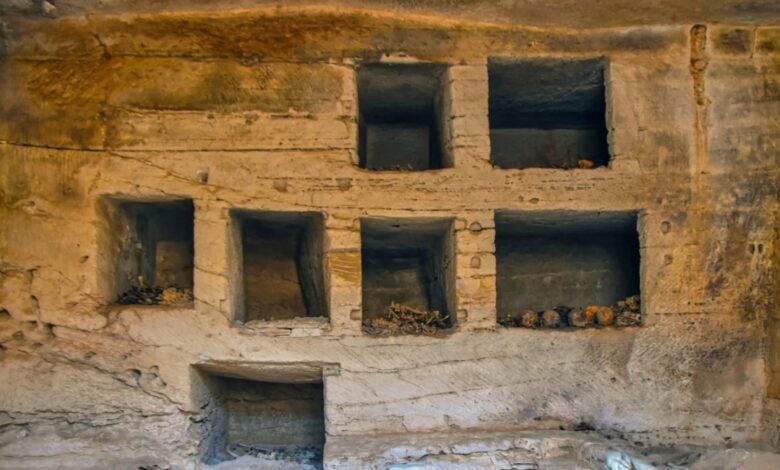
In another discovery, the ministry announced the finding of 18 new tombs at the Marina of El Alamein site, including 11 rock-cut tombs and 7 limestone tombs, bringing the total number of discovered tombs at the site to 48.
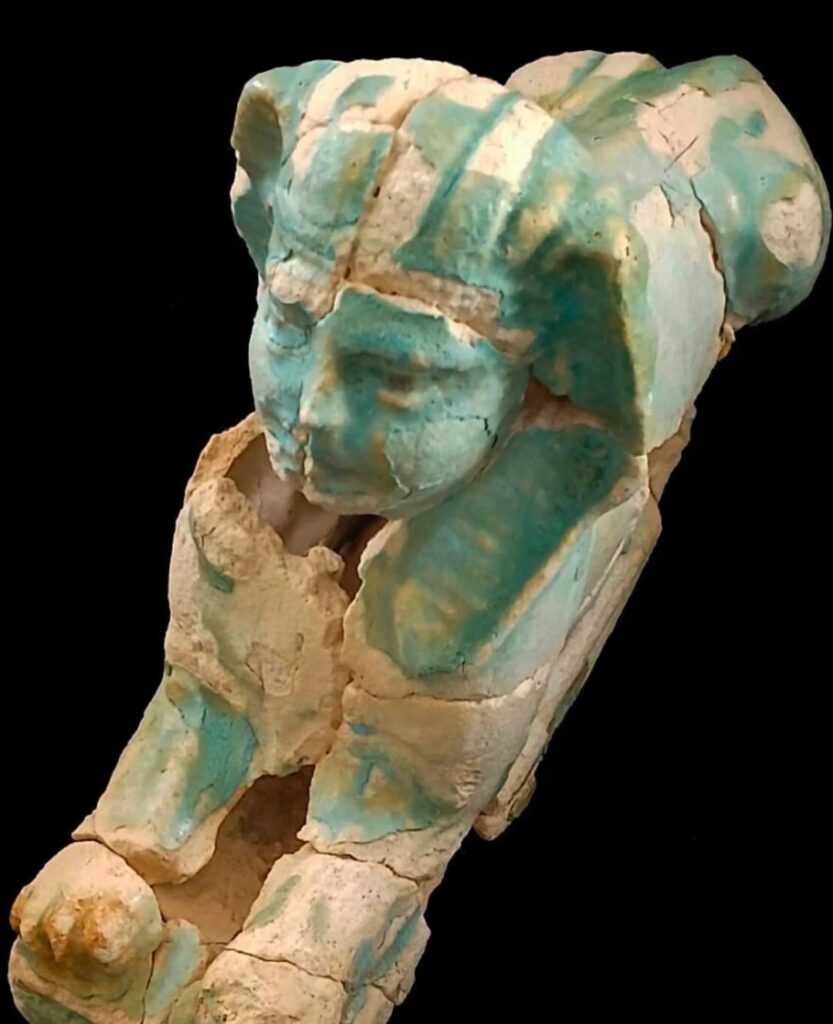
Discoveries included pottery, lamps, and stone basins, in addition to a 2.5-meter granite sarcophagus containing skeletal remains that are under study, and remnants of a plaster sphinx statue. Archaeologists also found four gold pieces placed inside the mouths of some of the deceased, known as the "golden tongue," a funerary practice associated with the beliefs prevalent during that period.
The Egyptian government hopes these discoveries will contribute to supporting the tourism sector, which is witnessing a remarkable recovery, after the country received about 19 million tourists in 2025, while the number of visitors exceeded 6.1 million tourists during the first four months of 2026.