Analysis and ReportsSlider
China bets on Namibia's treasures: oil and minerals at the heart of a new strategic partnership
Agreements that enhance economic cooperation
2 days ago
0 1,075 1 minute read
Written by Amna Hassan
China continues to expand its economic influence in Africa through Namibia, a country that has become one of the most promising destinations in the energy and critical minerals sectors.
The two countries signed eight new cooperation agreements covering energy, mining, infrastructure, and agriculture, a move that reflects Beijing's quest to secure its strategic resource needs for the global transition to clean energy.
Agreements that enhance economic cooperation
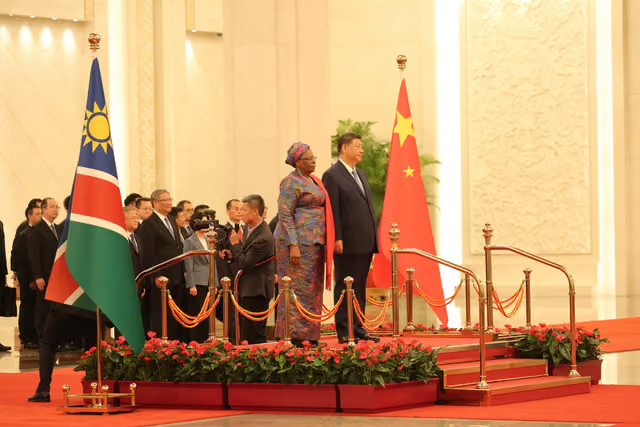
The signing of the agreements took place during Namibian President Naledi Pandor's visit to the Chinese capital, Beijing, where she held discussions with Chinese President Xi Jinping. These discussions resulted in broad understandings in the fields of uranium, lithium, and rare earth elements, in addition to cooperation in infrastructure, education, technology, and agriculture.
This visit is the first tour outside the African continent for the Namibian President since she took office in 2025, reflecting the importance that the Windhoek government places on its relations with China as part of its plans to attract investments and accelerate industrialization.
Namibia: An Emerging Power in Energy and Minerals
Namibia has emerged in recent years as one of the most attractive countries for investment following significant offshore oil discoveries, with reserves estimated at around 2.6 billion barrels and expectations that it will become a major oil producer in Africa by 2030.
The country's importance is not limited to oil, as it is also one of the world's largest uranium producers, and possesses large reserves of lithium and rare earth elements, which are essential minerals in the production of batteries, electric cars, and renewable energy technologies.
From exporting raw materials to domestic manufacturing
The new agreements focused on supporting local manufacturing, technology transfer, and skills development, enabling Namibia to increase the added value of its natural resources instead of merely exporting raw materials.
This trend reflects a growing shift in African policies, as resource-rich nations seek to build local industries and boost employment opportunities, while retaining a larger share of the returns from global value chains.
A partnership that serves the interests of both parties
China is Namibia's largest export market, while Chinese companies' investments in the country have exceeded $4.2 billion, mostly in the mining sector.
For Beijing, this partnership represents a long-term guarantee of securing critical minerals, while Namibia sees it as an opportunity to transform its natural resources into sustainable economic growth and strengthen its position in the global economy.