Written by Amna Hassan
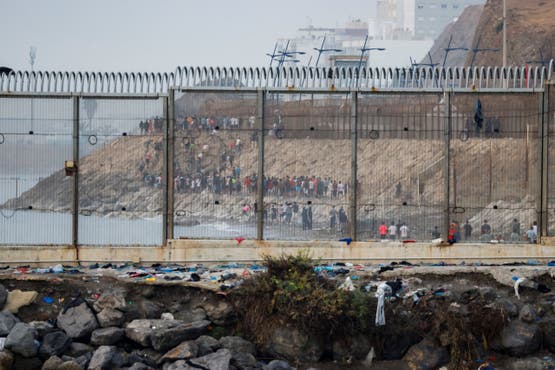
The Spanish city of Ceuta has returned to the forefront of the European scene after an unprecedented wave of mass crossings, which prompted tens of thousands of irregular migrants to try to reach it from Morocco In the largest influx the city has seen since the 2021 crisis.
Recent developments have raised widespread humanitarian and security concerns, and have reopened the issue of irregular migration within the European Union amid calls for stricter border controls.
Why is Ceuta a target for migrants?
Ceuta lies on the North African coast but is under Spanish sovereignty, making it part of the European Union despite being outside mainland Europe. The city has a population of only about 85,000, but its strategic location makes it one of the closest entry points to Europe for migrants arriving via North Africa.
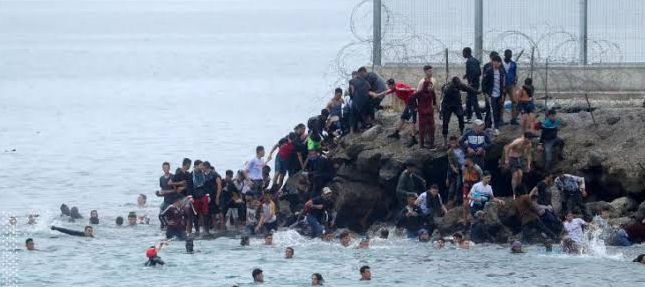
Despite the presence of multiple security fences and land and sea surveillance systems, human traffickers continue to seek new routes to circumvent security measures, whether by sea or through attempts to breach borders.
Figures reveal the scale of the crisis
Spanish authorities reported that over 53,000 migrants voluntarily returned to Morocco following the latest wave of crossings, while local estimates indicated that the total number of arrivals approached 60,000 in just a few days. Madrid also announced that the death toll from the crisis had risen to 67, as it continues to reinforce security measures, including the construction of additional barriers along the breakwater to prevent further crossings.
Political division within Europe
The crisis has sparked disagreements among European countries regarding how to handle immigration. Italy has called for stricter border controls with Spain and announced the imposition of inspections on non-European arrivals at air and sea ports. Madrid, in turn, has rejected the criticism, asserting that proposals to suspend its membership in the Schengen Area have no legal basis, a position supported by European legal experts.
A crisis that transcends borders
Observers believe that the Ceuta crisis is not only related to migration attempts, but also reflects the complexities of political relations between Morocco and Spain, in addition to the continued economic and humanitarian pressures that drive thousands of migrants to risk their lives in search of a better opportunity in Europe. With the continued tension, Ceuta seems likely to remain at the heart of the European debate on the future of migration policies and border security.