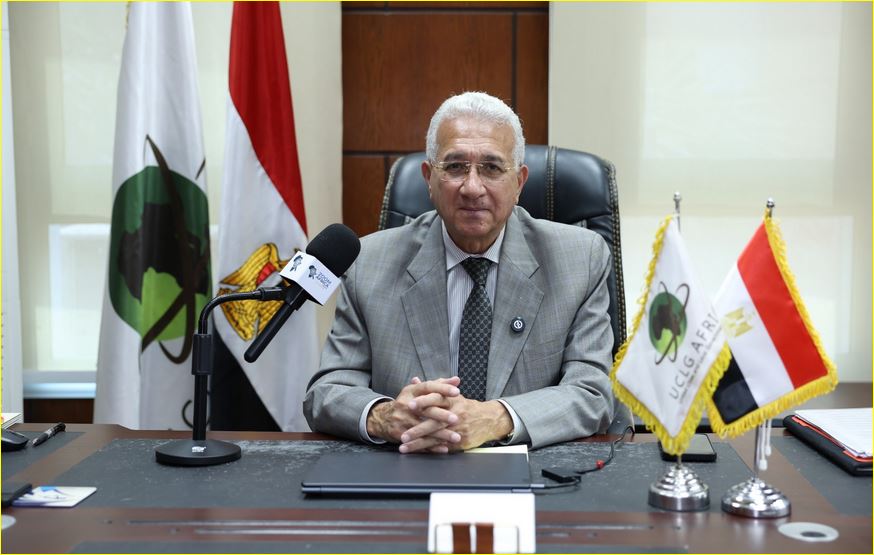
Ambassador Mohamed Hegazy, in his interview with Zoom Africa: Africa is Egypt's strategic depth... and the Grand Ethiopian Renaissance Dam revealed Ethiopia's hidden intentions.
Former Assistant Foreign Minister opens Pandora's box: America pressured Egypt over the water issue, and Africa is a treasure trove.
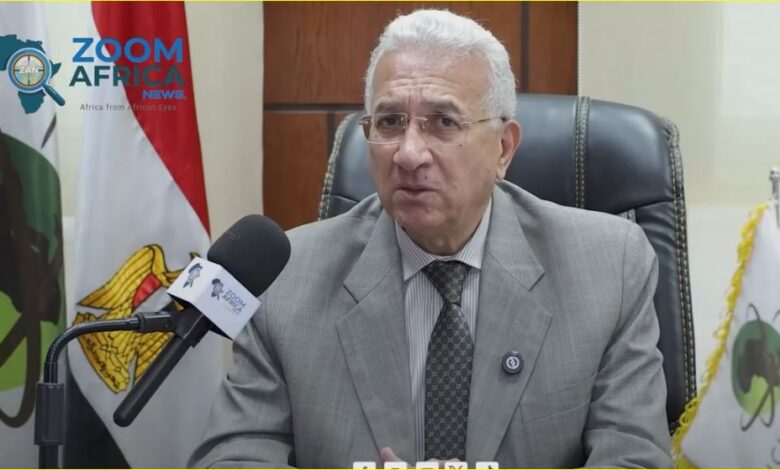
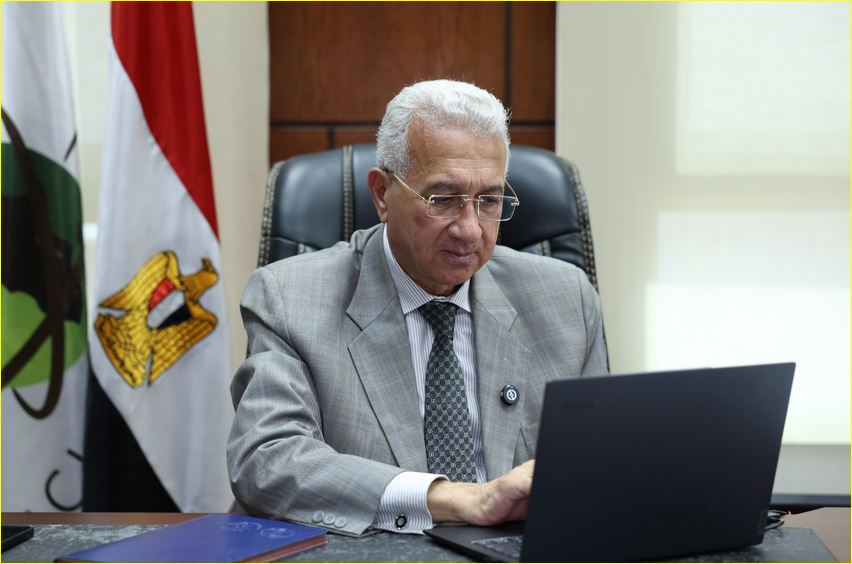
Ambassador Mohamed Hegazy, former Assistant Foreign Minister, affirmed that Egyptian-African relations are based on a long history of political, militant, and developmental support, stressing that the security and stability of the continent is an integral part of Egyptian national security.
In an exclusive interview with Zoom Africa News, he explained that Egypt has been and remains a key partner in supporting African liberation movements and is leading efforts to promote development and economic integration within the continent, while warning of the fierce international competition over Africa’s resources and attempts to use water as a political pressure tactic, especially in the Ethiopian Renaissance Dam file.
To the dialogue text
How do you view the nature of Egyptian-African relations?
Egyptian-African relations are strategic relations based on a deep understanding that cooperation with African countries is a necessity imposed by the unity of destiny and common history. Egypt has supported all national liberation movements in Africa, and Cairo was indeed the capital of the African struggle.
Egypt has also made significant economic and developmental contributions, based on its understanding that Africa’s real battle is a battle for life and development, and therefore it has always stood by the continent, considering its security and stability an integral part of Egyptian national security.
The late leader Gamal Abdel Nasser realized early on that the independence of African countries and their liberation from colonialism represented a fundamental pillar for consolidating the Egyptian revolution and confronting foreign interventions that had harmed the continent for decades.
Following the waves of independence in the 1950s and 1960s, Egypt played a pivotal role in expressing the African position within international forums, and led national liberation and comprehensive development efforts.
What is the importance of Africa to Egypt at the current stage?
Africa represents Egypt’s natural sphere of influence, whether on a political, economic, or developmental level.
The continent possesses enormous mineral wealth, huge markets, and a young, productive workforce, which opens up broad horizons for Egyptian exports and gives Egyptian companies great opportunities for expansion.
Egyptian projects have begun to attract significant attention within Africa, most notably the Julius Nyerere Dam project in Tanzania, which cost approximately $3 billion and reflects the size of the Egyptian economic and investment presence within the continent.
How can integration between Egypt and African countries be strengthened?
Connecting with Africa must be multi-dimensional, whether through infrastructure, road networks, or electrical and energy interconnection.
Egypt owns the Dabaa nuclear power plant and is working to strengthen electrical interconnection with sister countries to the south, whether Sudan, Ethiopia, or East and West Africa.
Moreover, transverse road projects linking the Sahel countries to Mediterranean ports, in addition to river transport projects, will all contribute to enhancing trade, investment and economic integration between Egypt and its African brothers.
How do you assess the role of Egyptian diplomacy in Africa?
There is a clear interest from the state, and a direct concern from President Abdel Fattah al-Sisi to maintain communication with African leaders, whether through mutual visits or initiatives related to conflict resolution.
Egypt’s presidency of the African Union in 2019 marked a significant milestone, witnessing a strong push for the African Continental Free Trade Area project, a project that represents the dream of the continent’s founding fathers, such as Gamal Abdel Nasser, Kwame Nkrumah, Julius Nyerere, and Nelson Mandela, who dreamed of an economically and developmentally united Africa.
What are the main challenges facing the African continent?
Africa possesses enormous natural resources, which has made it an arena for great international competition.
Some powers rely on investment and trade, while others resort to using more dangerous tools, such as supporting coups or changing political systems, which leads to unrest that threatens the stability of the continent.
The continent possesses huge reserves of gold, diamonds and rare minerals, and therefore the international struggle over them has continued from the colonial era to the present day.
Hence, Egypt always calls for reliance on the continent's own capabilities and achieving development from within.
How do you see the future of cooperation in the Nile Basin?
The Nile Basin represents a single ecosystem and must be kept free from political interference or unilateral actions, such as building giant dams without coordination with downstream countries.
The river has enormous potential for achieving shared development for all riparian states, but this requires cooperation and respect for international law.
We welcome current African initiatives, particularly those led by Uganda and South Sudan, to revive the cooperation track within the Nile Basin Initiative.
Egypt has always been one of the countries most supportive of the initiative, but the dispute has centered on the need to respect historical rights and current uses of water.
No single state should be allowed to impose its will on the rest of the states, as this violates the rules of international law.
How do you assess Ethiopia's position in the Renaissance Dam negotiations?
Unfortunately, Ethiopia entered the negotiations from the beginning with unclear intentions.
Between October 2019 and February 2020, an agreement was reached after six months of negotiations, and the then Egyptian Foreign Minister, Sameh Shoukry, went to Washington and initialed the agreement.
But the Ethiopian delegation did not attend the signing ceremony, which confirmed that Addis Ababa is only looking to achieve its own interests at the expense of the rights of others.
The meeting between President Abdel Fattah al-Sisi and Ethiopian Prime Minister Abiy Ahmed also witnessed an agreement to complete the negotiations, but the Ethiopian side did not adhere to what was agreed upon.
The issue is not just about filling the dam, but about the rules for filling and operating it together, especially during drought years, because ignoring these rules threatens the water security of the downstream countries, Egypt and Sudan.
US President Donald Trump spoke about financing the Grand Ethiopian Renaissance Dam. Do you think the United States used this issue to put pressure on Egypt?
Egypt represents a key pillar in the American strategy, but using water as a political pressure tactic is not new; history has witnessed many attempts to do so.
Following the assassination of Sir Lee Stack in 1924, Britain proposed an agricultural project in Sudan that would reduce Egypt’s share of the Nile waters, which later led to the 1929 agreement.
The US Bureau of Reclamation during the era of President Gamal Abdel Nasser also proposed a number of dam projects on the Nile, including the project that later evolved into the Renaissance Dam, but with a storage capacity that did not exceed 14 billion cubic meters, and not 74 billion as it exists now.
During President Sadat's era, the Soviet Union proposed building thousands of small dams on the Nile.
Therefore, I do not rule out the existence of water-related pressures, but Egypt dealt with the crisis through American and Emirati mediation, and sought to reach a solution that preserves everyone’s rights and spares the region any escalation.
How do you view the concept of Egyptian national security?
Egyptian national security is not limited to protecting geographical borders only, but extends to what is called the ”frontiers of national security”.
For this reason, President Abdel Fattah al-Sisi stressed, during his meeting with the President of Somalia, that the Egyptian presence there comes within the framework of protecting national security.
The same applies to Libya and Sudan, which represent a direct extension of Egyptian security. This prompted the political leadership to set clear red lines to preserve the security and stability of these two countries, considering that their stability is part of the stability of Egypt itself.