A group linked to Al-Qaeda claimed responsibility for large-scale attacks on army sites in Mali.
Coordinated attacks targeting military sites in several regions
Written by: Mohamed Ragab
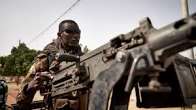
The Group for the Support of Islam and Muslims (JNIM), affiliated with Al-Qaeda, claimed responsibility for a series of coordinated attacks targeting Malian army positions in a number of cities and towns, asserting that it had taken control of at least three military sites during the operations. Reuters has not been able to independently verify these claims.
The attacks included the regions of Gao, Anefis, and Aguelhok in the north of the country, in addition to Sevare in central Mali and Keniourobah south of the capital Bamako, in one of the widest attacks witnessed by the country in recent months.
Malian Army: The situation is under control
In contrast, the Malian army confirmed that it was able to repel the attacks and regain control of the targeted locations, reporting the deaths of 26 militants during the confrontations in the Sevare and Gao regions, and affirming that the security situation is now “fully under control.”.
The army clarified that its forces continue sweeping and pursuit operations to track down armed elements, while reinforcing military deployment in the areas that were subjected to attacks.
Escalating security threats
These attacks come amid the continued deterioration of the security situation in Mali, despite the pledges of the military authorities, who took power after recent coups, to restore stability and eliminate armed groups.
Analysts believe that the coordinated attacks reflect the ability of extremist groups to carry out large-scale operations in scattered areas, which highlights the magnitude of the security challenges still facing the country and the Sahel region in general.
Armed alliances complicate the landscape
Reports indicate that the recent attacks coincided with movements by other armed factions, including the Azawad Liberation Front, which also announced operations against government forces in northern Mali, reflecting the continued complexity of the security landscape and the overlap in the activities of armed and separatist groups.
Observers fear that the escalation of these attacks could undermine efforts to restore security, especially as the activity of armed groups extends to new areas within Mali and neighboring Sahel countries.
Ongoing challenges for the authorities
The Malian government faces increasing challenges in combating armed groups, amid ongoing violence, displacement, and deteriorating humanitarian conditions. Experts emphasize that achieving stability requires integrated security and development solutions, along with strengthening regional cooperation to confront cross-border threats.