With limited job opportunities, AI-powered agriculture is becoming a haven for graduates in Kenya.
Artificial intelligence in agriculture in Kenya
Written by: Ayman Ragab
Young farmers in Kenya are resorting to combining Agriculture Traditional methods and mobile phone applications are being used to build their livelihoods in the absence of formal jobs.
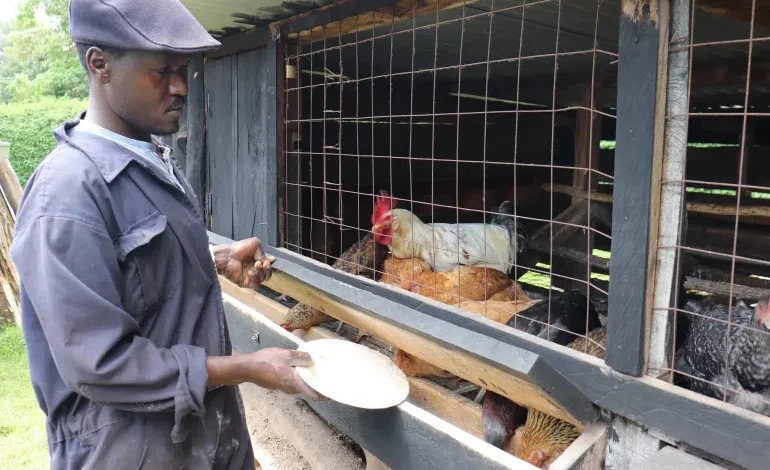
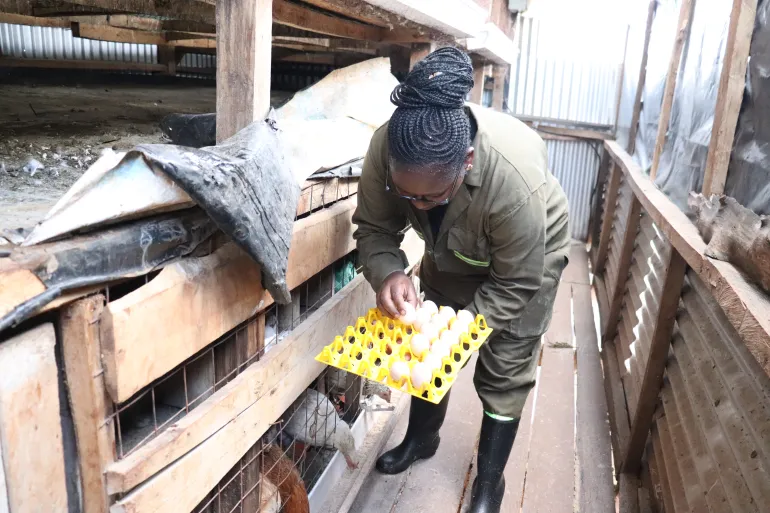
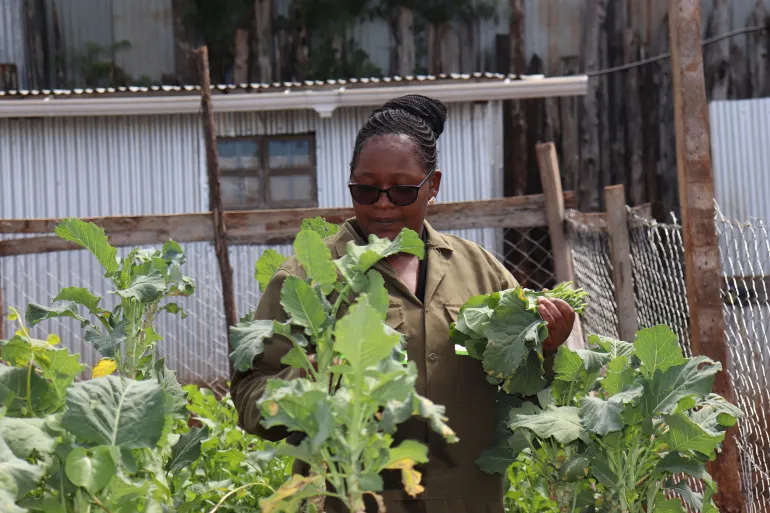
In Kericho County, Kenya, a typical day begins before sunrise for Chepkorir Rotich, a farmer in Kipoito village, western Kenya. By then, Rotich has milked her cows and sold the milk, fed her chickens, and returned to pick vegetables to fulfill pre-ordered deliveries. Her workday begins this way, and she performs it with enthusiasm.
When the 33-year-old mother of two left college more than a decade ago, she was excited and ready to join the formal workforce and get a full-time job.
She says: “I thought I would work as a business manager, but after a long job search, I accepted temporary job offers from three different companies. The highest salary was around $200 a month. This amount was not enough while I was living in Nairobi.”
The lack of office jobs has deprived young Kenyans like Rotich of employment opportunities, forcing them to find creative ways to make a living. As a result, many young people have turned to agriculture and other fields, using their digital and professional skills to stand out in the job market.
From fields to fodder: Agriculture is becoming a social activity
Rotich, for example, uses social media to market her agricultural products and to teach people how to practice farming using modern methods. These platforms help her share her knowledge with young people, who make up a large segment of her nearly 50,000 followers. She also runs a YouTube channel where she shares her expertise in agriculture.
The Food and Agriculture Organization of the United Nations (FAO) indicates that the average age of an African farmer is 60, a claim Rotich disputes, saying that the assumed age of farmers has led many young people to avoid farming rather than embrace it as a means of earning a living in the future.
Rotich says: “I think the reason they say that is because of the easy access to farmland, which is mostly owned by older people. In my case, I started farming in the yard of my rented house, and at the end of each month, the landlord owed me money after paying the rent, because I was selling him milk and vegetables. So, it’s all about the passion and perseverance of young people.”.
Kiringai Kamau, a lecturer at the University of Nairobi specializing in agricultural economics, agribusiness and food systems, says young people should pursue agriculture as a full-time career because they are the ones who can understand the technology and apply it effectively.
He adds: “To achieve this, we have established the Decentralized Learning Centre for Ecological Agriculture and Artificial Intelligence at Moringa University, where we will strive to make the centre train young people who will enter the field of agriculture to be able to communicate with the agricultural data ecosystem, derived from the infrastructure that will be provided, as well as provide information to the province and the country, and any other specialists who may be interested in the data coming in there.”.
Derek Njieji, head of the technical department at the Global Open Data for Agriculture and Nutrition (GODAN) organization, explains that while young people are embracing agriculture, technology also plays a role in providing them with opportunities.
About five kilometers from Kipoito, in the village of Kapturwe, Jeffrey Kiprop is busy cleaning his cowshed after feeding his cows early in the morning. The 32-year-old earned a bachelor's degree in information technology in 2017, but has never held a formal job.
Like Rotich, Kiprop relies on contract work for a living, such as developing and maintaining systems for schools. He says his highest pay was 15,000 Kenyan shillings (US$116). Now, he earns about 7,000 Kenyan shillings (US$54) a day from farming.
Kiprop also practices mixed farming, raising cows for milk and chickens for eggs and meat, as well as growing crops such as tea, coffee, pepper, cabbage and beans.
He uses modern technologies to grow his crops and raise his livestock, and benefits from his training in information technology, which he uses to ensure maximum profits.
Agriculture using programming: Artificial intelligence is reshaping rural farming
Among the tools used is the Plantix app, which it says helps detect crop diseases and malnutrition using artificial intelligence simply by taking and uploading a picture of the crop. The app also provides farmers with weather forecasts and best agricultural practices to follow based on current weather conditions.
Kiprop says: “I prefer the “Virtual Agricultural Engineer” program. It’s an AI-powered platform where I use Google Maps to determine the coordinates of my farmland, and then I select the types of crops I grow. In turn, the “Virtual Agricultural Engineer” lets me know the area of the cultivated plots. It also creates a feeding plan by taking soil samples on the farm and guides me on which nutrients the soil lacks and the exact amount to add.”.
Kiprop also uses an AI tool to manage the health and productivity of his cows.
Kiprop says: “I also use the Digicow app, which helps farmers manage dairy farm practices by tracking all daily activities on the dairy farm, including recording the amount of milk sold and used by the farmer, and dairy inputs such as feed and health practices, allowing the farmer to know whether he is making a profit or not.”.
Rotich and Kerup both agree on one thing: agriculture also comes with its own challenges, and one must be extremely passionate and persistent to achieve anything from it.
Kiprop says: “Consistency is key. It’s a quality many young people lack, giving up too early before they can break even and make a profit. You have to repeat things many times until you can finally master them and learn from past mistakes.” (Quoted from Al Jazeera)